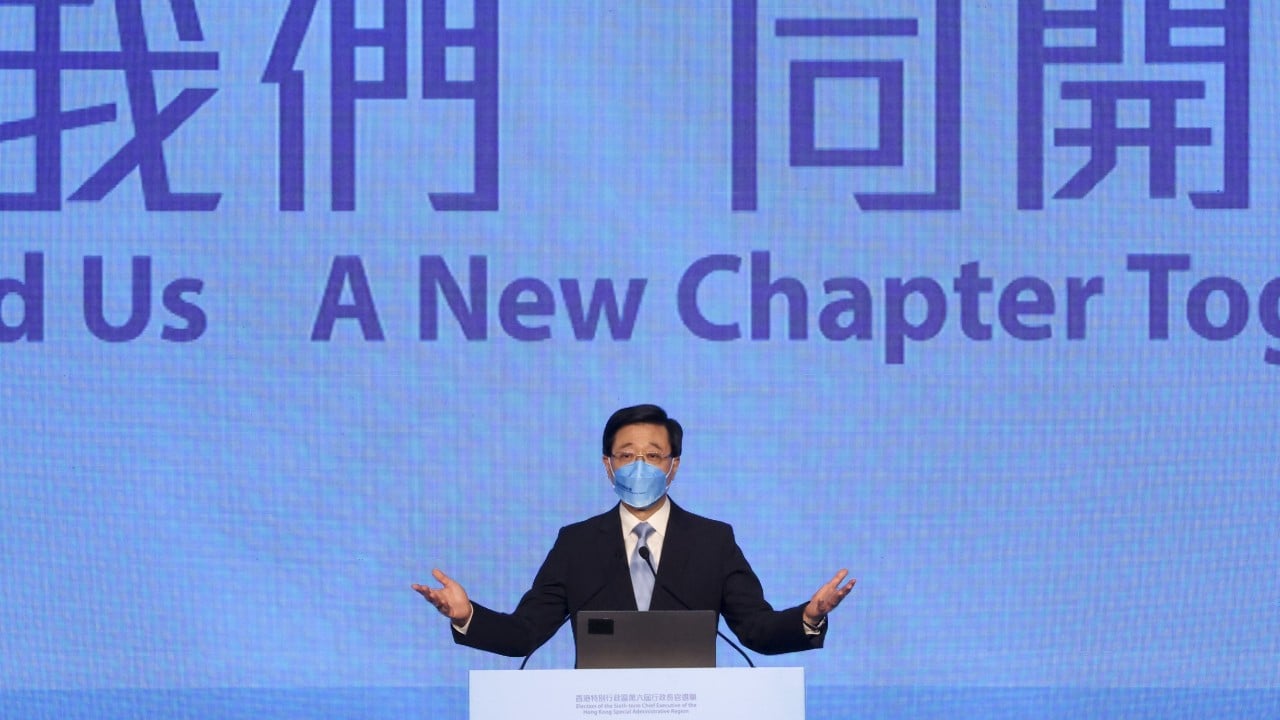
When John Lee took the oath of office as Hong Kong's chief executive, he promised a "new chapter" for the city. That phrase became the tagline of his administration. Years later, people are still asking whether that vision materialized or if it vanished into thin air.
You can't understand Hong Kong's current trajectory without looking at how Lee's administration redefined governance. The former security chief brought a results-oriented approach to the table. He wanted action, not endless bureaucratic debate. But running a global financial hub requires more than just administrative speed. It demands navigating geopolitical crosscurrents, retaining nervous talent, and fixing deep-rooted economic fractures.
Let's look at what has actually changed on the ground.
The Security Apparatus and Institutional Overhaul
You cannot talk about the new chapter without addressing the legal transformation. Under Lee's watch, the city enacted the Safeguarding National Security Ordinance, fulfilling a constitutional duty that had lingered for decades.
Critics argued this finished off the city's unique legal identity. Supporters claimed it provided the absolute stability needed for long-term business planning. From an execution standpoint, Lee moved fast. The legislative council passed the bill with unprecedented speed.
Government efficiency became the administration's favorite metric. Lee introduced Key Performance Indicators for civil servants. If departments missed targets on housing supply or public cleanliness, leadership heard about it. Bureaucrats could no longer hide behind procedural delays.
Economic Realities and the Artificial Intelligence Wave
Hong Kong's economy faced brutal headwinds after the pandemic. Real estate prices dipped, retail struggled, and foreign capital grew cautious. Yet, the economic story turned more complex than simple decline.
Gross domestic product recently hit faster expansion rates. The city caught a massive wave of global demand for artificial intelligence and technology integration. Lee's policy addresses leaned heavily into positioning Hong Kong as an innovation hub. The Northern Metropolis project—a massive cross-border development zone near the Shenzhen border—serves as the primary vehicle for this transformation.
The administration wants to fast-track infrastructure and attract global tech giants. Special legislative provisions aim to cut through red tape. But turning blueprint promises into actual operational tech clusters takes time. Investors remain pragmatic. They want to see if cross-border data flows and talent migration work smoothly in practice.
Tackling the Housing Crisis
Housing is where every Hong Kong leader wins or loses. For decades, families waited endlessly in cramped subdivided flats while housing prices soared out of reach.
Lee tackled this head-on by introducing light public housing units and setting strict wait-time targets. The average waiting time for public rental housing dropped slightly, showing tangible progress. The administration also started cracking down on substandard subdivided units through targeted regulations.
Yet, affordability remains a massive hurdle. Young professionals still struggle to enter the property ladder. The newborn bonus, introduced to combat a dismal fertility rate, offers a small financial cushion, but it hasn't reversed demographic decline.
The Global Talent Migration Puzzle
Retaining international status proved difficult when talent flooded out during strict pandemic restrictions. Lee's administration responded aggressively. They launched talent admission schemes that pulled in hundreds of thousands of applicants, mostly from mainland China, alongside global professionals.
On paper, the numbers look impressive. In reality, integrating this influx while keeping traditional international firms happy is a delicate balancing act. Western chambers of commerce frequently voice concerns about data security laws and free speech perceptions. Local businesses face shifting consumer habits as cross-border shopping trips to Shenzhen become daily routines for ordinary residents.
Assessing the Legacy So Far
John Lee's chapter for Hong Kong isn't finished, but its shape is clear. Security and administrative efficiency sit at the core. The government moves faster, builds more temporary housing, and tightly aligns its economic future with the national five-year plans.
At the same time, the old freewheeling atmosphere of the former British colony has permanently evolved into something strictly managed. Whether this strict operational model secures long-term prosperity depends entirely on how well the city maintains its global financial bridges while servicing regional integration.
Evaluate the progress based on execution rather than rhetoric. Check the data on housing wait times, monitor the growth of the Northern Metropolis, and watch how international capital reacts to local regulatory shifts.