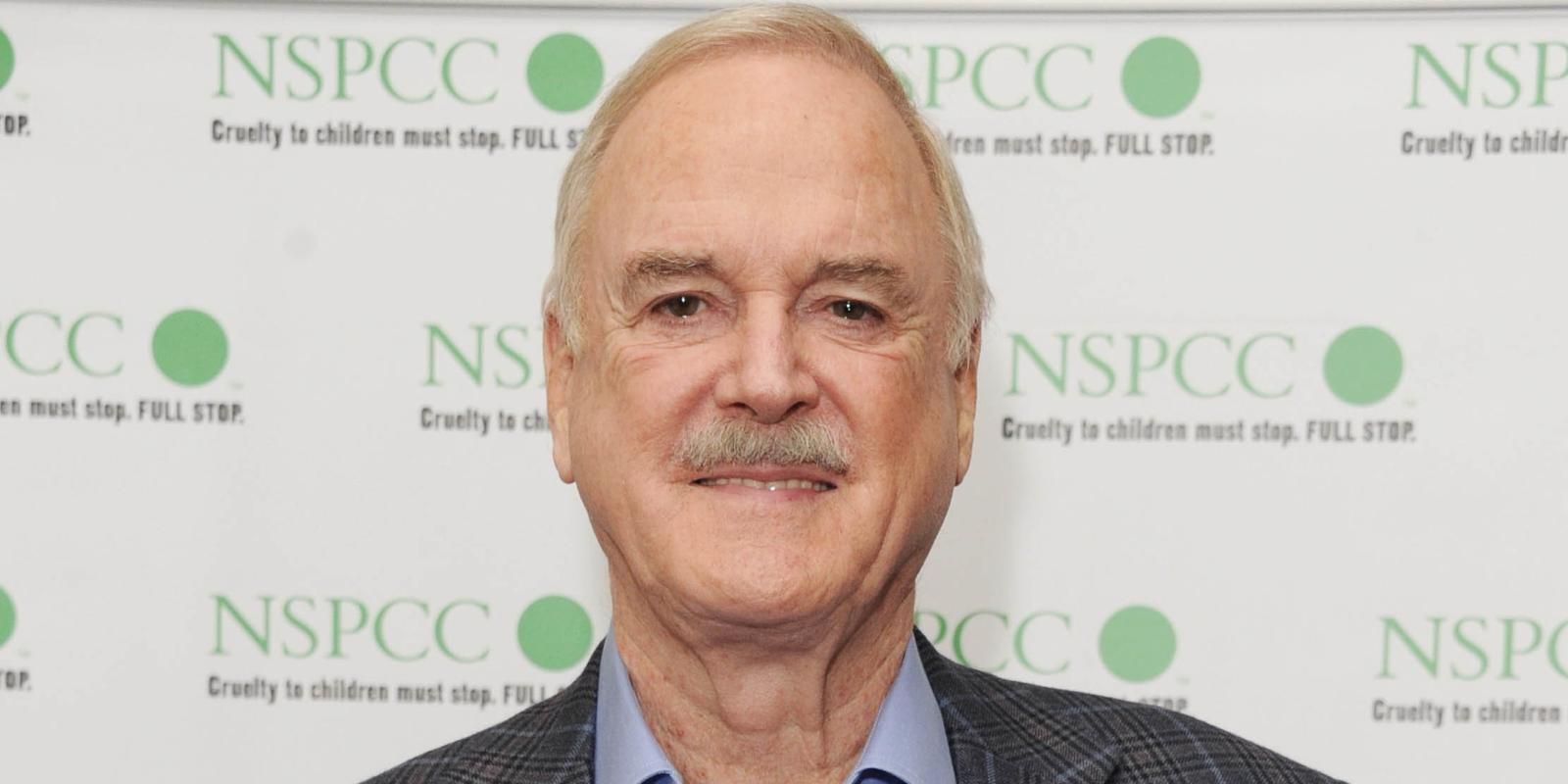
John Cleese recently sparked a firestorm of national debate by claiming that London is "no longer an English city." This wasn’t a scripted line from a sketch or a bit of dry Fawlty Towers wit. It was a blunt assessment of cultural shift that the 84-year-old comedian has voiced with increasing frequency. While critics immediately dismissed his comments as the grumblings of an out-of-touch expatriate, the reaction ignored a deeper, more uncomfortable reality. Cleese is tapping into a profound anxiety regarding the speed of demographic change and the perceived erosion of a specific, traditional British way of life.
The controversy isn't just about one man's Twitter feed. It represents a collision between the old guard of British cultural exports and the modern, globalized reality of the United Kingdom’s urban centers. When Cleese points to the "Islamic takeover" or the loss of Englishness, he is using inflammatory shorthand for a complex web of integration failures, housing crises, and the disappearance of the local "high street" culture he grew up with. To understand the weight of his words, one must look past the headlines and examine how the UK’s social fabric is being rewoven in real-time.
The Death of the Monoculture
For decades, the image of Britain sold to the world was one of homogeneity. It was a place of cricket on the green, pubs with wood-paneled walls, and a very specific brand of polite, repressed humor. Cleese was the architect of that image. Through Monty Python and Fawlty Towers, he exported a version of Englishness that was recognizable from Tokyo to Texas.
That world is gone.
Modern London is a megalopolis where over 300 languages are spoken. Data from the most recent census shows that "White British" residents now make up a minority of the capital's population. For a globalist, this is a triumph of diversity and economic dynamism. For someone like Cleese, it feels like the erasure of a home. The friction arises because the UK never truly decided what it wanted its multicultural identity to look like. Instead of a "melting pot" where different cultures blend into a new, unified whole, many British cities have become collections of "parallel lives."
In these enclaves, different ethnic and religious groups live side-by-side but rarely interact. They shop at different stores, attend different places of worship, and hold fundamentally different social values. When Cleese speaks of a "takeover," he is reacting to the visual and social dominance of these enclaves in areas that were once the heart of his version of England.
The Integration Gap
The "why" behind this cultural friction is rooted in policy failures that span decades. Successive governments encouraged large-scale migration to fill labor shortages but provided almost zero infrastructure for social integration. We didn't build enough houses, we didn't expand school capacities, and we didn't insist on a shared civic identity that transcended religious or ethnic backgrounds.
Religion plays a central role in this specific brand of anxiety. The growth of Islam in the UK is not just a demographic statistic; it is a visible shift in the public square. From the architecture of new mosques to the prevalence of halal butchers and the debate over Sharia councils, the symbols of Islamic life are now permanent fixtures of the British landscape. For traditionalists, these symbols are seen as competitors to the established Church of England and the secular liberal values that Cleese and his generation hold dear.
The problem is compounded by a perception of "two-tier" policing and social discourse. There is a growing sentiment among the white working and middle classes that expressing concern about these changes leads to immediate social ostracization. When a celebrity like Cleese speaks out, he becomes a lightning rod for millions who feel they have lost their right to complain about the changing face of their own neighborhoods.
The Expat Paradox
There is a glaring irony in Cleese’s position. He famously moved to the Caribbean, specifically Nevis, citing his distaste for the UK’s "stifling" atmosphere and his desire for better weather and lower taxes. Attacking the state of British culture from a tropical island strikes many as the height of hypocrisy.
However, his distance provides a certain clarity—or perhaps a certain detachment from the day-to-day nuances of modern British life. From the outside looking in, the changes appear more radical because they aren't softened by the slow, incremental shifts that residents experience. To Cleese, the Britain he returns to for book tours and filming is a foreign country. He is an immigrant in his own birthplace.
This sense of displacement is a powerful political force. It fueled the Brexit vote and continues to drive the rise of right-wing reform parties. It is a mistake to view these sentiments as purely driven by hate. Often, they are driven by grief. People are grieving for a version of their country that no longer exists, and they are looking for someone to blame.
Economic Realities vs Cultural Myths
While the cultural debate rages, the economic reality of the UK is what actually dictates these shifts. The "Englishness" Cleese misses was built on a post-war economic model that is totally dead. The small-town shopkeeper has been replaced by Amazon; the local pub has been priced out by skyrocketing business rates and property developers.
Migration is often the visible symptom of a globalized economy, not the root cause of cultural decay. Without the labor provided by immigrant communities, the National Health Service (NHS) would collapse overnight. The construction industry would grind to a halt. The very "English" institutions people want to protect are currently being propped up by the people they are told to fear.
Cleese’s warnings about an "Islamic takeover" overlook the fact that many second and third-generation British Muslims are just as worried about the cost of living, the quality of schools, and the state of the NHS as he is. There is a growing class of British Muslims who are socially conservative, entrepreneurial, and deeply invested in the stability of the UK. They aren't "taking over"; they are moving in and trying to build lives in a broken economy.
The Censorship of the Common Man
Perhaps the most potent part of Cleese’s argument isn't about demographics, but about the "woke" culture he believes prevents honest discussion. He has been a vocal critic of the BBC and other major institutions, claiming they have become so terrified of offending anyone that they have abandoned the pursuit of truth.
This resonates because it contains a kernel of truth. In the rush to be inclusive, many institutions have indeed struggled to handle critiques of multiculturalism without resorting to labels of "bigotry." This creates a pressure cooker effect. When legitimate concerns about the rate of change or the pressure on public services are ignored by the mainstream media, people turn to more radical voices.
The "investigative" reality here is that the UK is currently a nation of fractured realities. Depending on which neighborhood you walk through, or which news feed you follow, you are living in a completely different version of Britain. There is no longer a shared national story.
The Failure of the Liberal Elite
The people most shocked by Cleese's comments are usually those who live in gated communities or wealthy pockets of the Home Counties. They experience the benefits of multiculturalism—the food, the cheap services, the international buzz—without ever having to deal with the social friction that occurs in lower-income areas.
When a school in Batley or Birmingham becomes the center of a religious protest over curriculum content, the liberal elite often looks away or issues platitudes. They don't have to navigate the reality of competing worldviews in a shared space. Cleese, despite his wealth, has maintained a connection to a populist streak that recognizes this disconnect. He knows that for a large portion of the population, the "vibrant diversity" described by politicians feels like a loss of social cohesion.
A Nation at a Crossroads
Britain is not going to return to the 1950s. The demographics are baked in. The question isn't whether the UK will be multicultural—it already is—but whether it can find a way to make that multiculturalism functional.
The current trajectory is one of increasing polarization. On one side, you have a progressive faction that views any defense of traditional English identity as inherently suspicious. On the other, you have a growing movement of people who feel like strangers in their own land, represented by figures like Cleese who have the platform and the "I don't care if I'm canceled" attitude to say what others think.
We are seeing the slow-motion dismantling of the British identity as it was understood for centuries. This isn't just about religion or race; it's about the collapse of a shared set of values and a common history. If the UK cannot find a way to integrate its new citizens into a meaningful national story—and if it cannot allow for an honest, blunt discussion about the challenges of that integration—then the "takeover" Cleese warns about won't be a religious one, but a total breakdown of social trust.
The real investigative work starts by looking at the data on social trust in hyper-diverse versus homogeneous areas. The findings are consistently grim: as diversity increases, trust within and between communities often decreases in the short term unless there are strong, unifying local institutions. The UK has spent twenty years dismantling those very institutions—libraries, youth clubs, community centers—while simultaneously increasing the rate of social change.
You cannot have a stable society if you remove the glue that holds people together and then act surprised when they drift apart into warring factions. John Cleese isn't a prophet, but he is a canary in the coal mine. He is the loud, slightly eccentric warning that the British experiment in "laissez-faire" multiculturalism is reaching a breaking point.
Go into any pub outside the London bubble and listen. You will hear echoes of Cleese’s frustration. People want to feel that their culture has value, that their history matters, and that they haven't been abandoned by a political class that views their concerns as a PR problem to be managed rather than a reality to be addressed.
The future of the United Kingdom depends on whether its leaders can bridge the gap between the nostalgic England of the past and the complicated, multi-faith reality of the present without losing the essence of what made the country "English" in the first place. Right now, they are failing.
Check your local council’s transparency reports on social cohesion funding to see exactly how much—or how little—is being spent on actual community integration.