The Federal Reserve gathers this Wednesday for a meeting that marks the beginning of the end of the Powell era, yet the atmosphere in Washington suggests something far more volatile than a standard transition. Jerome Powell is widely expected to hold interest rates steady at 3.5% to 3.75%, but the real drama isn't in the decimals. It is in the seat he occupies. With his term as chair set to expire on May 15, 2026, the question is no longer just whether he stays or goes, but whether he chooses to execute a maneuver not seen in nearly eighty years to protect the central bank from the White House.
Powell is currently the primary target of a multi-pronged assault from the Trump administration. The President has already named Kevin Warsh as his successor, a move intended to signal a swift pivot toward the lower interest rates the executive branch has publicly demanded. However, a bureaucratic technicality has turned into a high-stakes chess match. While Powell’s title as chair expires in weeks, his legal term as a member of the Board of Governors lasts until January 2028.
He has every right to stay. If he does, he blocks the administration from filling his board seat, effectively neutralizing the President's ability to fully reshape the Fed's voting balance.
The Eccles Precedent
To understand why this is a crisis, you have to look back to 1948. Marriner Eccles, the architect of the modern Fed, was demoted from the chairmanship by Harry Truman. Instead of walking away in a huff, Eccles stayed on as a regular governor for three years, a constant thorn in the side of the administration. He believed the Fed’s soul was at stake.
The current situation is eerily similar. The Justice Department only recently dropped a highly scrutinized investigation into Powell regarding renovations at the Fed’s headquarters—an investigation many viewed as a "loyalty test" or a pressure tactic to force an early resignation. By clearing that legal hurdle, Powell now has the freedom to choose his exit on his own terms.
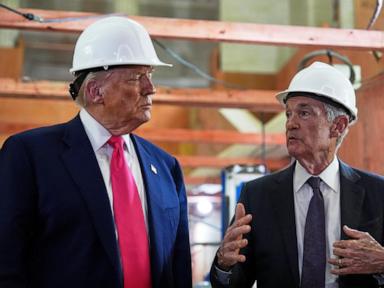
If Powell remains on the board after Warsh takes the gavel, it creates an unprecedented power dynamic. You would have the former "commander-in-chief" of the economy sitting just a few feet away from his replacement during every policy vote. This isn't just awkward; it's a structural roadblock for an administration that wants to treat the central bank like a sub-agency of the Treasury.
War, Tariffs, and the Policy Trap
The Fed is currently caught in a vice. Inflationary pressures are mounting, driven by two factors entirely outside the central bank’s control: a military conflict with Iran that has sent energy prices north, and the aggressive implementation of new tariffs.
3.5% is the floor, but the markets are beginning to wonder if it’s also a ceiling that can’t hold.
The administration wants rate cuts to stimulate growth, but the economic data suggests that cutting now would be like throwing gasoline on a fire. If Powell leaves entirely in May, Warsh inherits a poisoned chalice. He will be under immense political pressure to cut rates even as energy-driven inflation eats into consumer spending power.
Powell’s decision to stay or go is the ultimate signal of institutional resilience. If he packs his bags on May 15, it will be seen as a surrender to political gravity. If he stays, he is signaling to the global markets that the Federal Reserve is not yet a political trophy.
The Shadow of Kevin Warsh
Kevin Warsh is no stranger to these halls. A former Fed governor himself, he has a reputation for being more attuned to market signals—and perhaps political ones—than the technocratic Powell. His confirmation process was smoothed only after the DOJ investigation into Powell was shelved, a clear trade-off to ensure a "clean" transition.
However, a "clean" transition is exactly what the U.S. economy might not get.
The Fed’s independence has been the bedrock of American fiscal credibility for decades. When that independence is questioned, the premium on U.S. debt goes up. Investors don't like uncertainty, but they hate political interference even more. The recent volatility in the gold and silver markets is a direct reflection of this anxiety. Metals surged on the fear of a "captured" Fed, then tumbled when it appeared Powell might fight back.
The Boardroom Insurgency
The seven-member Board of Governors is currently a mix of seasoned economists and political appointees. If Powell stays as a governor, he retains his vote. He loses the ability to set the meeting agenda and the privilege of the post-meeting press conference, but he keeps his voice.
In a divided FOMC, one vote can be the difference between a "wait-and-see" pause and a disastrously timed rate cut. The administration knows this. That is why the rhetoric has been so sharp. They aren't just looking for a new chair; they are looking for a vacancy.
Why This Meeting is Different
Wednesday’s meeting will likely be Powell’s last time at the podium as the undisputed leader of the world’s most powerful financial institution. He has spent eight years navigating a pandemic, a labor crisis, and a return of global inflation.
He is unlikely to go quietly.
The markets are pricing in a 100% probability of a hold this week. The real "trade" is in the subtext of Powell’s final statements. If he emphasizes the need for "long-term institutional stability," he is telling the world he plans to keep his seat on the board. If he speaks in the past tense about his contributions, he is clearing the way for the Warsh era to begin without a shadow.
This isn't just about interest rates. It is about whether the person responsible for the dollar answers to the data or to the person in the Oval Office. Powell is currently the only thing standing between those two worlds.
The silence from the Fed chair’s office over the last few weeks has been deafening. Usually, a departing chair is on a "legacy tour," giving speeches and framing their tenure for the history books. Powell has done none of that. He has remained bunkered in, focused on the immediate inflationary threats from the Iran conflict and the domestic tariff fallout.
This suggests a man who isn't finished.
The Federal Reserve was designed to be insulated from the whims of the election cycle, but that insulation is wearing thin. On Wednesday, when the cameras turn on and Powell takes his seat, the world won't be looking at the interest rate charts. They will be looking at his face to see if he has the stomach for one last fight.
The most dangerous thing for a central banker is to be seen as a politician. But the most dangerous thing for an economy is a central banker who refuses to stand up to one. Powell knows the history of 1948. He knows that Marriner Eccles is remembered not for his policies, but for his refusal to blink.
The stand-off is no longer theoretical. It begins Wednesday.