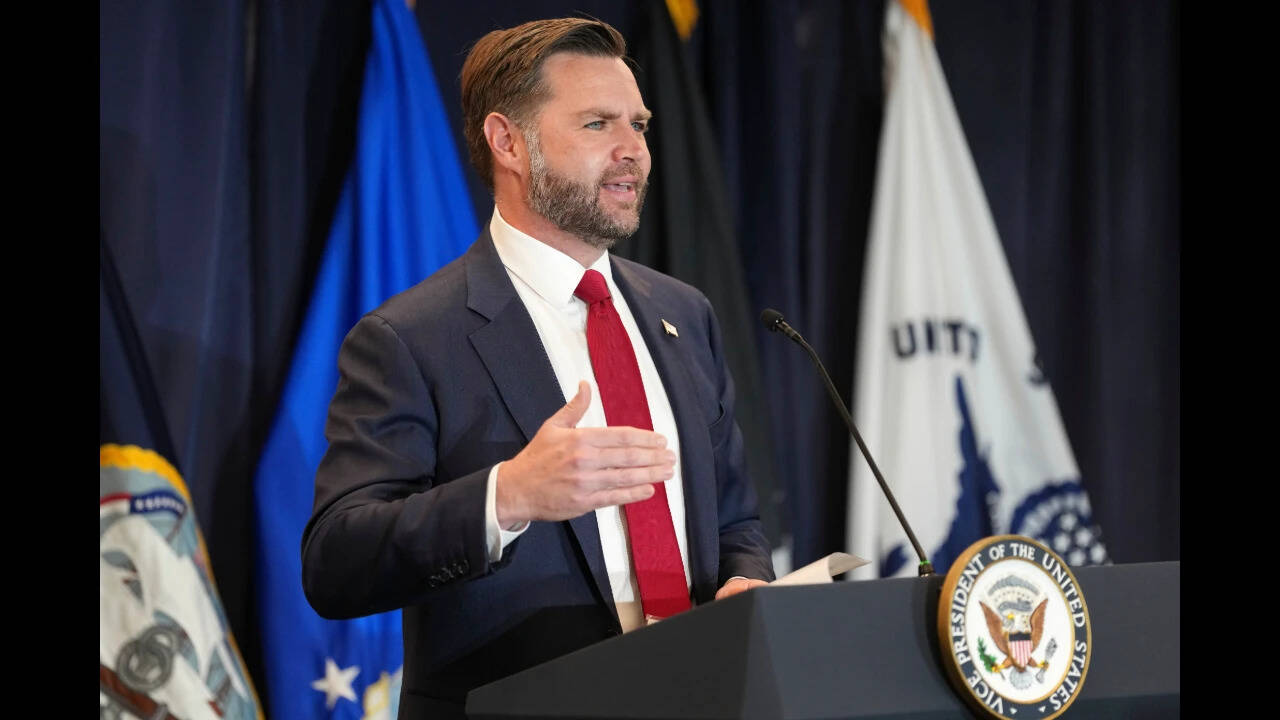
Political reporters nearly broke their keyboards. For roughly ten seconds, it sounded like the Vice President of the United States was publicly airing dirty laundry about a massive crisis inside the White House.
He wasn't.
When JD Vance casually mentioned "a lot of infighting," constant "reshuffling," and serious questions about whether "Number 2 has what it takes to lead," political junkies immediately assumed he was talking about the Trump administration or his own role as Vice President. Then came the punchline. He clarified he was actually talking about the Ohio State Buckeyes.
It was a classic political fake-out. And honestly, it worked brilliantly.
The Anatomy of a Viral Political Fake-Out
Timing is everything in politics and comedy. Vance delivered the line knowing full well how Washington press corps brains are wired. Reporters live for palace intrigue. Mention "infighting" and "reshuffling" near a microphone in D.C., and every journalist in the room leans forward expecting a major scoop.
Vance leaned right into that expectation. By framing college football drama using the exact vocabulary of a fractured political administration, he baited the room before pulling the rug out.
Look at the specific phrases he used to set the trap:
- Infighting and reshuffling — Words usually reserved for chaotic cabinet shakeups or competing factions in the West Wing.
- Number 2 leading — An obvious nod to the Vice Presidency itself, designed to make listeners think he was questioning his own standing or succession prospects.
The pause before the reveal is what sold it. If you rush a misdirection joke, nobody falls for it. Vance let the tension hang in the air just long enough for the collective blood pressure in the room to spike before pivoting to Columbus, Ohio.
Why Ohio State Football Always Hits Close to Home for Vance
To understand why this specific joke landed so well, you have to remember where Vance comes from. He isn't just a politician using a generic sports reference to sound relatable. He's a born-and-raised Ohioan from Middletown and a proud alumnus of The Ohio State University.
In Ohio, Buckeyes football isn't just a weekend pastime. It's practically a state religion.
When Ohio State struggles, suffers a tough loss, or undergoes coaching changes, the local sports talk radio sounds indistinguishable from cable news during an election night meltdown. Fans dissect every play call. Donors demand accountability. Quarterback controversies—literally debates over whether the backup, or "Number 2," has what it takes to lead the offense—dominate every dinner table conversation from Cincinnati to Cleveland.
Vance knows this culture inside and out. Having attended Ohio State before heading to Yale Law School, he has spent decades watching Buckeye Nation overreact to every depth chart adjustment. Applying that frantic football energy to Washington politics wasn't a stretch for him at all. It was second nature.
The History of Politicians Using Sports Misdirection
Vance is far from the first politician to weaponize sports humor to disarm a tense room. In fact, self-deprecating or misdirection jokes about athletics have been a staple of American political communication for decades.
Ronald Reagan was famous for this exact style of delivery. He frequently used deadpan setups that sounded like grim policy pronouncements before pivoting to a punchline about his age or his Hollywood days. Barack Obama regularly roasted his own March Madness brackets or poked fun at Chicago sports teams to break the ice during heavy press conferences.
Why do politicians keep going back to this well? Because it accomplishes three things instantly:
- It humanizes the speaker. Stepping out of stiff, scripted talking points proves there's an actual person behind the podium.
- It controls the narrative. By mocking the media's obsession with internal drama, a politician makes the actual rumors look silly by association.
- It connects with regular voters. Millions of Americans tune out when politicians argue about legislative procedure, but almost everyone understands sports frustration.
When a leader makes a room full of cynical reporters laugh at themselves for falling for a bait-and-switch, that's a win. Every single time.
What Makes a Good Washington Bait-and-Switch Work
Most politicians fail miserably when they try to be funny. You've seen it happen. They read a stiff joke off a teleprompter written by a 24-year-old staffer, force an awkward chuckle, and wait for applause that never comes.
Vance's Buckeyes moment avoided that trap because it relied on shared context rather than a canned one-liner.
First, the premise has to be believable. If there were zero rumors about staff turnover or political friction in Washington, nobody would have flinched at the setup. Because political media is always hunting for signs of division, the bait was irresistible.
Second, the pivot has to be authentic to the speaker. If a politician from New York or California tried to pull an Ohio State depth-chart joke, it would feel forced and calculated. Coming from a guy who genuinely bleeds scarlet and gray, the pivot felt completely natural.
Third, you have to commit to the bit. Vance didn't wink at the camera or smirk halfway through the sentence. He delivered the setup with complete seriousness, treating a college football quarterback debate with the gravity of a national security briefing.
How Media Clips Shape Modern Political Messaging
In 2026, nobody watches full thirty-minute speeches anymore. Political communication lives and dies in fifteen-second vertical video clips shared across social media feeds.
A moment like Vance's Ohio State fake-out is pure gold for the modern attention economy. Think about how a clip like that travels online. Someone scrolling through their feed sees a headline about JD Vance admitting to "infighting" and "reshuffling." They click expecting a political bombshell. Instead, they get a clever sports joke.
That surprise factor drives massive engagement. Supporters share it to show off their guy's quick wit and relatability. Sports fans share it because it's funny seeing college football drama invade the national political stage. Even critics end up boosting the clip while dissecting the underlying political subtext.
If you're paying attention to how modern political campaigns and administrations communicate, watch for these kinds of deliberate viral hooks. A well-timed misdirection doesn't just get a laugh in the room—it buys millions of organic impressions online without spending a dime on ad placement. Next time a politician starts a sentence sounding like they're about to confess to a massive scandal, wait ten seconds before hitting publish. They might just be talking about their favorite football team.