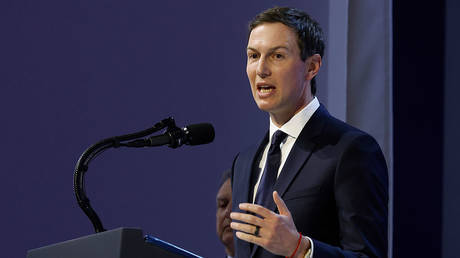
Jared Kushner has officially confirmed an upcoming diplomatic visit to Moscow immediately following a series of closed-door trilateral talks. The announcement signals a sharp pivot toward backchannel statecraft, bypassing traditional State Department protocols to address stalled geopolitical negotiations directly with the Kremlin. For observers who have tracked foreign policy over the last decade, this move is less of a surprise and more of a return to form. It relies on personal rapport and transactional deal-making rather than institutional diplomacy.
The mechanics of this visit reveal a calculated gamble. By stepping into Moscow right after trilateral discussions—sessions designed to align regional stakeholders before engaging Russia—Kushner is attempting to present a unified front while keeping the lines of communication informal. Traditional diplomats view this approach with deep skepticism. They argue that stripping away the bureaucratic layers of the foreign service removes essential guardrails, leaving complex territorial and economic disputes vulnerable to misinterpretation. Yet proponents counter that conventional channels have produced nothing but gridlock for years. When formal treaties stall, someone has to walk into the room without a fifty-page briefing book and ask what it actually takes to close the deal.
The Architecture of Backchannel Diplomacy
To understand why Moscow is back on the itinerary, you have to look at how backchannel diplomacy actually functions when formal alliances are strained. In standard international relations, every word is vetted by legal teams, intelligence analysts, and regional desks before a diplomat ever boards a plane. That process prevents catastrophic mistakes, but it also calcifies positions. Neither side can float a trial balloon without it immediately leaking to the press and triggering domestic political backlash.
Backchannels operate in the dark precisely so that both sides can test ideas without committing to them on paper. Historically, this has been a staple of high-stakes crises. During the Cuban Missile Crisis, informal intermediaries passed messages between Washington and Moscow outside the official embassy cables. In the early 1970s, Henry Kissinger used secret trips to Beijing to lay the groundwork for Richard Nixon's historic visit, completely sidelining the Secretary of State in the process.
Kushner's model draws heavily from the private sector rather than Cold War history. In real estate and private equity, you do not negotiate through mid-level functionaries; you find the single decision-maker who holds the pen and you sit across from them. Applying that logic to Moscow assumes that Russian foreign policy is purely centralized and transactional. That assumption holds water up to a point, given the concentration of power in the Kremlin, yet it often overlooks the deep institutional paranoia and historical grievances that drive Russian strategic thinking. You cannot simply buy out a centuries-old security doctrine with an infrastructure package or a trade concession.
What Happened in the Trilateral Room
The timing of the Moscow confirmation is everything. It did not happen in a vacuum; it followed directly on the heels of trilateral talks meant to establish baseline conditions before engaging Russian leadership. While the specific transcripts of those meetings remain tightly guarded, the structural purpose of a trilateral summit in this context is clear. Before approaching an adversary or a difficult negotiating partner, you must first lock down your allies or regional intermediaries so they cannot be played against one another.
Consider the dynamics at play. Russia excels at bilateral fracturing—peeling off individual nations with targeted energy deals, security guarantees, or economic pressure until a coalition collapses from within. By convening a trilateral format first, the participating parties attempt to build a firewall against that exact tactic. The message to Moscow is straightforward. There are no separate side deals to be cut with individual neighbors, and any concessions granted to the Kremlin will require collective sign-off.
Confirming the Moscow trip immediately after these talks suggests that the trilateral partners reached at least a provisional consensus on what they are willing to offer and where their hard red lines sit. Without that alignment, flying to Russia would be a fool's errand, handing the Kremlin immediate leverage to exploit divisions among its counterparts. However, consensus on paper is fragile. The moment Kushner lands in Moscow, Russian negotiators will inevitably test the seams of that trilateral agreement, offering tailored incentives designed to make one partner question the loyalty of the others.
The Kremlin's Strategic Calculus
Why would Moscow agree to host this visit now? Russian leadership rarely grants high-profile audiences unless they see a clear tactical advantage. Accepting a meeting with an envoy operating outside standard diplomatic channels serves several immediate purposes for the Kremlin.
First, it validates Russia's preferred mode of global governance. Moscow has long chafed against the post-Cold War international order, viewing multilateral institutions and Western diplomatic norms as instruments designed to contain Russian influence. Engaging in personalized, high-level deal-making allows the Kremlin to bypass those institutions entirely, reinforcing a worldview where a handful of powerful actors decide the fate of smaller nations behind closed doors.
Second, the visit buys time and creates optical leverage. Simply having a prominent American figure arrive in Moscow signals to domestic audiences and non-Western allies that Russia is neither isolated nor desperate. State media will frame the visit not as a desperate plea for peace or economic relief, but as Western envoys coming to the Kremlin to acknowledge geopolitical reality. Even if the talks yield zero tangible breakthroughs, the imagery alone is an asset.
Third, Moscow is keenly aware of the internal friction this creates within Western diplomatic circles. Every time an informal envoy steps onto the tarmac in Russia, career diplomats in Washington, Brussels, and London are forced to spend valuable bandwidth answering questions about who actually speaks for the administration. That ambiguity slows down coordinated policy responses and sows doubt among allies who rely on predictable, institutional communication.
The Risks of Transactional Statecraft
There is a fundamental flaw in treating geopolitics like a distressed asset acquisition. In business, once a contract is signed and the funds clear, the transaction is largely complete. In international security, signing an agreement is merely the starting gun for a new phase of enforcement, verification, and friction.
When negotiations rely heavily on personal relationships and informal understandings, the resulting agreements often suffer from constructive ambiguity—language intentionally left vague so both sides can claim victory at home. While vague language helps get ink on the page, it becomes a ticking time bomb during implementation. Without rigorous technical annexes, verification mechanisms, and clear penalties for non-compliance, an informal deal unravels the moment political winds shift.
Let us look at a hypothetical example to illustrate how this breaks down in practice. Imagine two parties agree to a localized ceasefire and an economic zone in a contested border region based on a handshake and a two-page memorandum. Within three weeks, a dispute arises over who controls customs inspections at a single rail crossing. Because the deal bypassed technical experts who would have drafted a hundred-page protocol on border logistics, there is no dispute resolution mechanism. One side sends in armed guards to secure the crossing; the other side views it as a breach of the agreement and resumes hostilities. The personal rapport between the lead negotiators cannot stop bullets at a rail yard when the underlying operational details were never hammered out.
Furthermore, sidelining institutional experts strips the negotiating team of institutional memory. Veteran diplomats know which phrasing Russian negotiators used in 2008, 2014, or 2022 to create legal loopholes. An outsider walking into the Kremlin without that granular historical knowledge risks agreeing to terms that sound reasonable in English but carry entirely different legal weight in Russian diplomatic practice.
The Domestic and International Blowback
Reaction to the confirmed Moscow trip splits sharply along predictable fault lines, yet the underlying anxieties are worth examining closely. Among traditional foreign policy hands, the primary concern is accountability. Career ambassadors and cabinet officials are subject to congressional oversight, public hearings, and strict record-keeping laws. Informal envoys operate in a gray zone where notes are scarce, readouts are selective, and public accountability is minimal.
Allied capitals are watching with a mix of quiet apprehension and pragmatic resignation. European leaders, in particular, have grown weary of being blindsided by sudden shifts in diplomatic posture. When major overtures to Moscow are orchestrated outside established transatlantic frameworks, it forces European governments to scramble to assess whether their own security interests are being traded away as bargaining chips. Even if they are briefed after the fact, being excluded from the room diminishes their standing.
At the same time, it would be dishonest to ignore why this unorthodox approach maintains political traction. Years of orthodox diplomacy have failed to resolve entrenched conflicts, prevent territorial encroachments, or curb escalating defense expenditures. Voters and taxpayers across Western democracies are exhausted by endless stalemates that consume billions of dollars with no clear exit strategy. To a frustrated public, sending a known deal-maker directly to Moscow looks like decisive action compared to the glacial pace of multilateral summits and non-binding resolutions.
What Actually Matters Once the Doors Close
Strip away the media circus, the partisan commentary, and the diplomatic hand-wringing, and the success or failure of this Moscow visit comes down to three concrete variables.
- Mandate Clarity: Does Kushner carry explicit, non-negotiable authority to commit to binding terms, or is this strictly a fact-finding mission? If the Kremlin senses that the envoy has to run every minor concession back through a divided bureaucracy for approval, Russian negotiators will stall and extract preliminary giveaways without offering anything substantial in return.
- Verification Mechanisms: Any framework discussed in Moscow will be judged not by its headline promises, but by its enforcement architecture. If discussions touch upon troop movements, sanctions relief, or energy corridors, there must be independent, eyes-on-the-ground verification built into the core of the proposal. Promises of good faith in Eastern Europe have a shelf life measured in hours.
- Allied Buy-In: Whatever emerges from the Kremlin must survive contact with the partners from the preceding trilateral talks. If Moscow demands concessions that violate the core security guarantees of neighboring states, the entire initiative will collapse before the plane even refuels for the flight home.
The geopolitical landscape does not reward neat narratives or easy victories. Walking into Moscow after a round of trilateral diplomacy is a high-wire act without a net, pitting the speed and flexibility of personal deal-making against the relentless, unforgiving machinery of Russian statecraft. History rarely judges backchannel diplomats by the boldness of their travel itineraries; it judges them strictly by whether the deals they strike hold up when the cameras are turned off and the hard work of enforcement begins.