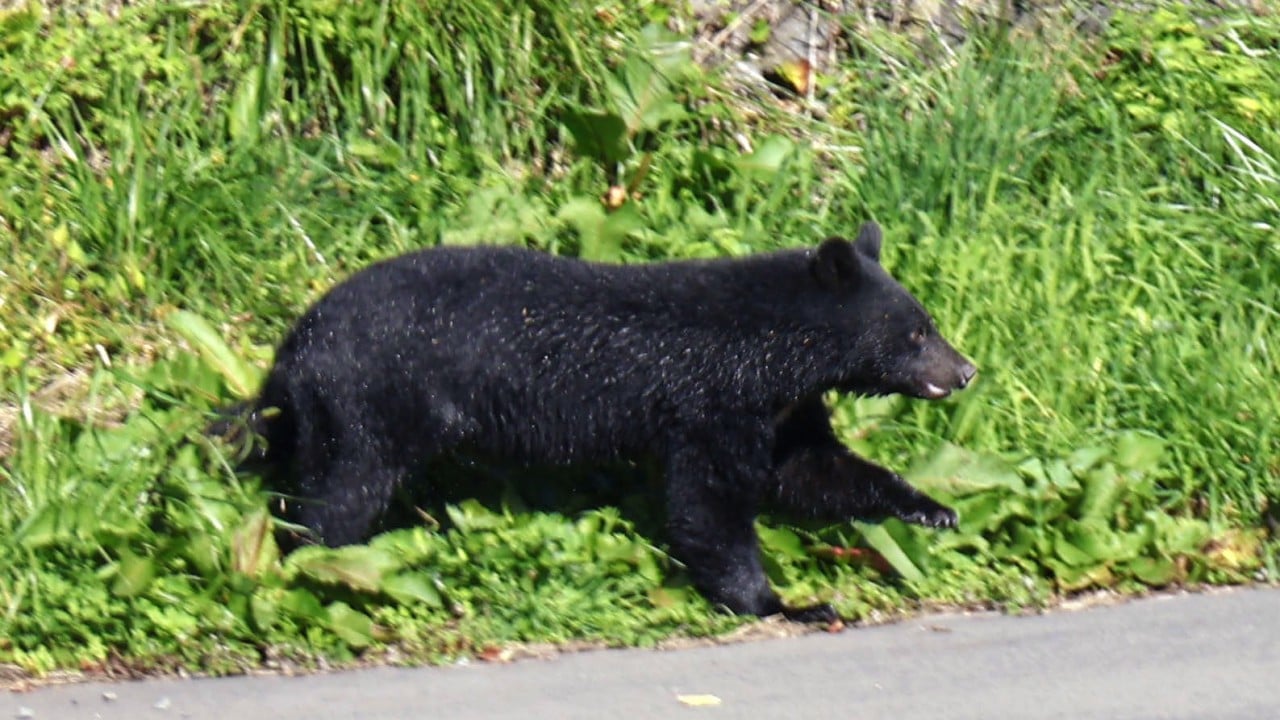
The headlines out of Honshu read like a low-budget creature feature. Record complaints. Panicked town halls. Elderly residents barricading their doors against an invading horde of bloodthirsty beasts. The lazy consensus from every major wire service is that rural Japan has become a combat zone, overrun by a sudden explosion of aggressive wildlife due to climate shifts, abandoned farmlands, and a population explosion among apex predators.
It is a neat, comforting narrative. It turns a complex ecological reality into a simple story of good versus evil, humans versus monsters.
It is also complete garbage.
Japan is not facing an unprecedented biological invasion. Japan is paying the price for a half-century of demographic abandonment, coupled with an urbanized populace that forgot how to live within three miles of an ecosystem. When you empty the countryside of working humans, let agricultural buffers revert to thickets, and then act shocked when the local fauna reclaims its historical real estate, you do not have an emergency. You have basic biology operating exactly as written.
The Myth of the Unprovoked Attack
Let us strip away the hysteria and look at the actual data compiled by wildlife management agencies across prefectures like Akita, Iwate, and Hokkaido. The mainstream press loves to frame bear encounters as unprovoked ambushes on innocent bystanders.
I have spent enough time tracking wildlife policy rollouts in mountain municipalities to know the script. A farmer leaves fallen persimmons rotting in an unharvested orchard directly behind a residential kitchen window. A bear, running on a biological imperative to pack on calories before hibernation, walks into an all-you-can-eat buffet twenty feet from a back door. The bear gets labeled as a rogue menace.
This is not a predator problem. This is a trash management and land-use failure.
For decades, rural depopulation has hollowed out the buffer zones between deep forests and human settlements. Rice paddies that used to be actively tended by young, active farming families are now overgrown with brush. Secondary forests have crept right up to the edges of concrete seawalls and asphalt parking lots. We built sprawling suburban-style infrastructure in the middle of traditional wildlife corridors and expected the animals to respect invisible property lines.
When a bear wanders down an abandoned logging road that now serves as a shortcut to a convenience store, we act like it breached a medieval fortress.
The Policy of Panic
The standard municipal response to rising complaint numbers is as predictable as it is useless: mass culling quotas and reactionary town meetings where bureaucrats hand out little brass bear bells that sound like wind chimes.
Imagine a scenario where a city council facing a spike in car accidents responded not by fixing the dangerous intersection or enforcing speed limits, but by declaring a war on automobiles and shooting every sedan in sight. That is roughly the equivalent of current wildlife management strategies in many Japanese mountain towns.
Culling panic-stricken foraging bears does nothing to address the structural vacuum that drew them there in the first place. You can shoot a hundred bears this autumn, but if the persimmons are still rotting on the trees, the beechnut crop in the high mountains failed due to late frosts, and the town dumpsters are unlocked, new bears will fill that ecological vacancy by next Tuesday.
The Japanese Ministry of the Environment has tried to inject science into the conversation, pointing out that mast failures—poor yields of acorns and beechnuts—force Asian black bears down-slope in search of calories. Yet, local governments routinely cave to public pressure driven by sensationalized media coverage. They prioritize immediate political theater over long-term prevention.
Rewilding the Mind
Living alongside wildlife used to be an accepted baseline for rural communities. Traditional Japanese mountain culture understood the boundaries of the forest. People knew that autumn meant heightened vigilance, that clearing underbrush around property lines was non-negotiable, and that food waste was an open invitation.
Urban migration broke that generational transmission of knowledge. Millions of people grew up in concrete monoliths in Tokyo, Osaka, and Nagoya, completely insulated from the rhythms of the natural world. When those same people retire to a quiet countryside home in Nagano, they bring urban expectations with them. They want manicured lawns, absolute safety, and zero friction from nature.
Nature does not care about your real estate investment or your morning walk.
To fix this, Japan needs to stop treating wildlife management as a branch of pest control and start treating it as landscape engineering.
First, agricultural abandonment must be met with active buffer zone clearing. If a farm or orchard is no longer productive, the land cannot simply be abandoned to grow waist-high brush that provides cover for moving animals. It must be stripped back to create clear lines of sight and uninhabitable zones between forests and homes.
Second, waste management needs to enter the twenty-first century. Bear-proof industrial bins should be mandatory across every municipality in bear country. Leaving garbage bags out on curb edges in flimsy plastic nets is an explicit invitation to urban-adapted wildlife.
Third, we need to dismantle the hysterical framing that every sighting equals a crisis. A bear passing through a riverbed or a distant hillside is not a threat; it is a normal component of a functioning ecosystem. Educating residents on the difference between a transient animal and a habituated nuisance animal is the only way to lower the panic temperature.
Stop blaming the bear for walking where you built your house. Clear the brush, lock the trash, and relearn how to share the mountain.