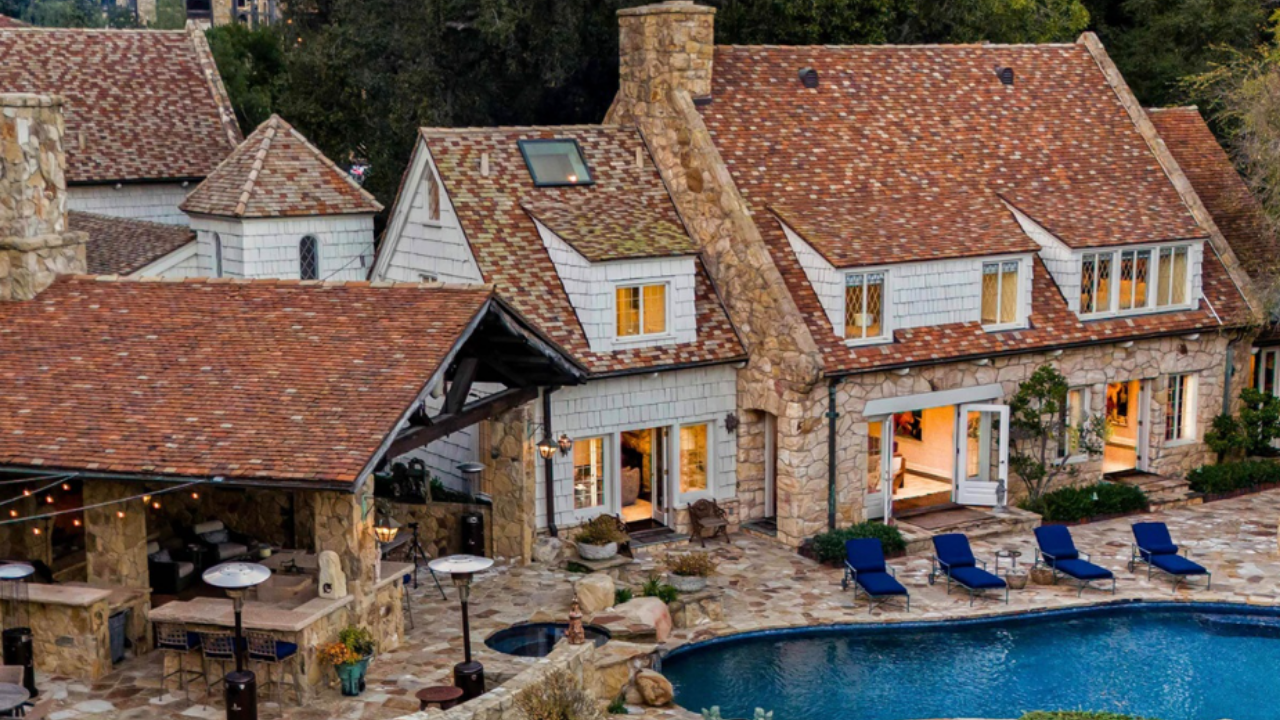
Luxury real estate in Southern California operates on a quiet, carefully guarded fiction. Sellers price properties not on immediate market value, but on legacy, ego, and the hope that an international buyer with more capital than sense will sweep in. That fiction collided with economic gravity when the historic Beverly Hills estate once owned by Hollywood legend James Cagney slashed its asking price by a staggering eight point five million dollars.
Dropping from thirty-eight point five million to twenty-nine million nine hundred ninety-five thousand dollars is not a routine market adjustment. It is a distress signal from the ultra-prime segment. For months, the property sat on the ledger as a monument to Golden Age prestige. Now, it stands as a case study in pricing disconnects across Los Angeles.
The Weight of Provenance versus Modern Demands
A celebrity pedigree carries immense cultural currency, yet architectural history rarely translates dollar-for-dollar into square footage value. The estate, nestled in an exclusive pocket of Beverly Hills, channels the classic Spanish Colonial Revival aesthetic that defined early Hollywood wealth. Cagney purchased the retreat in the nineteen thirties, seeking sanctuary from the relentless studio machinery that made him a box office titan through gangster classics like Public Enemy and White Heat.
Yet modern billionaires shopping in the thirty-million-dollar bracket rarely view history as an asset without friction. Architectural purists value preserved hand-painted tiles, original hardwood, and vintage wrought iron. Contemporary tech founders and venture capitalists, who increasingly dominate the coastal luxury pool, frequently demand sprawling open-plan layouts, smart-home automation infrastructures, and massive subterranean vehicle storage. Historic compounds often require millions in invisible infrastructure updates just to meet twenty-first-century lifestyle expectations.
When a listing lingers on the market for extended periods, it accumulates a psychological penalty. High-net-worth buyers track inventory with institutional precision. A major markdown signals to the brokerage community that the seller’s camp has abandoned rigid optimism and finally acknowledged comparable recent sales data.
Liquidity Realities in Ultra-Prime Los Angeles
The broader Southern California luxury market is experiencing a profound recalibration. Federal Reserve interest rate policies over recent years transformed the cost of capital, even for cash-heavy buyers who park liquidity across diverse portfolios. When borrowing costs remain elevated, high-end buyers evaluate opportunity costs differently. They can secure guaranteed yields in fixed-income instruments without assuming the staggering property tax burdens, maintenance overhead, and insurance complexities associated with sprawling legacy estates in Los Angeles County.
Furthermore, regional tax dynamics have altered buyer behavior. Measures like the city's transfer tax on high-value property transactions—often referred to locally as the mansion tax—add millions in transactional friction to deals exceeding specific thresholds. A buyer purchasing a property above twenty million dollars faces immediate, heavy taxation before a single renovation contractor steps foot on the grounds. This environment punishes unrealistic initial pricing strategies. Sellers who test the ceiling find themselves forced to chase the market downward.
Dissecting the Competing Pressures on Trophy Assets
Trophy properties operate in a vacuum distinct from standard residential housing. Supply is strictly finite, but demand is notoriously fickle. When a seller lists a historic compound at a peak figure, they are betting against market trends.
- The Stigma of the Price Reduction: In ultra-prime circles, luxury listings that drop in price often lose immediate momentum. Buyers wonder what structural, title, or zoning complications prompted the adjustment.
- Carrying Costs: Maintaining a multi-acre historic estate with mature landscaping, specialized security systems, and vintage preservation requirements bleeds hundreds of thousands of dollars annually, eroding the seller's resolve over time.
- Alternative Inventory: Wealthy buyers comparing Beverly Hills inventory to newer architectural masterpieces in Bel-Air or Holmby Hills frequently opt for turnkey modernity over historic restoration projects.
The Cagney estate correction reflects a broader truth about luxury assets. Nostalgia has a ceiling. No matter how deep a property's ties to Hollywood history run, the current purchasing cohort demands alignment between historical charm and functional luxury.
As the property re-enters the market at its leaner valuation, it tests whether a sub-thirty-million-dollar price tag is enough to spark a bidding war among collectors. The outcome will signal whether historical provenance can still command a premium in a market driven by ruthless financial pragmatism.