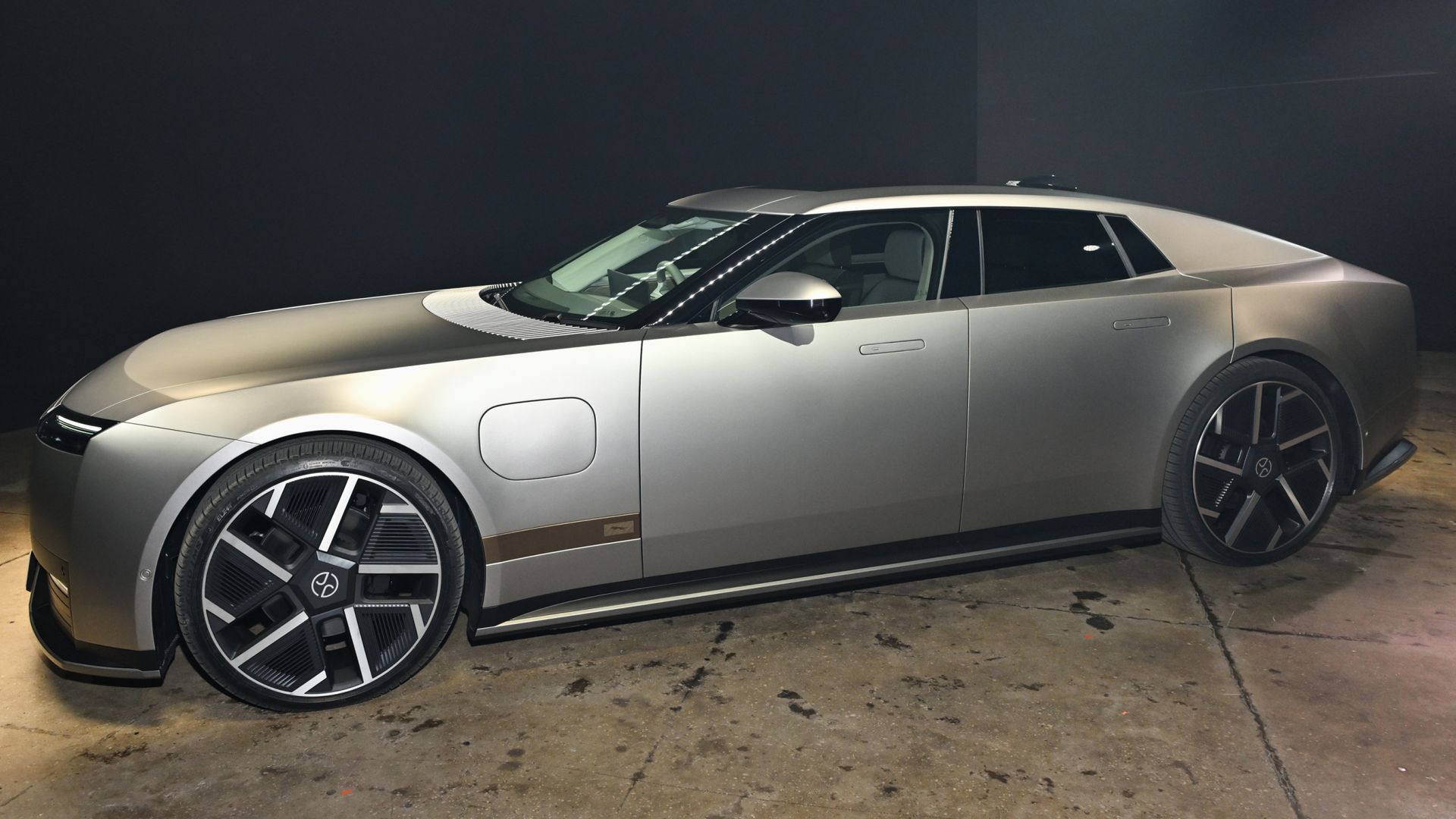
Jaguar is betting its entire future on a total reinvention. The British marque, long defined by the aristocratic roar of supercharged V8s and the classic low-slung elegance of the E-Type, is wiping the slate clean. Enter the Type 01 electric vehicle, a radical concept previewing the brand's pivot toward ultra-luxury, high-priced battery-electric mobility aimed squarely at affluent young buyers in North America.
Yet, as the marketing teams in Detroit and New York script narratives of modern American success, reality in the brand's home market tells a dramatically different story. The Type 01 and its production derivatives stretch past five meters in length, making them practically incompatible with the tight Victorian streets, multi-story concrete multi-storeys, and narrow residential avenues of London, Manchester, and Edinburgh. This geographic mismatch exposes an existential identity crisis for a company trying to abandon its domestic baseline to chase a lucrative, sprawling overseas audience. If you enjoyed this post, you might want to look at: this related article.
For decades, Jaguar operated under a comfortable presumption. Build sporty sedans and grand tourers that appealed to old money at home while retaining enough exotic British charm to attract export markets. That model broke down. Profit margins eroded, volumes slipped into irrelevance against German juggernauts like BMW and Mercedes-Benz, and the brand found itself trapped in an awkward middle ground between volume production and true exclusivity.
The decision to wipe the lineup and start over from a blank sheet of paper was not born of arrogance. It was born of desperation. Under the stewardship of parent company Tata Motors, executives decided that trying to out-volume the competition was a losing battle. Instead, Jaguar chose to retreat upward, abandoning the executive sedan segment entirely to target a rarefied tier of buyers who spend six figures on lifestyle statements rather than mere transportation. For another angle on this event, refer to the latest update from Financial Times.
The Type 01 serves as the physical manifestation of this pivot. Its design language rejects retro pastiche entirely. Gone are the wire-wheel nods and walnut dashes. In their place stands an imposing, monolithic silhouette characterized by vast expanses of uninterrupted sheet metal, a cab-forward stance, and proportions that owe more to high-fashion sculpture than traditional automotive packaging.
This dramatic stylistic shift targets a demographic that values aesthetic disruption above all else. Young, self-made wealth in Los Angeles, Miami, and Austin does not care about heritage racing victories at Le Mans. They care about presence. They want an object that stops traffic outside a gallery opening or a tech incubator. By styling the Type 01 for these sun-drenched, wide-laned metropolitan hubs, Jaguar designers created a machine optimized for the American visual landscape.
The Urban Infrastructure Chasm
Roads tell the truth that glossy brochures hide. Walk down a residential street in West London or traverse the congested districts of Bristol, and you will see the physical constraints that shape British motoring. Generations of urban planning predating the internal combustion engine mean that many parking spaces measure barely 4.8 meters in length, while tight city center multi-storeys feature turning radii designed for Austin Minis.
When a vehicle exceeds five meters—a common dimension for modern luxury flagships engineered around massive under-floor battery packs—simple daily tasks transform into high-stakes geometry.
[Traditional UK Parking Space: ~4.8m] ───> [Type 01 EV Length: 5.1m+]
Result: Rear overhang blocks narrow alleyways; front nose protrudes into active traffic lanes.
This physical mismatch creates a profound marketing paradox. How does a historic British brand command loyalty at home when its flagship product literally cannot fit into the infrastructure of the nation's capital?
Industry insiders suggest that Jaguar has quietly accepted collateral damage in its domestic market. The calculation in Coventry is cold and numerical. The total volume of luxury car sales in the United Kingdom cannot compete with the sheer purchasing power and spatial generosity of coastal American suburbs, Chinese mega-cities, and Gulf metropolises. By engineering the Type 01 for global export markets, Jaguar is effectively writing off the traditional British buyer who wants a manageable luxury cruiser.
This strategy marks a stark departure from how heritage brands usually operate. Ferrari remains deeply tied to the narrow, winding roads of Maranello and Rome, ensuring its sports cars retain a functional connection to Italian geography. Porsche builds machines that can handle the tight switchbacks of the Alps while dominating international markets. Jaguar, conversely, is severing its umbilical cord.
Inside the EV Architecture and Battery Realities
Behind the dramatic exterior styling lies a dedicated electric architecture engineered specifically to accommodate substantial energy density. Luxury buyers demand range, and range requires physical space for massive battery packs.
To achieve a targeted real-world cruising range that satisfies American buyers accustomed to vast interstate transit, engineers had to stretch the wheelbase. This dimensional imperative drives the vehicle's expansive length. Every extra kilowatt-hour of capacity adds mass and volume, pushing the cabin outward and extending the overhangs.
Thermal management systems add further bulk. High-output charging architecture capable of replenishing hundreds of miles of range in minutes requires heavy-duty inverter hardware, extensive liquid-cooling loops, and robust structural crash-absorption zones.
| Metric | Traditional Luxury Sedan | Type 01 EV Paradigm |
|---|---|---|
| Primary Target Market | Global / Domestic Hybrid | North American Urban Centers |
| Length Profile | Compact to Mid-Size (4.7m - 4.9m) | Ultra-Extended (5.0m+) |
| Design Philosophy | Evolutionary Heritage | Radical Visual Disruption |
| Packaging Priority | Cabin Ergonomics | Road Presence & Battery Volume |
The engineering team faced a brutal compromise. They could have shortened the wheelbase to accommodate European parking constraints, but doing so would have sacrificed the dramatic, low-slung proportions essential for the American luxury segment, or compromised battery capacity to the point of uncompetitiveness. They chose American proportions.
The Financial Gamble of Rebranding Upward
Resetting brand equity is one of the most expensive and perilous gambles in corporate history. When Jaguar halted production of its existing models to clear the decks for this new era, it voluntarily walked away from billions of dollars in recurring revenue. Dealerships were left with depleted inventory, showroom floors stood empty for months, and long-standing customers felt alienated by a corporate voice that suddenly sounded unfamiliar.
The financial pressure on Tata Motors to make this gamble pay off is immense. Developing a bespoke electric vehicle platform from scratch requires staggering capital expenditure, running into the billions before a single customer takes delivery.
To justify these development costs, the production version of the Type 01 must command transaction prices well north of one hundred thousand dollars. At this price point, Jaguar is no longer competing with Audi and Volvo. It is trespassing on territory guarded by Bentley, Porsche, and high-end trims of Tesla and Lucid.
These incumbent brands carry formidable advantages. Porsche commands near-religious devotion among driving enthusiasts with the Taycan. Tesla owns the technological narrative and charging infrastructure mindshare in North America. Bentley offers hand-crafted bespoke interior craftsmanship that a newly rebooted Jaguar cannot match overnight.
To succeed, the Type 01 cannot merely be an interesting design exercise. It must deliver an interior environment and dynamic execution that makes well-heeled buyers forget decades of reliability stereotypes and shifting corporate ownership.
The Cultural Disconnect at Home
There is a distinct emotional cost to abandoning one's roots. For generations, Jaguar was woven into the fabric of British industrial pride. It was the car of Prime Ministers, rock stars, and weekend racers.
By pivoting entirely toward an ultra-exclusive, export-heavy model lineup tailored for foreign aesthetics, the company risks alienating the cultural guardians of the brand. Enthusiasts in the UK view the growing physical footprint of the Type 01 not as a bold step forward, but as an abandonment of British sensibility.
Yet, sentiment does not balance corporate ledger sheets. The board room looks at sales charts showing declining European sedan demand alongside surging wealth creation across North America and Asia, and the decision becomes mathematically clear. Sentiment does not fund research and development. Cash flow does.
The Type 01 stands as a monument to transition. It represents a brand standing on the edge of a cliff, deliberately cutting the rope to its past in the hope that new wings will hold it aloft before it hits the ground.
Whether American buyers embrace this bold British reinterpretation of luxury remains the definitive automotive question of the decade. What is already certain, however, is that the narrow streets of the UK will watch the experiment unfold from the sidelines, struggling to find a place to park it.