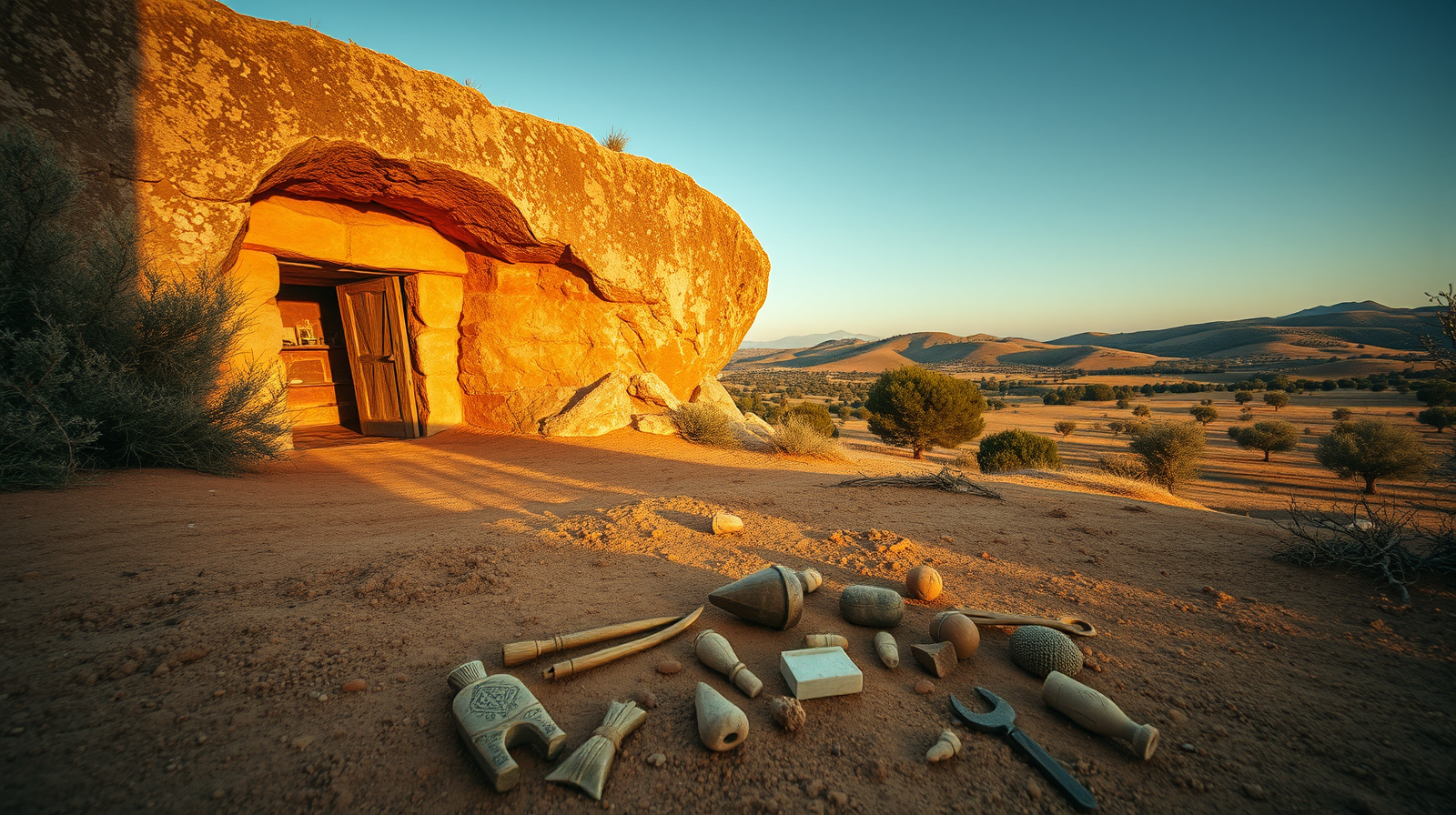
Archaeologists digging into the rocky terrain of Sardinia recently made a startling find: three previously unknown 5,000-year-old subterranean chambers. Local folklore calls these structures domus de janas, or "houses of the fairies," but don't let the whimsical nickname fool you. These aren't mythical hideaways for magical beings. They're intricate stone-cut tombs built by pre-Nuragic Mediterranean communities who held incredibly complex views on life, death, and spatial design.
The discovery happened at the Sant'Andrea Priu archaeological complex near Bonorva, bringing the total count of tombs on this single hillside up to 20. For years, researchers thought they'd mapped every square inch of the site. They were wrong. By spotting subtle anomalies in the soil packed between two previously excavated chambers, field teams dug down and found a trio of pristine underground rooms that sat undisturbed for millennia.
The find comes right on the heels of UNESCO granting World Heritage status to the domus de janas network across Sardinia. But beyond the headline appeal, this discovery raises a much bigger question: why did ancient humans go to such extraordinary lengths to make burial vaults look like cozy, living-room spaces?
Carving Homes for the Dead in Solid Stone
To understand these structures, you have to throw out the idea of a standard dark cave. The people of the Late Neolithic Ozieri culture didn't just dump bodies into natural crevices. They took stone picks and spent months—maybe years—carving out elaborate replicas of their actual wooden homes directly into solid bedrock.
Walk inside a fully preserved domus de janas and you'll see details that feel strikingly domestic. Ceilings feature carved ridges mimicking wooden roof beams. Walls show sculpted door frames, support columns, and raised stone hearths where ceremonial fires once burned. Many chambers were coated in red ochre, a pigment symbolizing blood, rebirth, and vitality.
Ancient Sardinians clearly believed death wasn't a sudden end. It was simply a move to a new address. By surrounding the deceased with familiar architecture, tools, and domestic comforts, they aimed to ease the soul's transition into the next life.
The three newly opened tombs—dubbed Tombs XVIII, XIX, and XX by the Italian Ministry of Culture—show distinct variations in scale and purpose:
- Tomb XVIII: Built with a distinct entryway corridor leading into a central rectangular room, complete with a sculpted hearth and adjacent side chambers. Excavators found obsidian blades, a loom spindle, and stone pickaxes inside.
- Tomb XIX: A smaller, more secluded layout featuring a modest outer pavilion and a rounded inner cell. It held delicate miniature pottery pieces tucked into corners.
- Tomb XX: The most impressive of the set. It spans seven interconnected chambers, preserves original painted decorative bands, and held over 30 distinct ceramic artifacts.
Why Roman Vases Were Found in Prehistoric Chambers
One of the biggest surprises came out of Tomb XX. Alongside 5,000-year-old structural features, researchers uncovered a hoard of Roman-era oil lamps, plates, and drinking jugs.
That might sound like a chronological mix-up, but it actually highlights how these sacred spaces were used over centuries. The Romans didn't destroy or loot these prehistoric tombs when they controlled Sardinia thousands of years later. Instead, they reused them. They recognized the site as sacred ground and continued placing their own dead—and offerings—inside the same rock walls.
Later on, Early Christian communities did the exact same thing, painting icons over prehistoric carvings. The domus de janas weren't just abandoned ruins; they remained active cultural touchstones for thousands of years.
What Fake Doors Tell Us About Ancient Beliefs
If you look closely at the interior walls of many Sardinian fairy houses, you'll spot one of their most fascinating features: carved "false doors".
These are shallow stone frames carved straight into the solid wall, leading absolutely nowhere. Long before Egyptian pharaohs used false doors in their pyramids to represent passages to the underworld, prehistoric Sardinians were already carving them into rock faces.
Above these mock entryways, ancient carvers often sculpted horns representing bulls—symbols of strength and fertility tied to early Mediterranean religious rites. The false door stood as a symbolic boundary: a doorway that the living could look at, but only the spirit of the deceased could pass through.
The Real Value of the Bonorva Dig
Popular media loves to lean into the "fairy house" myth because it sounds like a fantasy novel. But the real value of these discoveries is grounded in hard evidence.
This excavation shows that even heavily studied archaeological sites still hold major secrets. It proves that ancient Mediterranean cultures possessed advanced engineering skills, deep artistic traditions, and complex spiritual views long before classic antiquity.
If you want to see these sites for yourself, you don't have to wait long. The Italian Ministry of Culture is completing structural restoration on the three new tombs at Sant'Andrea Priu before opening them to public tours.
If you plan a trip to central Sardinia, skip the overcrowded coastal resorts for a day. Head inland to the hills of Bonorva, walk into the rock-cut necropolises, and look at the carved wooden-style ceiling beams. You'll get a rare, direct look at how human beings processed life, memory, and death 50 centuries ago.