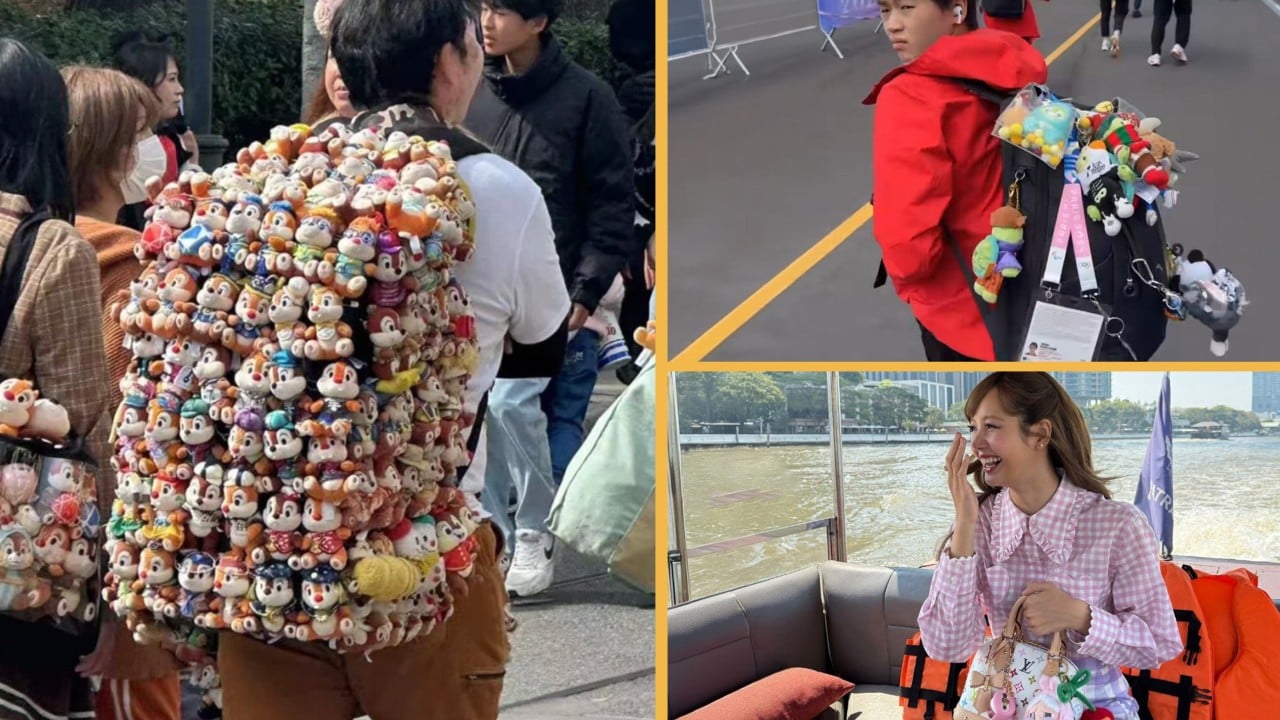
The mainstream media is obsessed with calling the "painful bag" or itabag a quirky subculture of self-expression. They see a plastic-windowed backpack stuffed with $500 worth of acrylic keychains and think, "How cute, these Gen Z kids are finding their tribe."
They are wrong.
The itabag isn't a fashion statement. It is a high-stakes psychological defense mechanism and a brutal display of consumerist dominance. If you think these bags are about "love" for a fictional character, you’ve been blinded by the glitter. This is about the commodification of loneliness and the desperate need for social armor in an increasingly fragmented urban China.
The Luxury of Suffering
The term itabag comes from the Japanese itai, meaning "painful." The common narrative says it's painful to look at because it’s gaudy. That’s the surface-level take for tourists.
In reality, the pain is literal and financial. I have seen collectors in Shanghai spend three months' rent on a single "rare" badge of a 2D husbando just to complete a symmetrical grid. They carry five to ten pounds of PVC and metal on their shoulders for twelve hours at a convention.
This isn't a hobby. It’s penance.
By centering their lives around the "painful bag," youth in Tier-1 cities are performing a ritual of devotion that mimics religious asceticism. In a world where career prospects are stalling and the "996" work culture has drained the soul out of the 20-something demographic, the itabag provides a tangible, controllable form of suffering. You can’t control your boss, but you can control how much your shoulders ache for your favorite character.
The Myth of the "Affordable" Subculture
Journalists love to frame this as an accessible alternative to high fashion. They claim that while a Birkin is out of reach, a decorated canvas bag is the "people’s luxury."
This is a mathematical lie.
Let’s break down the "market cap" of a high-tier itabag:
- The Base: A high-quality window bag from a brand like WEGO or a boutique Chinese designer ($40–$80).
- The "An" (Badges): A standard 75mm badge retails for $5. But you don’t buy one. You buy 30, 50, or 80 of the same design to create a "wall."
- The Scarcity Tax: On platforms like Xianyu (Alibaba’s second-hand market), "limited edition" badges from collaboration cafes in Tokyo or Shanghai flip for 10x to 50x their original price.
I’ve tracked "painful bags" that carry a secondary market value of over $5,000. That is more than the price of a mid-range Louis Vuitton Speedy. The difference? The Louis Vuitton bag has a resale floor. The itabag is a hyper-volatile asset class. The moment the "fandom" moves to a new mobile game, your $5,000 investment becomes a pile of worthless tin plate.
This is "flex culture" disguised as "fandom." It is a way for youth to signal wealth and "time-wealth" (the ability to queue for hours or hunt online) without looking like a traditional tuhao (nouveau riche).
Privacy is the New Punk Rock
The most counter-intuitive aspect of the itabag is its role as a barrier. We live in an era of total digital transparency. In China, your face is your ID, your wallet, and your social credit.
The itabag functions as a physical firewall.
When a fan walks through a subway station with a bag covered in the face of a specific character, they are broadcasting a very specific "Keep Out" sign to the general public while sending a "Handshake" signal to their specific tribe. It is a way to be visible and invisible at the same time.
You aren't looking at the person; you are looking at the character. The person behind the bag is shielded by a literal wall of plastic and metal. It is the ultimate anti-social social tool. It says, "I only want to talk to people who know the exact drop rate of this specific 2024 anniversary charm."
The "An-Kyo" Economy: Engineering Obsession
The industry isn't "supporting" this subculture; it is farming it.
Companies like miHoYo (Genshin Impact) and various Japanese IP holders have mastered the art of the "Blind Box" badge. They know that to make a "perfect" itabag, a fan needs dozens of the same item. By making those items random pulls, they force a secondary market explosion.
The Anatomy of a Forced Trend:
- The Symmetrical Requirement: Community standards dictate that a "good" bag must be symmetrical. This forces the purchase of even numbers of items.
- The "Base" Protection: Specially designed "binders" and "shams" are sold just to mount the badges.
- The Temporal Window: Merch is released in "waves" that never return, creating a permanent state of FOMO (Fear Of Missing Out).
This isn't a grassroots movement of kids liking cartoons. It is a sophisticated retail trap designed to exploit the "completionist" psychology of gamers. If you think this is about art, ask yourself why the most "respected" bags are the ones with 50 identical mass-produced circles rather than a creative mix of unique fan art.
The Loneliness Dividend
Why now? Why China?
The "painful bag" trend is the "Loneliness Dividend" in action. As marriage rates plummet and the "lying flat" (tang ping) philosophy takes hold, the emotional budget that used to go toward a partner or a family is being redirected into 2D characters.
A character doesn't judge you. A character doesn't ask when you're getting a promotion. A character is a safe investment for your affection. The itabag is the physical shrine to that safe investment. It is a portable altar.
The "pain" of the bag is a distraction from the "pain" of a hyper-competitive, isolating reality. It is easier to worry about a scratched badge cover than a stagnant career.
Stop Calling It "Self-Expression"
If everyone in a subculture is following the same rigid rules of symmetry, using the same five brands of bags, and buying the same mass-produced badges, is it really self-expression?
No. It’s a uniform.
The itabag is the corporate suit of the underground. It has its own strict hierarchy, its own "dress code," and its own elite gatekeepers. If your bag isn't "dense" enough, you’re ignored. If your badges are "bootleg," you’re exiled.
It is a replacement for the social structures that Gen Z has lost. It provides a sense of "order" in a chaotic world. But let’s be honest about what it is: a high-priced, plastic-coated cope.
The next time you see a "painful bag" on the streets of Chengdu or Beijing, don't marvel at the creativity. Look at the weight on the wearer's shoulders. That isn't just metal and plastic. It’s the weight of a generation trying to buy its way out of isolation, one $15 badge at a time.
Build a bigger bag if you want. Spend another thousand dollars on "limited" pins. Just don't pretend you're doing it for the "art." You're doing it because in a world that feels increasingly hollow, a five-pound bag of plastic is the only thing that feels heavy enough to be real.