President Donald Trump has shattered decades of diplomatic inertia by announcing a ten-day ceasefire between Israel and Lebanon, set to pave the way for a high-profile summit at the White House. This move, finalized on April 16, 2026, aims to transition from a month of brutal cross-border warfare into a permanent settlement. While the initial pause is a reprieve for civilians, the underlying mechanics involve a high-stakes demand for the Lebanese state to disarm Hezbollah and reclaim its monopoly on force—a feat that has eluded every administration in Beirut for over forty years.
The Trump Doctrine in the Levant
The administration is not looking for a mere cooling-off period. By invoking the 1983 peace attempts, the President is signaling a return to a style of diplomacy that prioritizes direct, leader-to-leader pressure over the slow-moving multilateralism of the past. The White House has confirmed that Israeli Prime Minister Benjamin Netanyahu and Lebanese President Joseph Aoun are expected to meet in Washington within the next week or two.
This is not a suggestion. It is a calculated deployment of American leverage. The carrot offered to Beirut includes massive reconstruction assistance and economic recovery packages, desperately needed by a nation whose infrastructure has been pulverized. The stick remains the continuation of Israeli military operations, which have already carved a "security zone" nearly ten kilometers deep into southern Lebanon.
The Hezbollah Stumbling Block
For a lasting peace to take root, the Lebanese Armed Forces (LAF) must do what they have historically been unable or unwilling to do: sideline Hezbollah. The ceasefire text, released by the State Department, explicitly states that the only forces authorized to bear arms in Lebanon will be state security agencies.
- State Sovereignty: Beirut has committed to preventing "non-state armed groups" from launching attacks.
- Security Zones: Israel retains the right to self-defense, a clause that essentially allows for pre-emptive strikes if Hezbollah preparations are detected.
- Border Demarcation: The talks will aim to settle the long-disputed international land boundary.
Skeptics point to the internal fractures within Lebanon. While President Aoun and Prime Minister Nawaf Salam have welcomed the U.S. mediation, Hezbollah representatives in parliament, such as Ali Fayyad, have already voiced opposition, calling for an unconditional Israeli withdrawal before any political discussion begins.
The Pakistan Connection and the Iran Factor
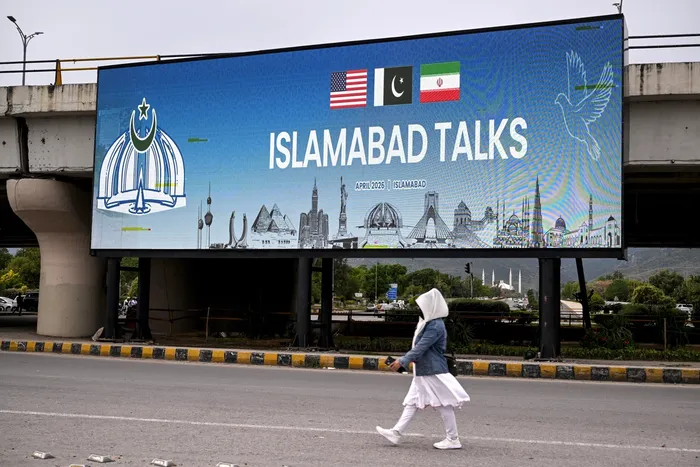
The diplomatic theater extends beyond Washington. While the U.S. brokered this specific ten-day window, a parallel track has been running through Islamabad. Pakistan’s army chief, Field Marshal Asim Munir, has been shuttling between Tehran and Washington to narrow the gaps.
This regional involvement suggests that any deal between Jerusalem and Beirut is inextricably linked to the broader "Iran war" that has disrupted global oil markets throughout early 2026. If the U.S. and Iran can maintain their own fragile "in-principle agreement" to talk, the pressure on Hezbollah to stand down may increase. If those talks fail, Lebanon remains the most likely fuse for a wider explosion.
Reality on the Ground
The ceasefire began at 5:00 p.m. EST on April 16, but the transition from active combat to a diplomatic summit is fraught with peril. In the final hours before the truce, Israeli drone strikes intensified, and the death toll in Lebanon surpassed 2,100. Thousands of displaced families are now looking toward the southern border, wondering if they can return to homes that sit within the new Israeli-defined security perimeter.
Netanyahu’s objectives are clear. He seeks the "dismantling of Hezbollah" and a "peace through strength." This is a departure from the "land for peace" formulas of the 1990s. The current framework demands security first, with political recognition and economic aid as the subsequent reward.
A Precarious Ten Days
Vice President JD Vance and Secretary of State Marco Rubio have been tasked with the granular details of the negotiations. Their challenge is to move from a temporary cessation of hostilities to a formal treaty in less than 240 hours. In the world of Middle Eastern diplomacy, ten days is a heartbeat.
The White House is betting that the sheer exhaustion of the Lebanese state, combined with the military pressure exerted by Israel, has created a window of opportunity that didn't exist in 1983 or 1993. Whether President Aoun can deliver on the promise to curb Hezbollah’s influence remains the central question. Without that, the White House summit will be little more than a photo opportunity on the path to an even larger conflict.
The coming days will determine if this is the start of a "new Middle East" or simply a brief pause while both sides reload. The world is watching the clock.