In the coastal towns of Denmark, the wind doesn't just blow; it carries the weight of the North Atlantic. It is a persistent, salt-crusted reminder that while the country is small, its reach extends into the deep, frozen blue of the Arctic. For decades, the relationship between Copenhagen and Greenland was a quiet, bureaucratic arrangement, the kind of geopolitical marriage that rarely made the front pages of international broadsheets.
Then came the offer.
It arrived not as a diplomatic feeler, but as a blunt, transactional proposition from the White House. The United States wanted to buy Greenland. To the rest of the world, it sounded like a relic of 19th-century expansionism or a bizarre real estate whim. But for the people of Denmark and the inhabitants of the world’s largest island, the suggestion acted as a chemical catalyst. It turned a stable solution into a volatile one.
The fallout from that moment didn't just bruise egos; it fractured a government.
The Mink and the Mandate
To understand why Danes found themselves at the polling stations earlier than anyone expected, you have to look past the icy shores of the Arctic and into the cramped, utilitarian sheds of Denmark’s mink farms. It seems like a leap. It isn't.
In 2020, amidst the height of global panic, a mutated strain of COVID-19 was discovered in Denmark's massive mink population. Prime Minister Mette Frederiksen, acting on what she believed was an urgent necessity to protect public health, ordered a nationwide cull. Millions of animals were killed. An entire industry, one that families had built over generations, vanished in a matter of weeks.
But the order was illegal.
The government lacked the legislative authority to demand the slaughter of healthy animals. This wasn't just a procedural hiccup. For a nation that prides itself on the "Rule of Law" as a sacred secular religion, this was a profound betrayal. The "Mink Crisis" became a shorthand for executive overreach. It created a pressure cooker of resentment that the Greenland sovereignty issue had already pre-heated.
Consider a hypothetical farmer named Jens. Jens doesn't care much for the high-altitude maneuvering of NATO or the mineral rights of the Thule Air Base. But Jens cares that his livelihood was erased by a frantic text message from a ministry. When the Social Liberals, a key ally of the government, threatened to topple the administration unless an election was called, they weren't just talking about mink. They were talking about the soul of Danish democracy.
A Giant in the Backyard
While Copenhagen grappled with its internal scandals, the shadow of Greenland loomed larger than ever. For the average Dane, Greenland is a place of mythic beauty and immense, haunting scale. It is part of the "Kingdom of Denmark," yet it is a world away.
When the US expressed its desire to "acquire" the territory, it forced a realization. Greenland was no longer just a distant, subsidized frozen expanse. It was the most valuable piece of real estate in the coming century. As the ice melts, the Northwest Passage opens. Beneath that ice lies a periodic table’s worth of rare earth minerals—the very materials required to build the batteries and wind turbines of a green future.
The election became a referendum on how a small nation handles a superpower’s appetite.
The stakes are invisible until they aren't. Imagine standing on the edge of the Ilulissat Icefjord. The silence is so heavy it feels physical. Then, a chunk of ice the size of a skyscraper calves into the water. That is the sound of the world changing. The Danish voters knew that whoever they sent to Christiansborg Palace would be the person negotiating the terms of that change with Washington.
The Quiet Power of the Ballot
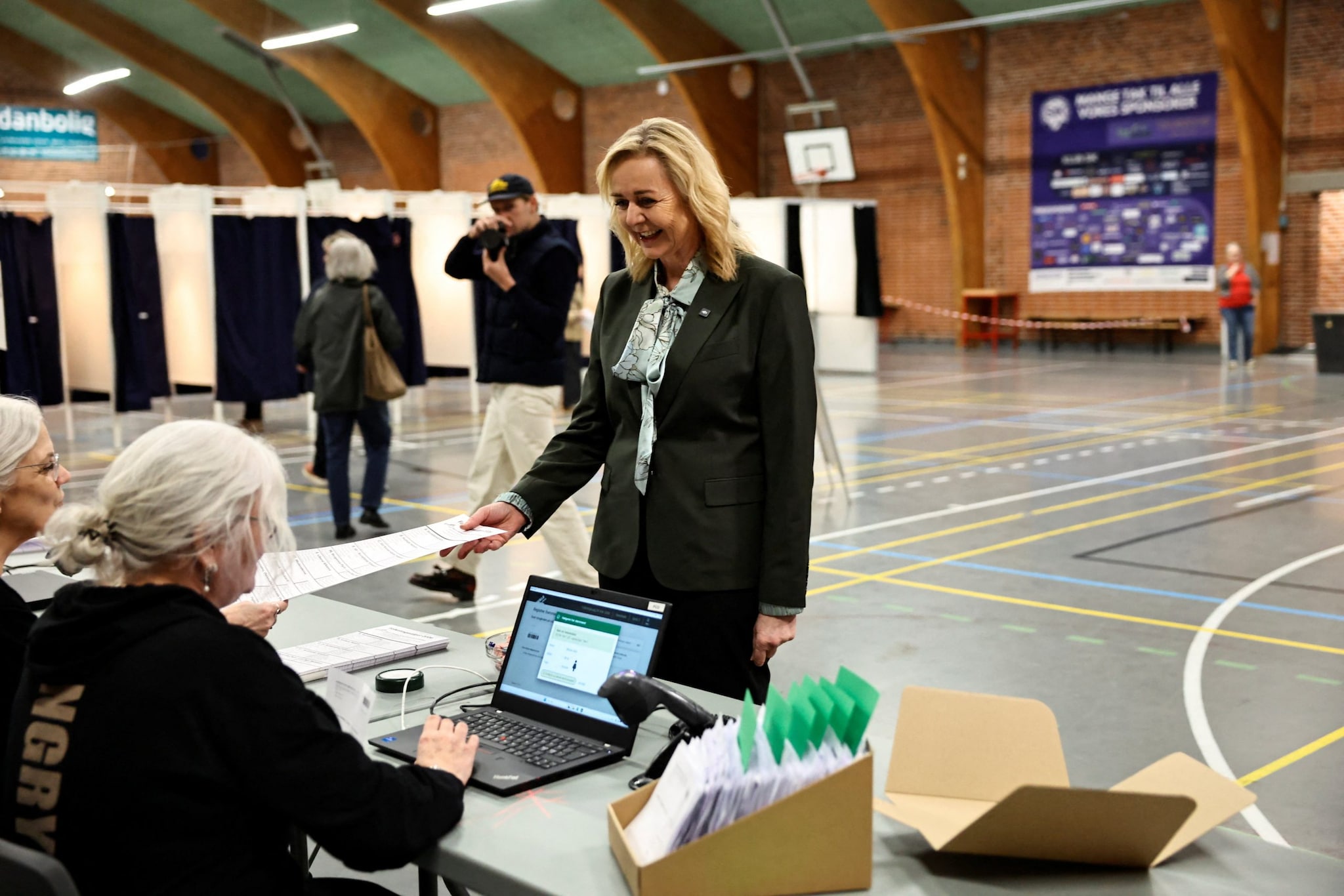
On election day, the atmosphere in Copenhagen was not one of fire and brimstone. It was a characteristically Nordic affair: orderly, rain-slicked, and intensely serious. People arrived on bicycles, leaning them against brick walls, shaking umbrellas before stepping into gymnasiums and community centers.
There is a specific kind of tension in a Danish election. It is the tension of a "consensus democracy." Because no single party ever wins an outright majority, the real drama happens in the days afterward, in the "Queen’s Round," where parties haggle over every line of a coalition agreement.
The voters were faced with a jagged choice. On one side was the incumbent, Mette Frederiksen, a leader who had proven she could be decisive but had also shown she could be dangerously impulsive. On the other was a fractured right-wing opposition, promising a return to traditional legalities but struggling to present a unified front.
The ghost of the Greenland purchase hung over the debates. It served as a reminder that Denmark cannot afford to be disorganized. When you share a border—even a maritime one—with the interests of the United States, Russia, and China, your internal house must be in order.
The Human Cost of Geopolitics
We often talk about elections in terms of percentages and "red blocks" versus "blue blocks." But the real story is found in the uncertainty of the people living through it.
In Nuuk, the capital of Greenland, the perspective is different. There, the election in Denmark is watched with a mixture of practiced detachment and acute interest. For many Greenlanders, the "US designs" weren't just a threat to Denmark; they were a potential opportunity for total independence. If Denmark couldn't protect Greenland's interests, perhaps someone else could.
This is the hidden cost of a diplomatic crisis. It creates a crisis of identity.
The Danish voter, standing in a booth in Aarhus or Odense, was carrying that weight. They were voting for a Prime Minister, yes. But they were also voting for a steward of the Arctic. They were voting for someone who could say "no" to a President without burning the bridge, and someone who could say "sorry" to a mink farmer while holding the country together.
The Result of the Rain
When the numbers finally flickered across the screens late into the night, the result was a "Red Block" victory by the narrowest of margins. A single seat.
It was a vindication for Frederiksen, but a humbled one. The message from the public was clear: We trust you to lead, but we do not trust you to rule alone. The era of the "strongman" style, even in its mild Danish form, was rejected in favor of the traditional, grinding, exhausting work of collaboration.
The election didn't solve the "Greenland Question." That question is a century-long saga that is only just beginning. The US still looks north with longing. The ice still melts. The minerals still wait.
But for one night, the power didn't reside in a boardroom in New York or a bunker in Virginia. It resided in the hands of citizens in a small, windy kingdom who decided that their sovereignty—and the land they hold in trust for the world—is not for sale.
The wind continues to howl across the Jutland peninsula, whipping the red and white flag against the grey sky. It is a cold wind, but it is theirs.