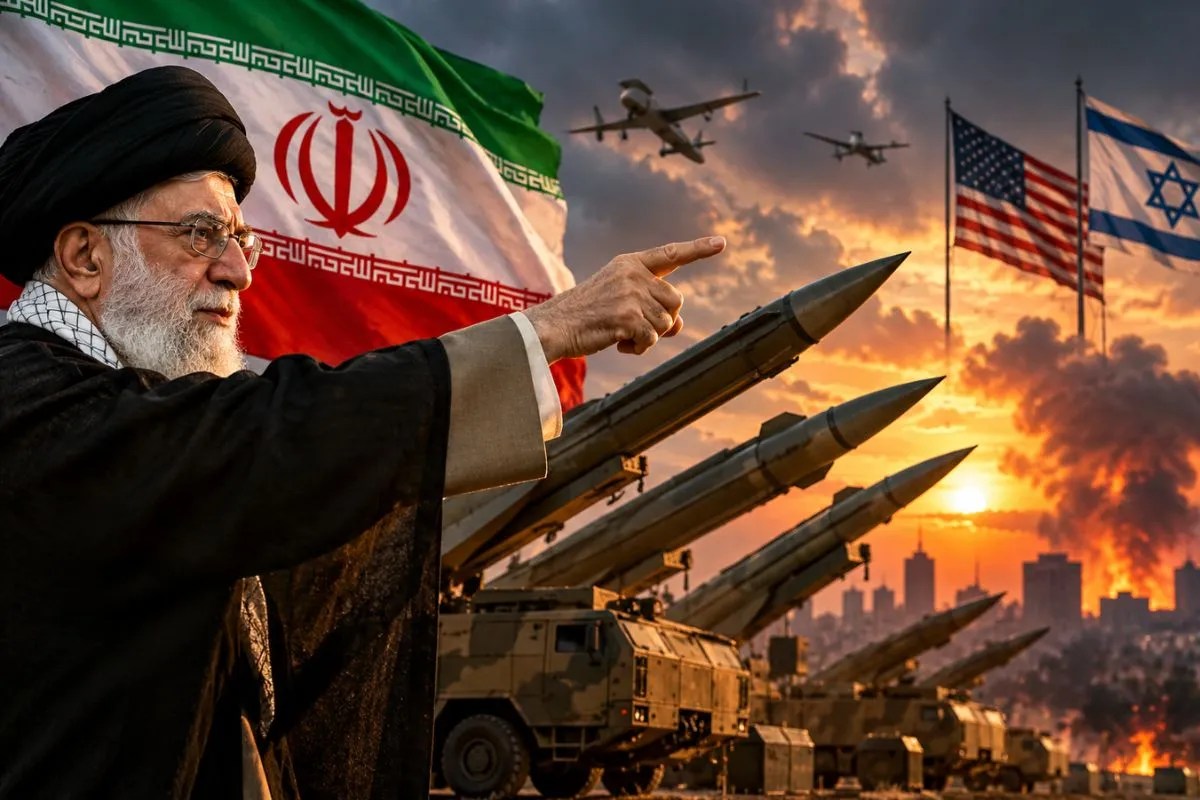
Geopolitical posturing often sounds like empty noise until a single phrase shifts the entire calculation. When senior Iranian military figures recently dropped the line about having multiple surprises ready for their enemies, Washington and Tel Aviv didn't just blink. They adjusted their threat matrices overnight. You can dismiss diplomatic threats as standard regional bluster, but ignoring operational curveballs in modern warfare gets armies killed.
Regional tensions have reached a boiling point where standard deterrence models are breaking down. Traditional proxy conflicts are morphing into direct standoffs, forcing intelligence agencies to rethink what Tehran's technological and tactical capabilities actually look like behind closed doors.
The Reality Behind the Rhetoric
Military warnings from the Islamic Republic rarely happen in a vacuum. When commanders talk about hidden capabilities, they're usually signaling advancements in asymmetrical warfare domains where conventional superpowers hold the initial advantage. Look at the proliferation of loitering munitions, underground missile cities carved deep into mountain ranges, and heavily upgraded naval drone swarms operating in the Persian Gulf.
Western defense analysts spent years mapping conventional ballistic missile stockpiles while Tehran quietly shifted capital toward electronic warfare and distributed command structures. That shift makes traditional missile defense shields look less like impenetrable domes and more like leaky roofs during a monsoon.
Israel's Iron Dome and Arrow systems perform exceptionally well against massed rocket barrages. But a surprise rarely looks like what you practiced defending against. If naval asymmetric tactics or cyber-physical sabotage hit critical infrastructure simultaneously with high-volume projectile strikes, the friction of war multiplies instantly.
Why Washington and Tel Aviv Are Nervous
The Pentagon doesn't lose sleep over standard threats, but unpredictable variables terrify military planners. When an adversary hints at capabilities you haven't seen deployed on a live battlefield, worst-case planning takes over every briefing room.
Consider the Strait of Hormuz. A tiny fraction of global oil flows through this choke point, and Iran holds home-court advantage. If Tehran decides to deploy novel sea-mines, fast attack boats equipped with hyper-cavitation torpedoes, or uncrewed surface vessels packed with high explosives, the commercial shipping lanes shut down before the US Navy can even clear the area.
Economic fallout always follows military escalation. Energy markets react violently to the mere whisper of supply disruptions in the Middle East. Oil futures spike, shipping insurance rates triple, and global supply chains groan under the weight of rerouted cargo ships. That is the quiet lever Tehran pulls while everyone else stares at the sky waiting for missiles.
Changing the Rules of Engagement
Deterrence used to mean having a bigger stick than the other guy. Today, it means convincing your opponent that your unpredictable response will cost more than any tactical victory is worth. By leaning into ambiguity, Iranian strategists keep Western and Israeli intelligence guessing whether a new threat is psychological warfare or a tangible engineering breakthrough waiting for the green light.
You have to look past the translated headlines to understand the strategic utility of these warnings. They aren't meant for domestic consumption alone. They serve as a direct message to military planners in CENTCOM that a regional war won't look like a clean air campaign. It will be messy, protracted, and asymmetric in ways that neutralize high-tech advantages.
Watch how intelligence sharing accelerates between Washington and its regional partners over the coming months. Real operational adjustments happen behind closed doors long before any public statements hit the wire.
The threshold for miscalculation has never been lower. When both sides are convinced the other is bluffing, the margin for error disappears entirely.


