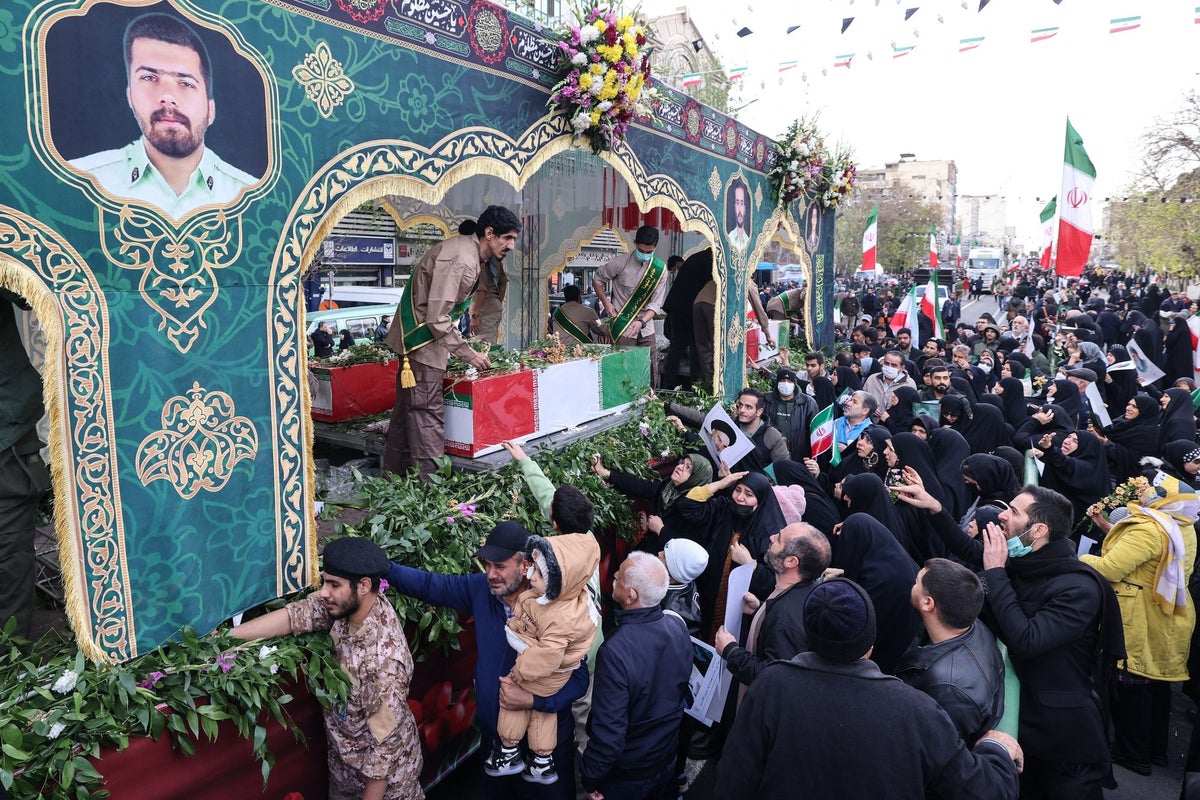
Months after the streets of Tehran and provincial cities quieted under the weight of security crackdowns, the machinery of state execution continues to grind forward. Iran has executed two more men linked to the anti-government demonstrations that shook the Islamic Republic, transforming courtrooms into instruments of deterrence long after the initial crowds dispersed. This ongoing use of capital punishment reveals a regime operating not from a position of restored stability, but from a persistent, deep-seated anxiety regarding public dissent.
The state apparatus relies on rapid trials, absent of genuine due process, to process those detained during the civil unrest. International monitors and human rights organizations have repeatedly flagged these proceedings as fundamentally flawed. Confessions extracted under coercion form the cornerstone of the prosecution's case, presented in state media as incontrovertible proof of guilt. The strategy is transparent. By framing protesters as national security threats rather than citizens exercising political grievance, the judiciary attempts to strip political dissent of its legitimacy.
The Anatomy of State Retaliation
Understanding why executions persist half a year after the height of the protests requires examining how the political hierarchy views civil disobedience. The demonstrations triggered by the death of Mahsa Amini posed a challenge to the foundational ideology of the state. When street-level mobilization subsided due to mass arrests and lethal force, the confrontation shifted into the judicial arena.
Execution serves a dual purpose for the ruling authorities. First, it attempts to permanently sever the leadership potential within youth movements by removing visible participants. Second, it broadcasts a deterrent message to millions who watched the unrest from their windows or participated quietly.
The Legal Framework of Accelerated Trials
The judicial process deployed against anti-government protesters moves at a pace that contrasts sharply with ordinary criminal dockets. Revolutionary Courts handle these cases behind closed doors. Defense attorneys frequently report being denied access to case files until days before hearings.
- Coerced Confessions: Broadcasted apologies and admissions of guilt frequently appear on state television prior to sentencing.
- Vague Charges: Vague legal definitions such as waging war against God or corruption on earth encompass everything from property damage to leadership roles.
- Limited Appeals: Supreme Court reviews often rubber-stamp lower court decisions without substantive legal re-examination.
These procedural shortcuts highlight an urgent institutional need for speed. The state cannot afford protracted public trials that might revive interest in the defendants' grievances. Swift verdicts ensure that the narrative remains tightly controlled by state media organs.
Economic Strain and Political Volatility
Protests in Iran rarely emerge in a vacuum. Beneath the immediate anger over social restrictions lies a chronic economic crisis. Inflation rates exceeding traditional metrics, currency devaluation, and unemployment create fertile ground for widespread anger. Sanctions compound these domestic policy failures, but government mismanagement remains a primary driver of public misery.
When citizens take to the streets, they are frequently reacting to the impossibility of basic survival as much as they are protesting ideological constraints. The state recognizes this convergence of economic desperation and political defiance. Executing individuals convicted of participating in anti-government protests is an attempt to address a structural political crisis through brute force.
The Limits of Deterrence
History suggests that capital punishment rarely succeeds in permanently suppressing systemic political opposition. When avenues for legal political expression close, dissent adapts rather than disappears. The ongoing executions harden public resentment, turning private grief into generational hostility toward the ruling class.
Families of those executed face intense pressure from security forces. Mourning rituals are restricted, cemeteries are monitored, and public expressions of sympathy are treated as fresh offenses. This heavy-handed approach creates a cycle of grief and defiance that complicates the government's long-term stabilization goals.
The strategy of intimidation relies on the assumption that fear is an infinite resource. Yet, prolonged exposure to economic deprivation and state repression often erodes the psychological barrier of fear. People with little left to lose view the threat of harsh penalties differently than those with secure stakes in the existing order.
As long as the root causes of civil unrest—economic stagnation, corruption, and the denial of fundamental civic freedoms—remain unaddressed, the judicial system will continue to function as a frontline defense for the state. Each execution underscores the widening gulf between a government desperate to preserve its authority and a populace increasingly convinced that the current structure cannot accommodate their future. The silence in the streets is deceptive. Beneath the surface, the grievances that fueled the protests persist, waiting for the next catalyst to bring them back into the open.


