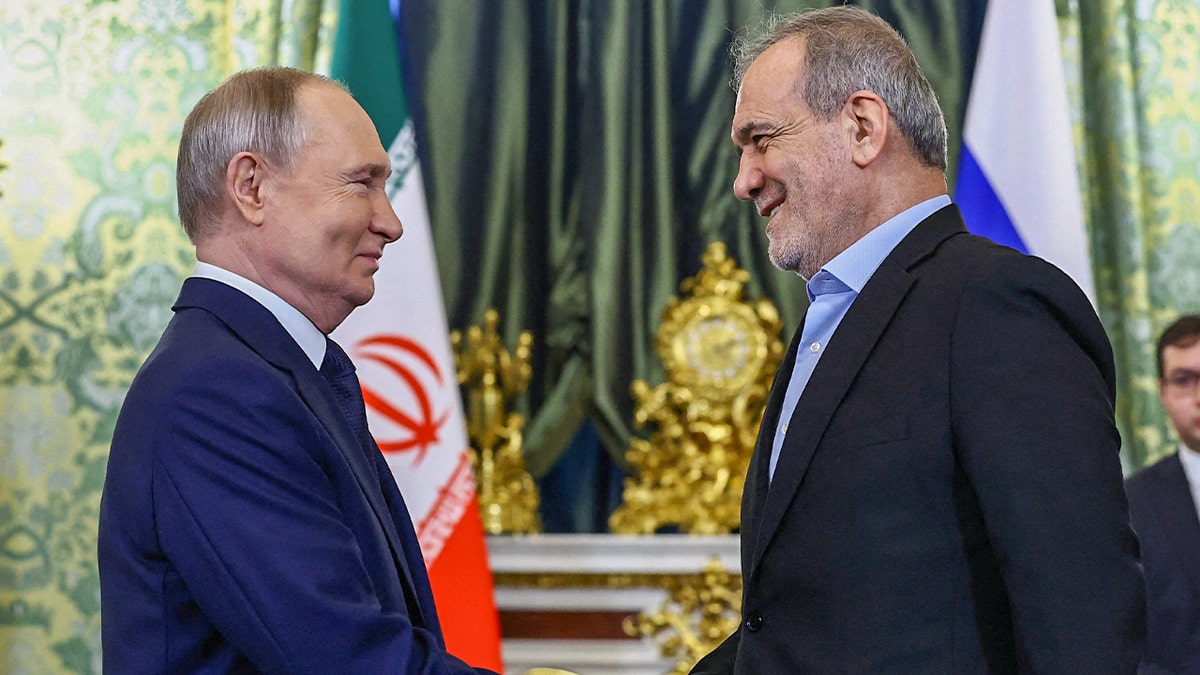
The Middle East isn't just "changing." It's being violently reshaped. While Western capitals watch the fallout of the recent 2026 air strikes on Iranian soil, Tehran’s top diplomat, Abbas Araghchi, just made a move that signals where the real power axis is shifting. After a whirlwind trip through Pakistan and Oman, Araghchi landed in St. Petersburg to sit down with Vladimir Putin.
His message wasn't subtle. He didn't just call Russia a friend; he defined the relationship as a "strategic partnership at the highest level" that has survived the ultimate stress test: a direct military conflict with the U.S. and Israel. Learn more on a related topic: this related article.
If you think this is just diplomatic fluff, you're missing the bigger picture. This isn't about two countries who happen to dislike the West. It's about a 20-year binding treaty that went into effect late last year, and it's currently being written in the language of real-time intelligence and satellite feeds.
The Treaty That Changed the Map
Last October, the Iranian-Russian Treaty on Comprehensive Strategic Partnership officially became law. We’re currently seeing exactly what those 47 articles look like when they're pulled off the page and put into practice. Additional reporting by TIME delves into related views on the subject.
While Putin publicly calls for a "peace settlement," his administration has been quietly providing the very tools that keep Tehran’s defenses viable. Reports from earlier this month indicate that Russian satellite data has been used to track U.S. naval movements in the Persian Gulf. This isn't a secret handshake anymore. It's an operational alliance.
Why St. Petersburg Matters Right Now
Araghchi didn't go to Russia just to say thanks. He went there because the region is in what he calls a "major flux." Let's look at why this specific meeting carries so much weight:
- The Leadership Handover: Putin confirmed receiving a message from Mojtaba Khamenei, who was recently named the new Supreme Leader. This confirms that despite the internal shifts in Tehran, the pro-Russia stance is being locked in for the next generation.
- The Failed Islamabad Talks: Araghchi blamed Washington's "excessive demands" for the collapse of recent peace negotiations. By pivoting immediately to Putin, he's telling the world that Iran doesn't need a U.S.-led deal to survive.
- The Strait of Hormuz Factor: Iran is currently pushing a proposal to reopen the Strait and end the naval blockade. They want Russia's backing to make sure any maritime security agreement is on Tehran's terms, not Washington's.
Moving Beyond Drones and Missiles
Most people focus on the hardware—the drones Iran sent to Ukraine or the S-400 systems Russia reportedly sent back. But the real "depth" Araghchi keeps talking about is in the digital and intelligence realms.
We've seen a massive spike in cooperation between Russian and Iranian hacker groups targeting critical infrastructure. It's hybrid warfare. They aren't just sharing bullets; they're sharing code and real-time battlefield data. Russia’s "strategic caution" shouldn't be mistaken for lack of involvement. They aren't putting boots on the ground because they don't have to. Providing Iran with the "eyes" to see U.S. warships is far more effective and less risky for Moscow.
The Pakistan Connection
It's interesting that Araghchi is using Islamabad as a home base for these talks. Pakistan has emerged as the primary "peace broker," facilitating the back-channel messages between Tehran and the Trump administration.
When Araghchi flies from St. Petersburg back to Islamabad, he's carrying Russia’s red lines with him. He's effectively telling the U.S. that any deal made with Iran is now, by extension, a deal that must satisfy Russian interests too. You can't separate the two anymore.
What This Means for Global Stability
The "axis" between Moscow and Tehran is no longer a theoretical threat. It’s a functioning security architecture. Putin’s comments about the "heroic" struggle of the Iranian people aren't just for the cameras—they're a signal to the Global South that Russia will stand by its allies even when the missiles start flying.
For anyone hoping for a quick return to the old status quo, Araghchi’s trip is a cold shower. The "depth" of this partnership means that Tehran isn't isolated. It's integrated.
If you're tracking the Middle East, stop looking for a local solution. The path to peace—or at least a ceasefire—now runs through Moscow as much as it does through Washington. The next step is watching how the U.S. responds to Iran’s "written messages" sent via Pakistan. If those messages include Russian-backed demands for maritime control, the "flux" in the region is only going to get more volatile.