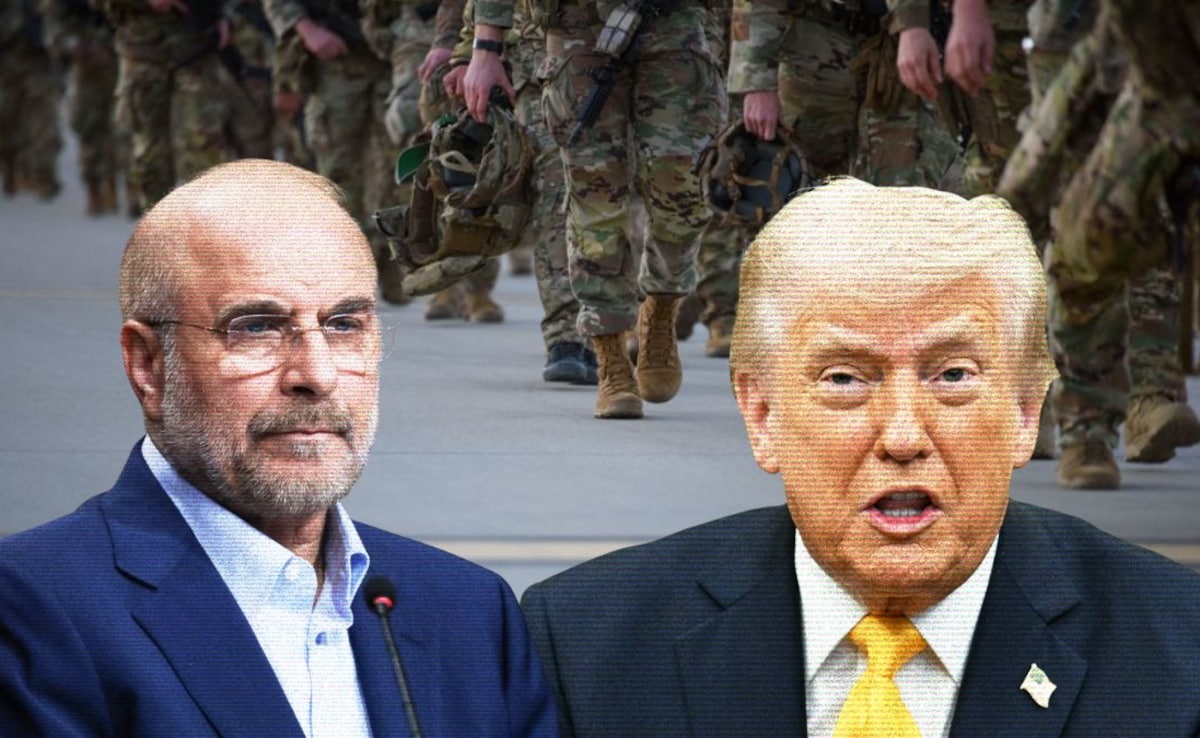
Geopolitics is often treated like a broken plumbing fixture. Pundits look at the friction between Washington and Tehran, see a leak, and assume someone just needs a bigger wrench. The latest chatter surrounding Mohammad Bagher Ghalibaf’s warning to Donald Trump—that "what generals broke, soldiers can’t fix"—is the peak of this analytical laziness. It assumes the goal of the Iranian state is "repair." It assumes the goal of the U.S. executive is "resolution."
Both are wrong.
The friction isn't a malfunction. It is the fuel for both regimes. If you want to understand why the Middle East remains a powderkeg, stop looking at the diplomacy and start looking at the internal mechanics of survival for those in power. Peace is a liability; managed tension is a goldmine.
The Myth of the "General's Mess"
The common narrative suggests that the 2020 strike on Qasem Soleimani broke a delicate clockwork of diplomacy that can't be reassembled. The "soldiers" (diplomats and mid-level bureaucrats) are supposedly powerless because the "generals" (the hawks) shattered the trust.
This is a middle-manager's view of history.
Trust was never the currency. Leverage was. By framing the conflict as a "broken" relationship, commentators ignore the reality that the Iranian leadership thrives on the "Satanic" image of the U.S. to justify domestic crackdowns. Conversely, the U.S. defense apparatus requires a sophisticated, high-tech adversary to justify $800 billion budgets.
The "breakage" wasn't a mistake. It was a pivot.
Why the "Soldiers" Won't Fix It
When Ghalibaf says soldiers can't fix what generals broke, he’s projecting a false sense of helplessness. In reality, the "soldiers"—the diplomatic corps—don't want to fix it. Why would they?
- Careerism in Chaos: In a stable environment, a diplomat is a bureaucrat. In a crisis, a diplomat is a hero. There is no incentive for a "Grand Bargain" because a Grand Bargain ends the relevance of the negotiator.
- Sunk Cost of Sanctions: We have built an entire global financial compliance industry around Iranian sanctions. Thousands of analysts, software platforms, and legal firms exist solely to navigate this specific friction. Erase the friction, and you erase a multi-billion dollar sector of the "security" economy.
- The Tech-Military Feedback Loop: We are seeing the rise of "asymmetric tech" in the region. Low-cost drones, cyber-warfare, and decentralized command structures. These aren't tools for winning a war; they are tools for maintaining a stalemate.
Imagine a scenario where the U.S. and Iran actually normalized relations tomorrow. The IRGC (Islamic Revolutionary Guard Corps) loses its raison d'être. Their grip on the Iranian economy—which some estimates place at over 30% of the GDP—would evaporate as foreign direct investment from the West poured in and demanded transparency. The IRGC doesn't fear a U.S. invasion; it fears a McDonald’s in Tehran.
The Sanctions Illusion
Every time a new administration takes office, the question is: "Will they lift the sanctions?"
This is the wrong question. Sanctions are no longer a tool of persuasion. They are a permanent fixture of the global trade architecture. They have become the "new normal" for how we segment the world into "us" and "them."
I have seen companies spend $500,000 on compliance audits just to ensure a single shipment of medical supplies doesn't accidentally trigger a secondary sanction because a third-party logistics provider used a port with 1% IRGC ownership. This isn't "fixing" anything. It's a tax on existence.
The "Soldiers" aren't trying to lift sanctions. They are managing the paperwork.
The "Generals" Were Right About One Thing
While the rhetoric of "breakage" is flawed, the tactical reality is that the nature of conflict has moved beyond the reach of traditional treaties.
$F = ma$
Force equals mass times acceleration. In the old world, the "mass" was the size of your army. In the new world, "mass" is the density of your digital influence and your ability to disrupt supply chains without firing a shot.
The JCPOA (the Iran Nuclear Deal) was a 20th-century solution for a 21st-century problem. It focused on centrifugal mass. It ignored the "acceleration" of proxy networks and cyber-capability. When the "generals" moved toward direct kinetic action (like the Soleimani strike), they weren't breaking a treaty; they were acknowledging that the treaty was already a ghost.
The Fallacy of the "Rational Actor"
Western analysts love to apply "Rational Choice Theory" to Tehran. They assume that if the economic pain gets high enough, the regime will pivot.
This ignores the Martyrdom Economy.
In the Iranian political psyche, suffering isn't a sign of failure; it's a badge of legitimacy. When Ghalibaf warns Trump, he isn't asking for a way out. He is setting the stage for a new era of "Maximum Resistance." This isn't a bug in the system. It is the system's operating language.
People Also Ask: "Can Trump negotiate a better deal?"
The premise is flawed. You can't negotiate a "better" deal when the other party views the negotiation itself as a form of surrender. Trump's "Art of the Deal" logic works on real estate developers who want to maximize profit. It does not work on ideologues who want to maximize survival.
People Also Ask: "Is war inevitable?"
No. War is expensive and risky. Stalemate is cheap and predictable. The current state of "no peace, no war" is the most profitable outcome for the military-industrial complexes on both sides.
Stop Looking for a "Fix"
The obsession with "fixing" the Iran-U.S. relationship is a distraction. It's like trying to "fix" the weather. You don't fix it; you build for it.
Businesses and investors need to stop waiting for a diplomatic breakthrough that will never come. The "Generals" didn't break a relationship; they ended an era of pretension. We are now in a permanent state of gray-zone competition.
If you are waiting for the "Soldiers" to return us to 2015, you are holding your breath in a vacuum. The infrastructure of the conflict is now more robust than the infrastructure of the peace.
The warnings from Tehran aren't a plea for a new deal. They are an announcement of the new status quo. Accept that the "leak" is actually the design.
Stop trying to fix the plumbing. Start learning to swim in the flood.


