The silver dome of Al-Aqsa stands as the focal point of a spiritual geography that, for one month every year, becomes the most scrutinized square kilometer on earth. Ramadan in Jerusalem is traditionally a period of heightened religious devotion and communal gathering, but the current atmosphere has shifted from one of solemnity to one of survival. The primary reality on the ground is that access to the Old City is no longer a matter of faith or tradition; it is a complex, multi-layered logistical blockade governed by biometric data, age restrictions, and a shifting set of permit requirements that can change between the pre-dawn meal and the evening prayer. This is not merely a story about religious tension, but a granular study of how urban movement is weaponized to maintain a fragile, high-stakes status quo.
The Infrastructure of Exclusion
To understand why the streets of the Muslim Quarter feel thinner this year, one must look at the physical and digital architecture of the checkpoints. It is a mistake to view these barriers as simple gates. They are sophisticated filtering systems. While previous years saw broad age-based bans, the current strategy utilizes a "precision" approach. This involves the deployment of temporary watchtowers and the systematic narrowing of entry points like Damascus Gate.
The bottleneck is intentional. By creating a physical squeeze, security forces can more easily identify individuals through facial recognition technology and manual ID checks. For a young man from the West Bank, the journey to Friday prayers is an exercise in probability. Even with a valid permit, the "random" denial at a secondary perimeter is a common occurrence. This creates a psychological barrier as much as a physical one. When the rules of entry are opaque and inconsistently applied, the inherent risk of the journey often outweighs the spiritual reward, leading to a forced thinning of the crowds.
The Permit Paradox
The permit system is the engine of this restriction. In theory, it is a bureaucratic process. In practice, it is a tool of demographic management. This year, the criteria for who receives a permit have become increasingly stringent. We see a direct correlation between the security climate in the broader region and the number of "denied" statuses appearing on the Al-Munasiq app used by residents to check their eligibility.
There is a specific cruelty in the timing of these denials. Often, a permit is granted in the morning only to be revoked while the holder is in transit. This leaves thousands of worshippers stranded at the Qalandia or Rachel’s Tomb checkpoints, unable to move forward and unwilling to turn back. The result is a series of "spontaneous" prayer gatherings on the asphalt of industrial zones, miles away from the sanctuary of the mosque. These are the images that rarely make the evening news, yet they define the lived experience of the month for the majority of the population.
The Economic Asphyxiation of the Old City
Beyond the spiritual toll, the restrictions are dismantling the economic lifeblood of the Old City. The shops lining the Suq Khan al-Zeit rely almost entirely on the massive influx of visitors during Ramadan to stay solvent for the rest of the year. This is the "Golden Month" for merchants selling everything from dates and qatayef to prayer rugs and embroidered clothing.
The current environment has turned the bustling market into a ghost town by early evening. When the police set up "sterile zones" around the main gates, they effectively cut off the customer base from the vendors. Business owners report a drop in revenue exceeding 70 percent compared to pre-crisis years.
- Supply Chain Disruptions: Getting goods into the Old City is a nightmare. Delivery trucks are frequently turned away at the New Gate or Jaffa Gate, forcing merchants to transport heavy pallets via handcarts over long distances.
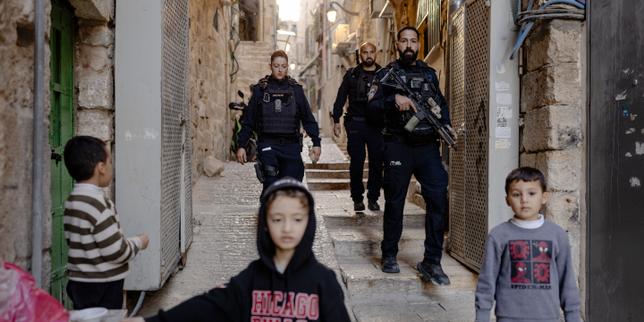
- Customer Anxiety: Even locals living within the city walls are hesitant to stay out late. The presence of heavily armed patrols every ten meters creates a "stay-at-home" culture that is the antithesis of the traditional Ramadan evening.
- Tourism Collapse: The international pilgrims who usually fill the hotels are largely absent, scared off by travel advisories and the visible militarization of the holy sites.
This is not a temporary dip in sales. It is a structural decline. As these small, family-owned businesses fold, the character of the Old City changes, leading to a vacuum that is often filled by interests that do not reflect the local community.
The Weaponization of the Status Quo
Diplomats often talk about the "Status Quo" at the Temple Mount/Haram al-Sharif as a sacred set of rules. However, the definition of that status quo is currently being rewritten on the fly. The traditional role of the Waqf, the Jordanian-appointed body that manages the site, is being systematically sidelined.
We are seeing a shift where tactical police decisions on the ground supersede long-standing diplomatic agreements. For example, the decision to limit the number of people who can stay overnight in the mosque for Itikaf (spiritual retreat) is presented as a fire safety or security measure. Yet, to the worshippers, it is a direct intervention in a core religious practice. When the police enter the carpeted halls with boots on to clear the building at midnight, the "Status Quo" isn't being protected—it's being dismantled.
The Role of Technology in Enforcement
The use of drones and high-altitude balloons equipped with thermal imaging has changed the nature of surveillance in Jerusalem. During the Taraweeh prayers, the sky is filled with the low hum of surveillance tech. This constant monitoring serves two purposes: gathering intelligence and projecting an image of total oversight. It ensures that any gathering, no matter how small, is immediately flagged.
This digital panopticon extends to social media. Security agencies now use AI-driven sentiment analysis to monitor Palestinian accounts for "incitement." While the stated goal is to prevent violence, the broad definition of incitement often catches simple expressions of religious identity or frustration with the checkpoints. This has led to a wave of "preemptive" arrests, where individuals are detained before they even leave their homes.
The Fragmented Family
Perhaps the most overlooked factor is the destruction of the family unit during the holiday. Ramadan is, at its heart, a time for families to break their fast together. The current restrictions have sliced through these connections. If a mother has a permit but her twenty-year-old son does not, the family is split.
I spoke with families who live in East Jerusalem but have relatives in the suburbs just behind the Separation Wall. These relatives, despite being only a few kilometers away, are effectively barred from joining the Iftar meal. The "Jerusalem ID" has become a golden ticket, creating a class system within the Palestinian community itself. Those with the blue ID can move—mostly—while those with the green ID are trapped in an ever-shrinking series of enclaves.
The Myth of De-escalation
Every year, there is a flurry of diplomatic activity in the weeks leading up to Ramadan. Officials from Washington, Amman, and Cairo meet to discuss "de-escalation." These meetings usually produce press releases about easing restrictions and "breathing room" for the population.
This year's "concessions" have been largely performative. Announcing that women over 50 can enter without a permit sounds like a relaxation of the rules, but when you consider that the transit infrastructure is so clogged that a 60-year-old woman has to wait four hours in the sun to pass a single gate, the concession becomes meaningless. It is a calculated strategy: grant the right in theory, but make it impossible to exercise in practice.
The tension in the air is palpable. It is a quiet, simmering heat that doesn't always erupt into the "clashes" that the international media waits for. Instead, it manifests as a collective exhaustion. The constant negotiation for space, for the right to pray, and for the right to simply exist in one's own city is wearing down the social fabric.
The Security Dilemma
The official justification for these measures is always "security." It is the ultimate trump card. In a region where the threat of violence is real, the state argues that these restrictions are the only thing preventing a full-scale conflagration.
However, there is a counter-argument that is rarely entertained in the halls of power: that the restrictions themselves are the primary driver of instability. By closing off all avenues for peaceful religious expression and communal gathering, the authorities are creating a pressure cooker. When you take away a person's ability to pray at their holiest site, you aren't making the city safer; you are radicalizing the moderate.
The strategy currently in play is one of "maximum friction." It assumes that by making life as difficult as possible, the population will eventually submit to the new reality. History suggests the opposite. In Jerusalem, friction doesn't lead to submission; it leads to an eventual, inevitable explosion that no amount of facial recognition technology or concrete barriers can contain.
The current state of Ramadan in Jerusalem is a preview of a future where urban spaces are managed through total exclusion. The walls are no longer just made of concrete; they are made of code, permits, and the constant threat of a badge. For those inside the city, the month is a reminder that their presence is tolerated only under the most specific and controlled conditions. The lights of the Old City may be bright, but they illuminate a landscape that is becoming increasingly hollowed out.
Check the entry requirements at the Damascus Gate on any given Friday morning. Observe the ratio of soldiers to worshippers. Count the empty tables in the restaurants of the Christian Quarter. These are the real metrics of the city's health, and they are all trending toward zero.