The air inside the Fukushima Daiichi nuclear power plant is heavy with a unique brand of silence. It is the silence of contained energy, of a place that knows exactly what happens when human error meets the laws of physics.
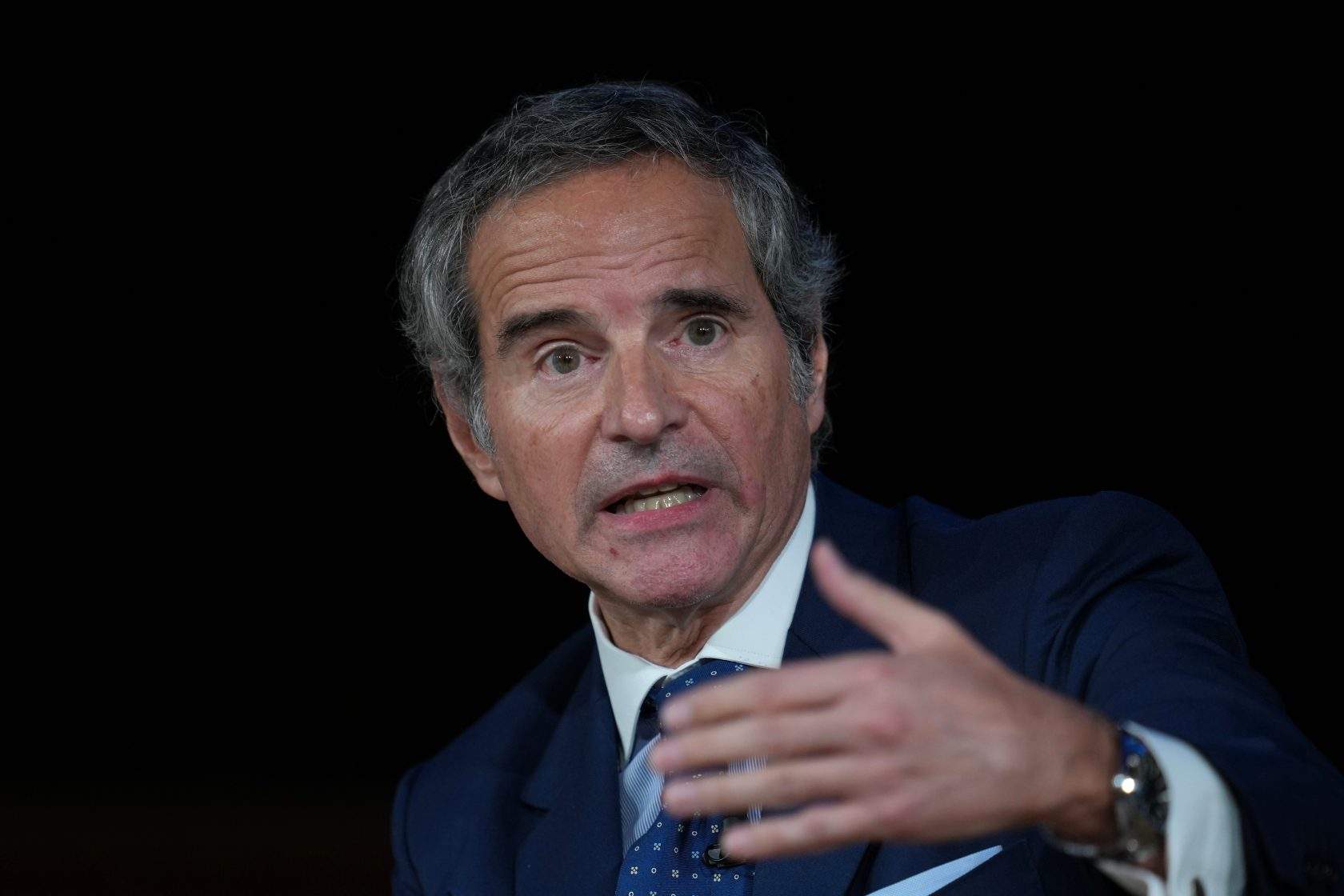
Standing in that quiet space, thousands of miles from his home base in Vienna, Rafael Mariano Grossi looked at the reporters gathered around him. As the head of the International Atomic Energy Agency, the UN’s nuclear watchdog, his job description is essentially to prevent the end of the world. He does this not with weapons, but with clipboards, seals, and highly specialized radiation detectors.
On this particular Wednesday in late June, the questions fired at him were not about Japan. They were about Iran. Specifically, they were about a high-stakes, public game of geopolitical chicken playing out between Washington and Tehran.
Just days earlier, the United States and Iran had signed a 14-point memorandum of understanding. It was a fragile, interim peace accord designed to finally end the shadow war and the fallout from the devastating 2025 bombings of Iranian nuclear facilities. For a brief moment, the world exhaled. Then, the messaging fractured.
In Washington, President Donald Trump insisted that the deal guaranteed absolute, 100% access to Iran’s nuclear sites. In Tehran, Iranian diplomats immediately shot back, publicly denying that any such inspection protocols existed. They claimed no visits were scheduled. They insisted the UN watchdog was merely using "media hype."
Grossi listened to the noise, adjusted his stance, and offered a masterclass in bureaucratic calm.
"The inspections will indeed take place," Grossi said, his voice steady against the background hum of the Japanese facility. "Whether this happens the day after tomorrow or in one week or in 10 days, it’s important, but not essential. This is going to happen."
To understand why this soft-spoken certainty matters, you have to look past the political theater and understand what an inspector actually does.
Consider a hypothetical inspector. Let's call her Sarah. Sarah does not carry a gun. She wears a hard hat, steel-toed boots, and a badge that measures her own radiation exposure. When she walks into a enrichment facility, she is looking at things that are completely invisible to the naked eye. She is looking for isotopes. She is verifying the serial numbers on tamper-indicating seals that are designed to fracture if anyone so much as breathes on them too heavily.
For the past year, people like Sarah have been locked out of Iran’s most critical, bomb-damaged enrichment sites.
When a nation enriches uranium, it is essentially spinning a cascade of supersonic centrifuges to separate isotopes. To power a city, you need uranium enriched to about 3% or 5%. To build a devastating weapon, you need it at 90%. Right now, Iran is the only nation on earth enriching uranium to 60% purity without an active weapons program.
It is a terrifyingly short technical hop from 60% to 90%. Experts estimate that Iran’s current stockpile contains enough highly enriched material to build up to 10 nuclear warheads, if they choose to cross that threshold.
Without inspectors on the ground, the international community is effectively flying blind. Satellites can see buildings, and they can see cratered roofs from the 2025 airstrikes. But a satellite cannot tell you if a technician has quietly moved a cylinder of hexafluoride gas into a hidden tunnel. A satellite cannot measure the exact enrichment level of a microscopic residue left on a pipe.
Only a human being with a swab can do that.
That is why the political bickering over the timeline is a secondary sideshow. The Iranian deputy foreign minister, Kazem Gharibabadi, took to social media to scoff at the UN, declaring that inspections would only happen after all economic sanctions were fully lifted. Trump responded by threatening to cancel all future diplomatic meetings entirely if the inspectors weren't let in.
But Grossi, who has spent years navigating the psychological labyrinth of international diplomacy, knows that public posturing is just the tax nations pay to appease their domestic audiences.
The core truth is written in ink. The signed memorandum explicitly states that the nuclear material and facilities will be supervised by the IAEA. In all letters.
This isn't about trust. International diplomacy at this level has absolutely nothing to do with trust. It is about verification. It is about creating a system where cheating becomes mathematically and logistically impossible to hide.
The next 60 days will be a grueling marathon of technical talks in Switzerland, mediated by Pakistan. Teams of lawyers and engineers will sit in boring conference rooms, arguing over the specific "modalities"—the exact dates, the specific doors, the precise model of cameras that will be allowed inside the concrete ruins of Isfahan and Natanz.
It is easy to get lost in the jargon of nonproliferation, to treat this as a dry exercise in foreign policy. But the stakes are grounded in basic human survival.
Every day that the seals remain unverified and the cameras remain dark, the margin for error shrinks. The tension in the Middle East behaves exactly like the pressure building inside a closed reactor vessel. If you don't provide a transparent, verified release valve, the system eventually fails.
Grossi’s quiet confidence in Japan wasn't born out of naivety. It was the calm of a man who knows that, when the political speeches end and the cameras turn off, both sides ultimately look into the same abyss. They know that a world without eyes on the uranium is a world where a single misunderstanding can ignite a region.
The inspectors will get their access. Not because of a sudden wave of goodwill, but because the alternative is a terrifying mathematical certainty that neither side can afford to gamble on.