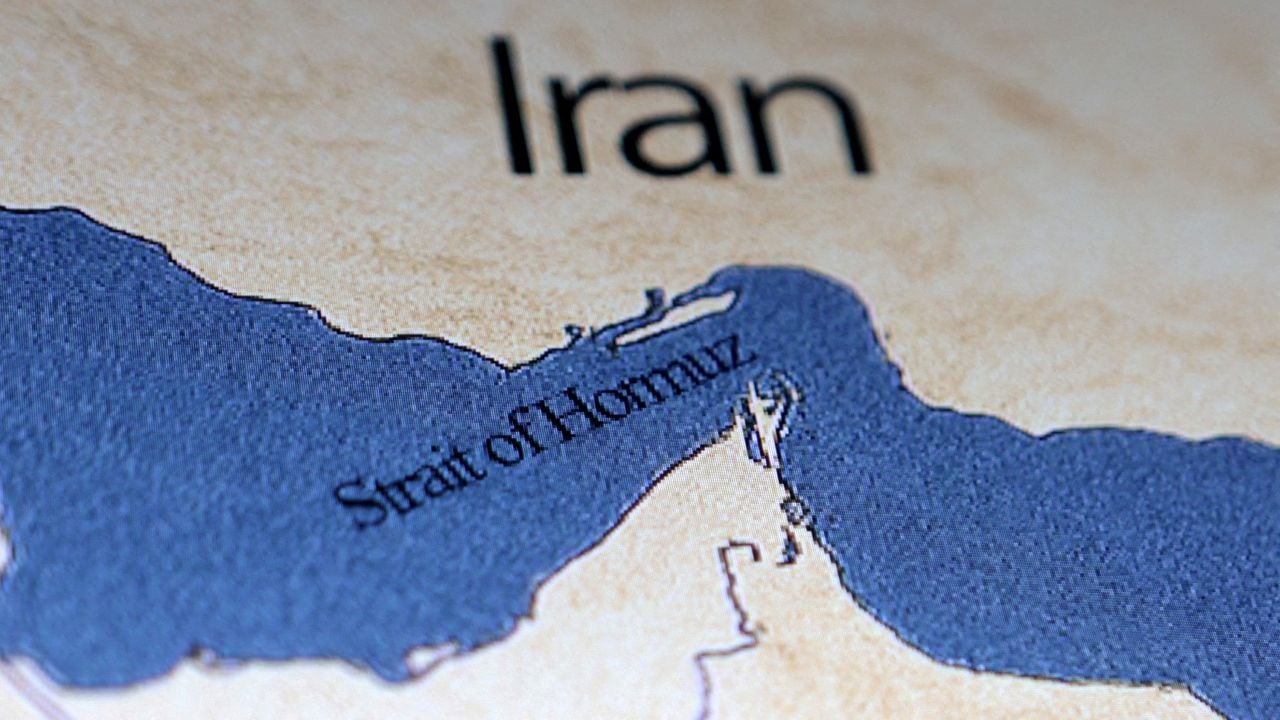
The map in the Situation Room never shows the price of a gallon of milk in Scranton. It doesn't show the fatigue in the eyes of a mother in Columbus whose son is on his third deployment. To the architects of foreign policy, the Middle East—or West Asia, as the diplomats prefer—is a grid of strategic depth, proxy influence, and maritime chokepoints. But to the American public, it is becoming something far simpler: a drain.
Meera Shankar, who once walked the halls of power as India’s Ambassador to the United States, knows that the most dangerous thing in Washington isn't a rival’s missile. It is the quiet snap of American consensus. When she speaks of a "prolonged war" in West Asia not sitting well with the American public, she isn't just offering a geopolitical forecast. She is describing a psychological breaking point.
The Kitchen Table vs. The War Cabinet
Imagine a kitchen table in Michigan. It’s 6:00 PM. The news is humming in the background, a chaotic blur of orange explosions and gray rubble in Gaza or Southern Lebanon. For the person sitting at that table, the distance between their bank account and the Mediterranean Sea feels infinite, yet the two are tethered by a jagged, invisible wire.
Since 2001, the United States has spent trillions on "forever wars." That’s a number so large it ceases to mean anything to the human brain. We understand $100. We understand $1,000. But $8 trillion? That is a ghost number. It’s the phantom limb of an economy that could have built high-speed rails, modernized schools, or fixed the crumbling bridges that hum under our tires every morning.
Shankar’s insight is rooted in this exhaustion. The American public isn't necessarily isolationist by nature. They are tired by experience. They have watched the same movie for two decades, and the ending never seems to change. The credits crawl, the lights stay dim, and the bill keeps climbing.
The Ghost of 2003
The hesitation we see today isn't just about the current administration’s polling numbers. It’s a deep-seated muscle memory. In 2003, the drums of war were rhythmic and loud. Today, they are discordant. The public has developed a sophisticated skepticism. They ask the questions that diplomats used to ignore: What is the exit? Who are we helping? Why does the stability of a region ten thousand miles away require the constant presence of our neighbors' children?
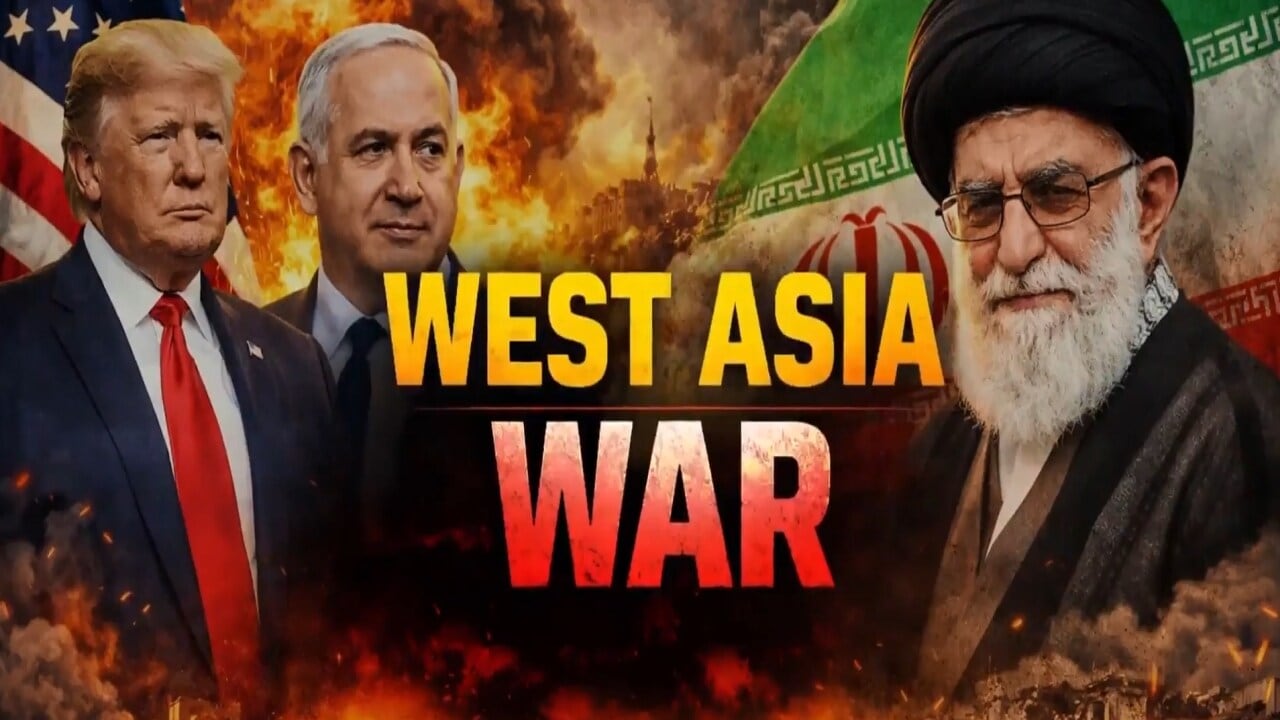
When a conflict in West Asia threatens to expand—drawing in Iran, destabilizing oil routes, or requiring yet another massive carrier strike group—the American voter doesn't see a "strategic pivot." They see a distraction from the crumbling interior of their own country.
Shankar points out that the U.S. is currently trying to manage a delicate balance. On one hand, it must support its traditional allies like Israel. On the other, it is staring at an electorate that is increasingly vocal about its "America First" or "Domestic Priority" leanings. These aren't just slogans. They are the cries of a middle class that feels it has been footing the bill for a global security architecture that no longer serves its interests.
The Arithmetic of Blood and Oil
War is often sold as a necessity of freedom. But for the person working two jobs to keep up with inflation, the freedom to police the Levant feels like an expensive luxury.
Consider the arithmetic of a drone strike. A single Reaper drone costs roughly $30 million. That is the equivalent of the annual salaries of hundreds of teachers. When the conflict in West Asia drags on, these comparisons move from the fringes of political discourse to the center of the dinner table.
The public’s tolerance for a "prolonged" engagement is paper-thin because the rewards are intangible while the costs are visceral. If the conflict spills over into a regional conflagration, the first thing Americans will feel isn't a sense of patriotic duty. It will be the spike in gas prices. It will be the realization that their government is once again prioritizing the borders of others over the stability of home.
The Quiet Pivot
Shankar’s observation about the "unlikely" support for a long war highlights a shift in the American psyche. We are no longer in the era of the "unipolar moment." The U.S. is stretched. It is looking toward the Pacific, eyeing the rise of China with a mixture of fear and necessity. Every Tomahawk missile fired in West Asia is one less resource available for the competition that will actually define the next century.
The public senses this. They know that the world has changed. They see the supply chains breaking. They see the technology gap closing. They wonder why the old playbooks are still being read when the pages are yellowed and torn.
The "invisible stakes" are the social contracts being frayed. Every time a government ignores the domestic fatigue to pursue an open-ended foreign entanglement, the trust between the governed and the governors erodes. That trust is the most precious resource a democracy has. It is much harder to rebuild than a bridge or a power plant.
The Burden of Leadership
Being a superpower is a heavy mantle. It requires a presence that deters chaos. But as Shankar notes, that presence is only as strong as the will of the people back home. If the American public decides that the cost of being the world’s policeman is too high, the entire global order shifts.
This isn't just about troop levels or naval deployments. It’s about the soul of a nation trying to decide what it wants to be when it grows up. Does it want to be the eternal sentinel of the desert, or does it want to be a nation that can provide a stable, prosperous life for its own citizens?
The tragedy of the "prolonged war" is that it forces a choice that shouldn't have to be made. It pits the safety of allies against the sanity of the domestic population.
Shankar’s warning is a mirror. It reflects a Washington that is beginning to realize it can no longer write checks that the American people refuse to sign. The era of the blank-check intervention is over, not because of a change in international law, but because of a change in the American heart.
The sun sets over a quiet street in a suburb that has seen too many "Welcome Home" banners and far too many funerals. The streetlights flicker on. Somewhere, a television is still reporting on the escalating tensions in a land of ancient sands and modern missiles. The viewer reaches for the remote. They don't want to see the map. They want to see a future where the world doesn't feel like it’s constantly on the verge of falling apart—and where they aren't the ones expected to hold it together.
The silence that follows the click of the power button is the most honest answer Meera Shankar’s warning could ever receive.
Would you like me to generate a detailed breakdown of the historical shifts in American public opinion toward foreign interventions since the end of the Cold War?