The alarm rings at 4:30 AM. It is cold, the kind of damp chill that clings to the inside of a windshield before the heater kicks in. Marc turns the key of his delivery van. The diesel engine sputters, coughs, and then settles into a heavy, familiar rumble. For Marc, and for millions of independent drivers like him, this sound used to mean the start of a productive workday. Today, it sounds like a ticking clock, counting down the euros draining from his bank account.
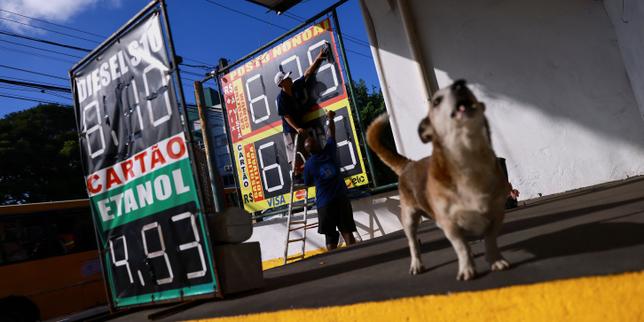
Most people do not think about diesel until they pass a gas station and glance at the digital signboards glowing against the grey sky. They notice a bump in the price, sigh, and keep driving. But diesel is not just a fuel. It is the literal friction of our economy. It is the cost of moving flour to the baker, clothes to the boutique, and medical supplies to the hospital. When diesel spikes, everything else follows, creeping upward like ivy on a brick wall.
Right now, a quiet storm is gathering over the energy sector. The signs are there, hidden beneath dense financial reports and geopolitical posturing, pointing toward a brutal new surge in diesel prices.
To understand why this matters, we have to look past the trading floors in London and New York and look at a single, hypothetical wooden crate of apples sitting in a supermarket aisle.
The Long Journey of a Single Apple
Let us trace that crate backward. Before it reached the shelf, it sat in a distribution center. A semi-truck brought it there, burning through hundreds of liters of diesel. Before that, a smaller truck hauled it from a processing plant. Before that, a tractor picked it up from the orchard floor. Every single step of that journey relies on a heavy-duty combustion engine designed to run on exactly one thing.
When the price of crude oil fluctuates, the public focuses on gasoline. Gasoline gets us to the beach or the grocery store. It is personal. Diesel, however, is structural.
Refineries are facing a massive structural bottleneck. For years, the global shift toward green energy has discouraged investment in traditional refining capacity. Why build a multi-billion-dollar refinery that takes a decade to turn a profit when governments are promising to phase out fossil fuels? The result is an aging, strained network of facilities operating at maximum capacity, with zero margin for error.
Then came the geopolitical fractures. Europe’s decision to cut off Russian diesel imports forced a massive reorganization of global supply chains. Instead of a short boat ride across the Baltic Sea, diesel now must travel thousands of miles from refineries in the Middle East or Asia. Longer journeys mean higher shipping costs, larger carbon footprints for the transport itself, and a volatile premium added to every single liter pumped into a tank.
Consider what happens next when a system is stretched this thin. A single unexpected shutdown at a refinery in France, or a minor pipeline disruption in the North Sea, ceases to be a local headache. It becomes a global price shock.
The Illusion of Choice
We like to think we have options. If coffee gets too expensive, we buy tea. If beef prices soar, we switch to chicken. But you cannot choose to opt out of the diesel supply chain.
When Marc pulls his van up to the pump, he does not have a choice. He cannot retroactively convert his vehicle to electric overnight; the commercial infrastructure simply is not there yet, and the capital expense would ruin his small business. He inserts his card, watches the numbers spin wildly on the display, and feels a familiar knot tighten in his stomach.
"I used to plan my margins six months in advance," he says, staring at the nozzle. "Now, a sudden escalation of tensions in the Middle East can wipe out my profit for the entire month before I even finish my route."
This uncertainty breeds caution. When transport companies cannot predict their fuel costs, they stop hiring. They delay upgrading their fleets. They raise their base rates. Those raised rates are passed directly to the wholesalers, who pass them to the retailers, who ultimately pass them to you.
That is why a crisis in the diesel market is never contained to the gas station. It is an invisible tax levied on every item on every shelf. The shoes on your feet, the medicine in your cabinet, the drywall in your house—they all rode on a diesel engine.
The Refiner's Dilemma
The math behind a barrel of oil is surprisingly complex. A refinery cannot simply choose to make only gasoline or only diesel. Crude oil is cooked in massive distillation towers, separating into different components based on boiling points. It is a rigid chemical reality.
Lately, the types of crude oil available on the market have shifted. With specific sanctions and production cuts from major oil-producing nations, the market has seen a shortage of "heavy, sour" crudes—the specific, sulfur-rich varieties that are ideal for maximizing diesel yield. Instead, there is an abundance of lighter crudes, which produce plenty of gasoline but less of the heavy distillates needed for industry and shipping.
We are entering a bizarre economic paradox: we have plenty of oil, but we are running out of the specific kind of fuel that keeps the global economy from grinding to a halt.
It is easy to get lost in the jargon of cracks, spreads, and distillates. But the reality is much simpler. Demand for transport is rising, the capacity to refine the necessary fuel is shrinking, and the geopolitical chess board is more unpredictable than it has been in a generation.
The Weight of the Road
The sun is fully up now, casting a grey, metallic light over the highway. Marc is back on the road, navigating the morning traffic. His van is loaded with boxes of fresh pastries and artisanal breads bound for local cafes.
He knows that the people buying those pastries will complain if the price goes up by fifty cents. They will blame the cafe owner. The cafe owner will blame the baker. The baker will blame Marc. But the real culprit is sitting inside the fuel tank beneath Marc's feet, burning quietly, costing more with every kilometer.
The global economy is a delicate machine, held together by invisible threads of logistics. We take for granted that the shelves will be full, that the packages will arrive on time, and that the cost of living will remain manageable. But that stability relies entirely on the cheap, predictable flow of energy.
When that flow is disrupted, the veneer of stability thins very quickly. We are not just facing a potential increase in the cost of filling up a tank. We are looking at a fundamental re-evaluation of what it costs to move things across the face of the earth.
Marc turns off the highway, pulling up to his first delivery of the day. He cuts the engine. The heavy rumble stops, leaving a sudden, heavy silence in the cabin. He reaches for his clipboard, steps out into the cold air, and gets to work, hoping that tomorrow the numbers on the glowing signboards will stop their relentless climb.