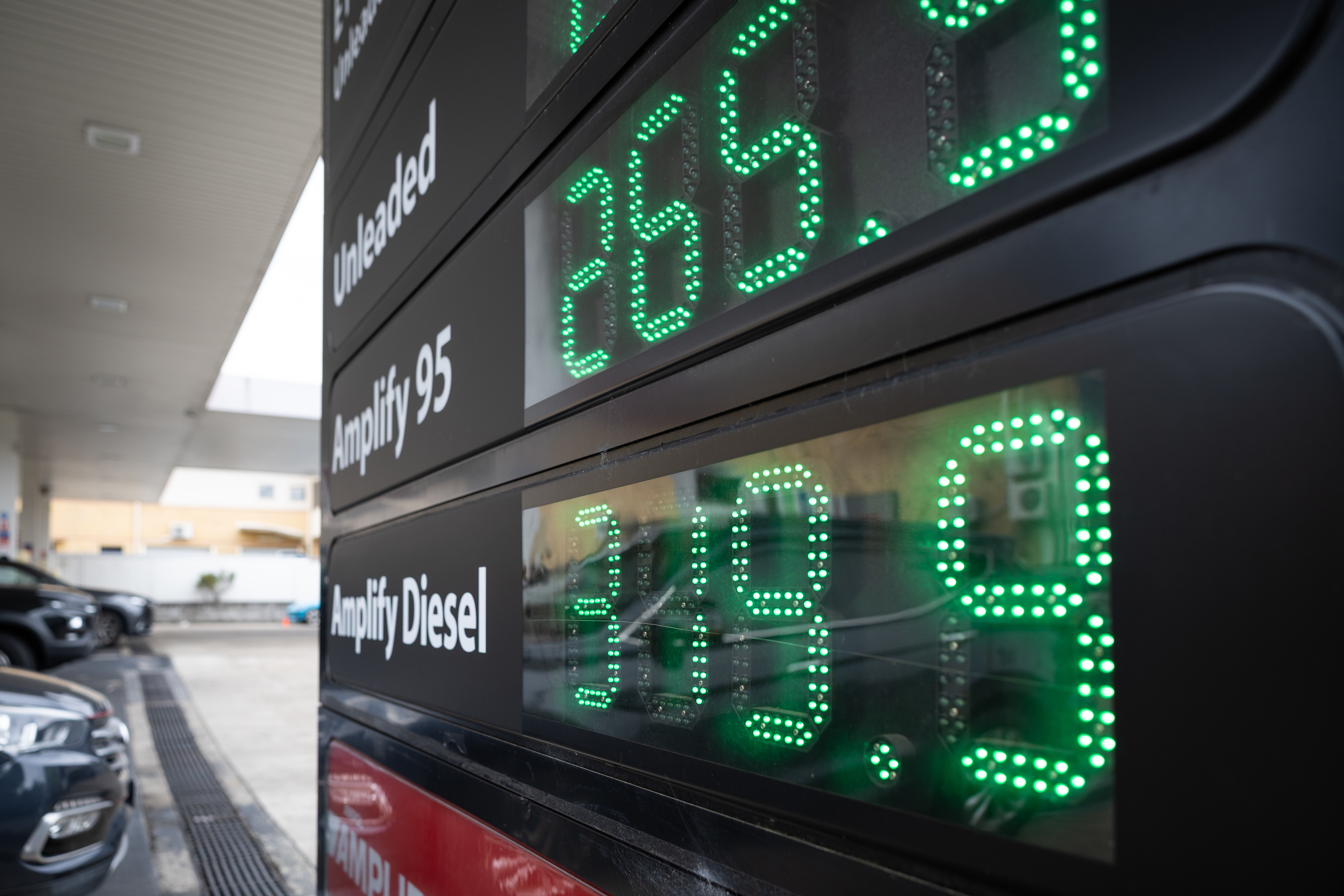
The neon glow of a service station sign is usually a beacon of convenience. It promises a quick fill-up, a lukewarm coffee, and perhaps a bag of chips for the road. But lately, for thousands of drivers across the state, that glowing "P" has stood for something else: predation.
We often talk about inflation as a ghost—an abstract force that haunts spreadsheets and bank statements. In reality, inflation has a physical location. It lives on the corner of the highway and the main street. It breathes through the rubber nozzle of a fuel pump. For the 93 service station operators recently caught in a massive state-wide price-gouging blitz, the ghost was very much a machine, and the victims were anyone with a commute and a budget.
The Quiet Math of Desperation
Imagine a woman named Sarah. She isn’t real, but her bank account is a mirror for millions. Sarah drives a ten-year-old sedan that rattles when it hits sixty. She works two jobs—one at a daycare and another shelving stock at night. Every Tuesday, she pulls into a station with the "low fuel" light amber and persistent.
She checks the digital board. The price has jumped twenty cents overnight. She does the math in her head, not in percentages, but in gallons of milk. If she fills the tank today, she loses the extra protein for dinner. If she doesn't, she might not make it to her second shift.
Sarah is the human casualty of what regulators call "non-compliance." To the boardroom, it’s a strategic margin adjustment. To Sarah, it’s a betrayal.
The recent blitz by state authorities wasn't just a routine check of the books. It was a targeted strike against a culture of opportunistic pricing. More than 93 stations were hit with heavy fines after investigators discovered they were intentionally lagging behind falling wholesale prices or hiking rates far beyond the legal threshold during peak demand.
Greed is rarely loud. It doesn't scream at you from the storefront. Instead, it whispers through a digital display, betting that you’re too tired, too rushed, or too desperate to notice a ten-dollar discrepancy at the pump.
The Architecture of the Gouge
How does a "blitz" actually happen? It starts with data.
Regulators don't just drive around looking for high numbers. They track the "rack price"—the cost at which the station buys the fuel—and compare it to the retail price offered to the public. When the gap becomes a canyon, the red flags go up.
In this latest crackdown, inspectors found a pattern that was less about administrative error and more about calculated exploitation. Some stations were caught "cycling" prices—dropping them just long enough to avoid the highest level of scrutiny before spiking them back up when the morning rush began. Others simply ignored the state’s transparency laws, failing to report their price changes to the mandatory monitoring apps that help consumers find the cheapest fuel in their area.
Consider the mechanics of the pump itself. It is a highly regulated piece of machinery, calibrated to ensure you get exactly what you pay for. But the price tag attached to that volume is where the regulation often thins out. By failing to update prices in real-time or by keeping them artificially high while the rest of the market corrected downward, these 93 stations essentially levied an invisible tax on the local economy.
It is a slow bleed. A few cents here, a dollar there. Multiply that by the thousands of cars that pass through a busy intersection every day, and you aren’t looking at a mistake. You’re looking at a heist.
Why the Fine Isn’t Always the Fix
There is a cynical school of thought in the retail petroleum industry. Some operators view a government fine not as a deterrent, but as a "cost of doing business."
If a station makes $50,000 in excess profit by gouging customers over a holiday weekend, a $5,000 fine is just a line item on a ledger. It’s an investment with a 900% return. This is why the recent state-wide action had to be different. The "blitz" wasn't just about the money; it was about the public record.
When a station is flagged, it loses the one thing that keeps the lights on in a competitive market: trust.
Trust is a fragile currency. You trust that the milk isn't expired. You trust that the brakes on your car will hold. And you trust that the number on the pump reflects the market, not a merchant's desire to buy a third vacation home on your dime. When 93 stations are outed at once, it sends a ripple of skepticism through every neighborhood. It turns neighbors into investigators.
People start looking closer. They start using the apps. They start driving an extra three miles to the independent station that kept its prices fair while the big-name franchise up the road was squeezing the zip code dry.
The Ripple Effect of a Full Tank
The impact of price-gouging extends far beyond the gas station canopy. It is a logistical poison.
When fuel prices are artificially inflated, the cost of everything else rises. The courier delivering packages has to raise his rates. The food truck owner has to shave a few cents off her margins. The local plumber spends more on his van's overhead, which eventually shows up on your invoice for a leaky faucet.
We live in a world of interconnected gears. When one gear—fuel—is jammed by artificial friction, the whole machine slows down.
The investigators who conducted this blitz weren't just protecting "consumers." They were protecting the flow of the local economy. They were ensuring that the money Sarah earns at the daycare actually stays in her pocket or goes toward her rent, rather than being siphoned off into the underground tanks of a station that thinks the rules don't apply to them.
The Human Cost of the Digital Board
There is a specific kind of anger that comes with being cheated at a gas station. It’s different from being overcharged for a luxury watch or a fancy meal. Fuel is a necessity. In most of the state, if you don't have gas, you don't have a job. If you don't have a job, you don't have a life.
To gouge someone on fuel is to hold their mobility hostage.
The 93 operators who are now staring down hefty penalties and tarnished reputations likely didn't see it that way. They saw numbers on a screen. They saw a chance to pad the quarterly report. They saw an opportunity to capitalize on a "volatile market"—a phrase that has become a convenient shield for all sorts of corporate sins.
But the volatility wasn't the problem. The ethics were.
State authorities have signaled that this is not a one-time event. The blitz was a warning shot across the bow of an industry that has grown comfortable with the idea that the public is too distracted to fight back. The message is clear: the data is being watched, the pumps are being monitored, and the "invisible tax" is being audited.
As Sarah drives home, the sun setting behind the strip malls, she sees the sign for the station that was fined. The numbers have dropped. They finally match the station three blocks away. She doesn't know about the investigators or the spreadsheets or the "price-gouging blitz." She only knows that today, for the first time in weeks, the math in her head finally adds up to enough.
She pulls in, the nozzle clicks into place, and the numbers on the pump begin their rapid, rhythmic climb—but this time, the rhythm is fair. The ghost has been chased out of the machine.