The ritual begins at a kitchen table in a quiet suburb of Ottawa. Elias, a thirty-four-year-old architect who used to spend his weekends hiking the Gatineau hills, is not looking at blueprints. He is looking at a small, white plastic cylinder. He clicks it. A fine mist of corticosteroids vanishes into his nasal passage. He waits. He swallows. He checks a weather app on his phone, not for rain, but for the "pollen forecast."
It is purple. Dark purple.
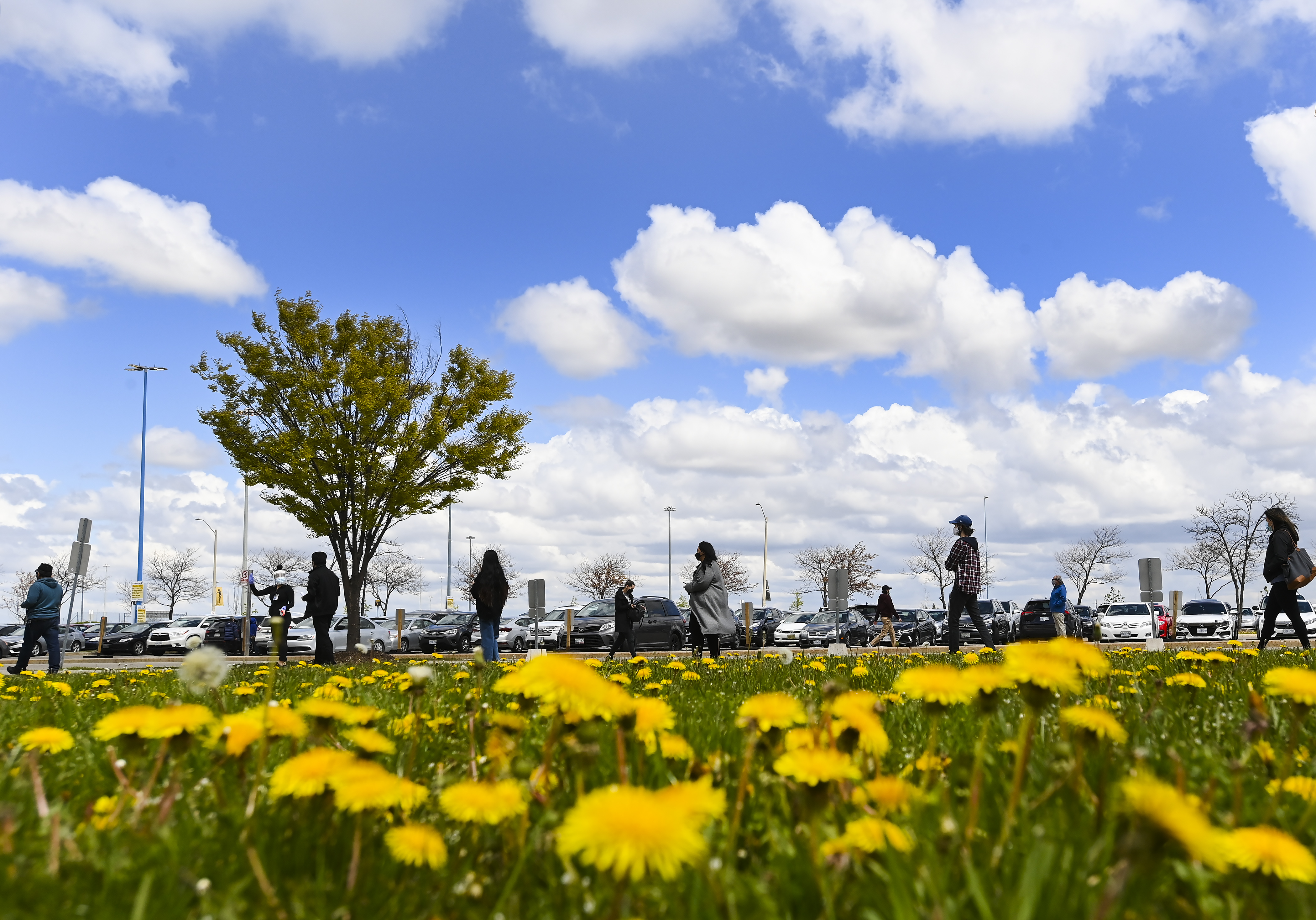
This is the new Canadian spring. It is no longer a gentle awakening of the earth; it is a biological assault. What used to be a few weeks of "hay fever" has morphed into a multi-month marathon of systemic inflammation. Across the country, from the damp forests of British Columbia to the wind-swept Maritimes, millions of people like Elias are realizing that the air itself has changed. It feels heavier. More aggressive.
The science behind this shift isn't a mystery, but the way we experience it is deeply personal. We are witnessing the intersection of a warming planet and a botanical world that has been pushed into overdrive.
The Botanical Arms Race
To understand why Elias’s eyes are currently vibrating with itchiness, we have to look at the trees. Deciduous giants like birch, oak, and maple are the primary protagonists in this story. Under normal historical conditions, these trees had a predictable schedule. They woke up, they bloomed, they released their pollen, and they settled into the green stillness of summer.
That schedule is broken.
Canada is warming at roughly double the global rate. This isn't just a statistic found in a dry government report; it is a functional shift in the lifecycle of every plant on your street. Because winters are shorter and springs arrive with a sudden, jarring heat, trees are starting their reproductive cycles earlier. Much earlier. In some parts of Ontario and Quebec, the pollen season now starts twenty days sooner than it did in the 1970s.
But it isn't just about time. It is about potency.
Consider the role of carbon dioxide ($CO_{2}$). We often talk about $CO_{2}$ in terms of the greenhouse effect, but for a plant, $CO_{2}$ is food. When you pump more of it into the atmosphere, plants don't just grow larger; they produce more pollen. A lot more. Studies have shown that ragweed grown in environments with doubled $CO_{2}$ levels can produce up to 60% more pollen than plants in "normal" air.
Imagine a factory that suddenly receives a massive influx of raw materials and is told to double its output without expanding its walls. The result is a concentrated, hyper-potent dust that is more chemically reactive than what our ancestors breathed. This isn't your grandfather’s allergy season. This is a high-definition, turbocharged version of it.
The Urban Heat Island and the Male Tree Problem
Elias lives in the city, which brings us to a peculiar, man-made irony. Cities are often several degrees warmer than the surrounding countryside because of asphalt, concrete, and a lack of canopy cover. This "heat island" effect tricks trees into thinking it’s even later in the season, keeping them in a state of high-alert pollen production.
Then, there is the "botanical sexism" of urban planning. For decades, city planners preferred planting male trees because they don't drop messy seeds, fruits, or pods onto sidewalks. It seemed like a win for the maintenance department. But male trees are the ones that produce pollen. By lining our streets exclusively with male clones, we created "pollen traps"—urban corridors where the concentration of allergens is significantly higher than in a natural forest.
Elias walks down a street lined with beautiful, uniform maples. He sees a leafy canopy; his immune system sees a gauntlet of microscopic thorns.
When the Immune System Rebels
Inside the human body, the reaction to this increased pollen load is a masterpiece of misplaced aggression. When Elias inhales a grain of birch pollen, his immune system makes a catastrophic error. It identifies the harmless protein on the pollen’s surface as a dangerous invader—a parasite or a bacterium.
In response, his body produces Immunoglobulin E (IgE) antibodies. These antibodies attach to mast cells, which are essentially the "security guards" of the tissue. When the next wave of pollen arrives, these mast cells explode, releasing a chemical called histamine.
Histamine is what causes the classic symptoms: the swelling of the nasal passages to "block" the invader, the production of mucus to "flush" it out, and the itching to alert the host that something is wrong. But in a world where the pollen doesn't stop for three months, the body remains in a permanent state of emergency.
This chronic inflammation is exhausting. It leads to "brain fog," a cognitive sluggishness that makes Elias feel like he’s working underwater. It disrupts sleep, leading to a secondary cycle of fatigue and irritability. For the one in five Canadians who suffer from allergic rhinitis, this isn't an inconvenience. It is a tax on their quality of life, their productivity, and their mental health.
The Thunderstorm Effect
There is a terrifying phenomenon that researchers are watching closely in Canada: Thunderstorm Asthma.
During a heavy spring storm, humidity and electricity can cause pollen grains to rupture. Instead of a single grain, you now have hundreds of tiny, sub-microscopic particles. These particles are small enough to bypass the nose’s filtering system and travel deep into the lungs.
For someone who only has mild hay fever, a sudden thunderstorm can trigger an acute asthma attack. In 2016, a single event in Melbourne, Australia, sent thousands to the emergency room. As Canada's weather becomes more volatile and the pollen counts climb, the risk of these "pollen bombs" increases. It is a reminder that our health is tethered to the rhythm of the sky in ways we are only beginning to respect.
The Cost of the Invisible
We often quantify climate change in terms of rising sea levels or burnt acreage. We rarely talk about the cost of the pharmacy aisle.
Elias spends roughly $150 every spring on over-the-counter antihistamines, nasal sprays, and eye drops. Multiply that by millions of people. Add in the lost workdays and the increased strain on primary care physicians. The economic footprint of "more intense" allergy seasons is staggering.
More importantly, there is a generational shift occurring. Children are being sensitized to allergens earlier than ever before. If your first five years of life are spent in an environment with record-breaking pollen counts, your immune system is "trained" to be hyper-reactive. We are essentially breeding a future where respiratory sensitivity is the default setting for the human race.
Adapting to a New Atmosphere
If the air is no longer our friend, how do we live?
The advice used to be simple: stay inside. But for a country that spends six months huddling away from the cold, the idea of spending the beautiful Canadian spring behind double-paned glass is a form of psychic torture.
We are seeing a shift toward more proactive management. Immunotherapy—commonly known as allergy shots—is no longer a niche treatment for the severely afflicted. It is becoming a necessary recalibration. By exposing the body to tiny, escalating doses of the allergen, doctors are trying to "teach" the immune system that the tree isn't the enemy.
But on a macro level, we need to rethink our cities. We need "pollinator-friendly" urban forests that balance male and female trees. We need to acknowledge that air quality isn't just about smog or wildfire smoke; it is about the biological particles we’ve encouraged to proliferate.
The Last Walk of the Season
Elias puts on his sunglasses. They are wraparound, designed to create a seal against his face. He wears a mask, a habit leftover from the pandemic that has found a second life as a pollen filter. He looks like a man preparing for a dusty trek across a desert, but he is just going to get the mail.
He stops at the end of his driveway. A light breeze shakes the branches of the birch tree overhead. A faint, yellow dust settles on the black paint of his mailbox. It looks like gold dust. It looks like life itself, trying desperately to propagate in a world that is getting warmer and weirder.
Elias breathes in, feels the familiar prickle in the back of his throat, and wonders when the green world became something he had to survive.
The seasons haven't just changed their timing. They have changed their intent. We are no longer mere observers of the spring; we are participants in a high-stakes biological negotiation that happens every time we take a breath.