The air inside the Washington Hilton ballroom always smells the same: a peculiar mixture of expensive floral arrangements, heavy floor wax, and the metallic tang of nervous sweat. If you stand in the center of the room during the White House Correspondents’ Dinner, you are surrounded by the most recognizable faces in the world. But if you look closely—past the glitz of the Hollywood stars and the stiff collars of the political elite—you see the men and women who aren't eating. They stand with their backs to the walls, their eyes never settling, their hands hovering inches from concealed hardware.
Security at this event is not a checklist. It is a living, breathing organism. It is a high-stakes theatrical production where the audience never sees the stagehands, even though those stagehands are carrying enough firepower to level a city block.
Every year, the "Nerd Prom" draws thousands to a basement ballroom that has become a historical landmark for all the wrong reasons. It was outside this very hotel, on a gray March day in 1981, that John Hinckley Jr. stepped out of a crowd and changed the nature of American security forever. When a President walks into the Hilton today, he isn't just entering a party. He is entering a fortress built on the lessons of past failures.
The Anatomy of the Perimeter
Before a single tuxedo is donned, the Secret Service begins the "sweep." Imagine a team of technicians moving through the vents, under the floorboards, and behind the velvet curtains with the surgical precision of an archeological dig. They are looking for anything that shouldn't be there. A stray wire. An unusual scent. A breach in the drywall.
The perimeter starts miles away. Long before a guest reaches the metal detectors, their name has lived in a database for weeks. Background checks for the White House Correspondents’ Dinner are exhaustive. Every waiter, every technician, and every journalist is vetted against federal watchlists. It is a silent filter that catches the "noise" before it ever reaches the door.
By the time the motorcade arrives, the Washington Hilton is no longer a hotel. It is a "Hard Site."
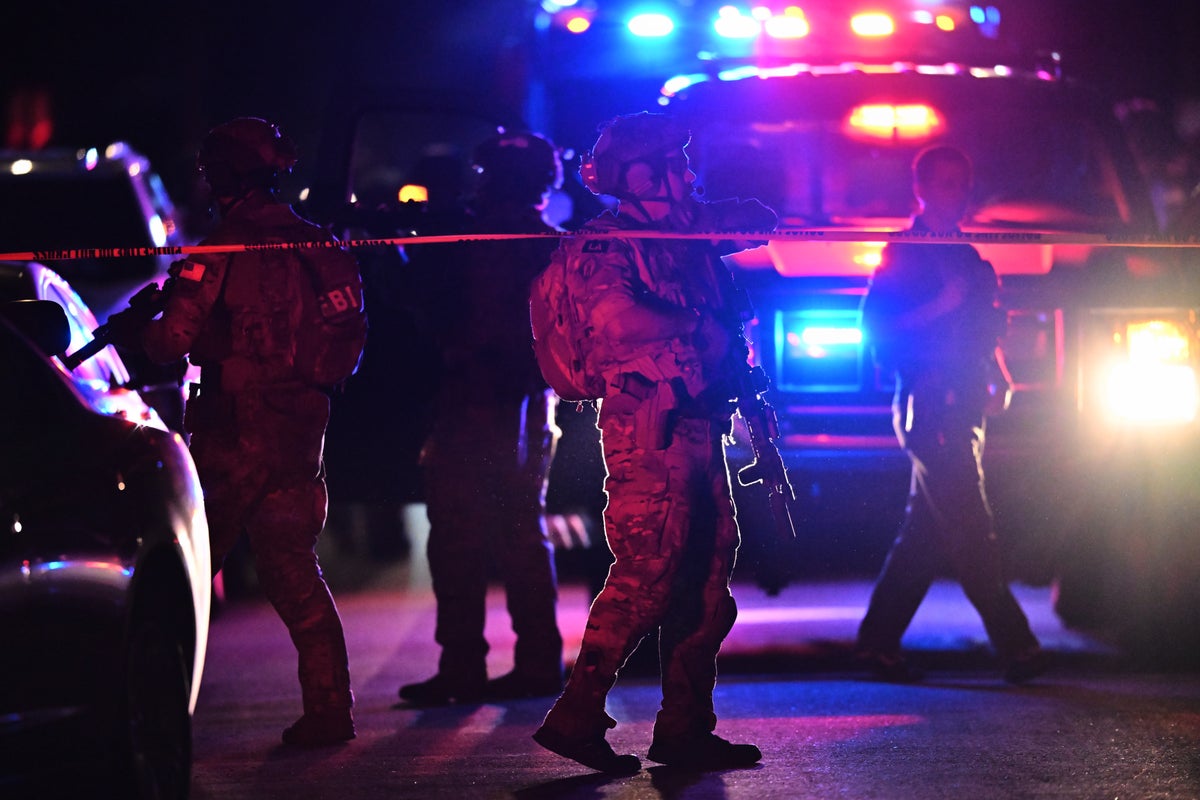
The streets are bled dry of traffic. Dump trucks filled with sand—heavy, immovable barriers against vehicular attacks—block the intersections. Sharpshooters take their positions on the rooftops of the surrounding Connecticut Avenue buildings. They aren't looking at the celebrities on the red carpet; they are looking at the shadows in the windows across the street.
The Magnetometer Gauntlet
Consider the perspective of a young staffer or a first-time attendee. You arrive in your finest attire, feeling like a million dollars, only to be funneled into a basement hallway that feels like a high-security airport terminal. This is the bottleneck.
The Secret Service deploys a massive array of magnetometers. Everyone goes through. There are no exceptions for fame, wealth, or proximity to power. You watch a Cabinet Secretary empty his pockets into a gray plastic bin just like everyone else. You see a Hollywood A-lister stand with her arms out, being wanded by an agent whose face is a mask of professional indifference.
Inside the room, the security is layered like an onion. The outer layer consists of the Metropolitan Police and hotel security, handling the logistical chaos of three thousand people in formal wear. The middle layer is a mix of plainclothes agents who look exactly like the guests, blending in with their own black ties and cocktail dresses. They are the "floaters." They listen to the conversations. They watch for the guest who looks a little too frantic, or the person whose hands are shaking just a bit too much.
Then there is the inner circle.
The Nuclear Football and the Red Line
The President’s seat is the center of the universe for one night. To the casual observer, it’s just a table near the stage. To the security detail, it is the most vulnerable point in the room.
Behind the President sits a man in a military uniform. He doesn't laugh at the jokes. He doesn't eat the dry chicken. Between his feet sits a black leather bag—the Presidential Emergency Satchel, better known as the "Nuclear Football." It is a jarring reminder that while the comedian on stage is making fun of the administration's poll numbers, the machinery of global destruction is less than three feet away.
The Secret Service agents in the "inner ring" have a specific look. It’s not just the earpiece. It’s the way they stand—weight on the balls of their feet, hands clasped in front of them in what is known as the "ready" position. They aren't looking at the President. They are looking at you. If you stand up too quickly or reach into a jacket pocket for a phone with too much urgency, four pairs of eyes will lock onto you instantly. It is a terrifying, silent pressure.
The Threat You Can't See
In recent years, the nature of the threat has shifted. It’s no longer just about the lone gunman in the crowd. The modern security landscape is digital and invisible.
The Secret Service now employs electronic countermeasure teams. These specialists monitor the radio spectrum, looking for unauthorized signals that could trigger an explosive device or control a drone. The air inside the Hilton is thick with jamming frequencies and signal monitoring. Your cell phone might work for a quick tweet, but the "invisible fence" is constantly scanning for the digital signature of a threat.
Chemical and biological sensors are tucked into the decor. They are silent sentinels, sniffing the air for sarin, anthrax, or pepper spray. The fear of a "soft" attack—something that could disable the entire room without a single shot being fired—is what keeps the security chiefs up at night.
The Human Cost of the Watch
There is a psychological toll on the people who provide this security. Imagine being the agent assigned to the "Presidential Move." You have rehearsed the evacuation routes a thousand times. You know exactly which service elevator leads to the armored limousine. You have memorized the floor plan of every kitchen and storage closet in the building.
When the room erupts in laughter at a particularly biting joke, the agents remain stone-faced. They are the only people in the room not allowed to be human. They are trained to see the world as a series of trajectories and blast radiuses. To them, the glittering ballroom is just a series of "kill zones" and "cover points."
The tension only breaks when the motorcade finally pulls away from the Hilton's side entrance. Only then, as the sirens fade into the D.C. night, do the shoulders drop. The sand-filled trucks move. The sharpshooters pack their rifles into long, black cases. The "Hard Site" dissolves back into a regular hotel, leaving behind nothing but scattered programs and the lingering scent of expensive perfume.
We go to these dinners to celebrate the First Amendment and the freedom of the press. We go to see and be seen. But the real story isn't on the stage or at the head table. The real story is in the shadows of the ballroom, where the most sophisticated security apparatus on earth holds its breath for four hours, praying that tonight is the night they stay invisible.
It is a fragile peace, bought with a staggering amount of money and an even greater amount of human vigilance. We laugh at the jokes because we are safe. We are safe because, somewhere in that room, someone is watching the exit, counting the seconds, and waiting for a sound that never comes.
The Hilton stands quiet now, the velvet ropes put away. But the ghosts of 1981 still linger near the sidewalk, a reminder that the line between a gala and a tragedy is thinner than a tuxedo lapel.