Seafarers are the connective tissue of global trade, yet they remain its most disposable assets when geopolitical tensions boil over. In the narrow, volatile corridor of the Strait of Hormuz, Indian sailors have found themselves transformed from merchant workers into high-stakes bargaining chips. This isn't just a story of bad luck or being in the wrong place at the wrong time. It is a systemic failure of maritime protection and a brutal demonstration of how commercial shipping lanes have been weaponized by regional powers. When a vessel is seized, the headlines focus on the flag of the ship or the owner’s corporate office. The men in the engine rooms and on the bridges, however, are the ones who pay the physical and psychological price for conflicts they did not start.
The Geography of Risk
The Strait of Hormuz is a choke point. Nearly a fifth of the world's oil consumption passes through this thin stretch of water separating Iran from Oman. For an Indian seafarer, who makes up a massive percentage of the global maritime workforce, transiting this area is a calculated gamble. Iran’s Islamic Revolutionary Guard Corps (IRGC) has repeatedly demonstrated that any ship with even a tenuous link to a rival nation is fair game for boarding. In related news, take a look at: The Gavel and the Ghost.
When the IRGC commandos fast-rope onto a deck, the crew's legal protections vanish. International maritime law, specifically the United Nations Convention on the Law of the Sea (UNCLOS), theoretically guarantees "innocent passage." But theory carries no weight against an armed boarding party in international waters. The sailors are often held in a state of legal limbo. They are not prisoners of war, because no formal war exists. They are not criminals, because they have broken no law. They are simply there.
The Mechanics of Seizure
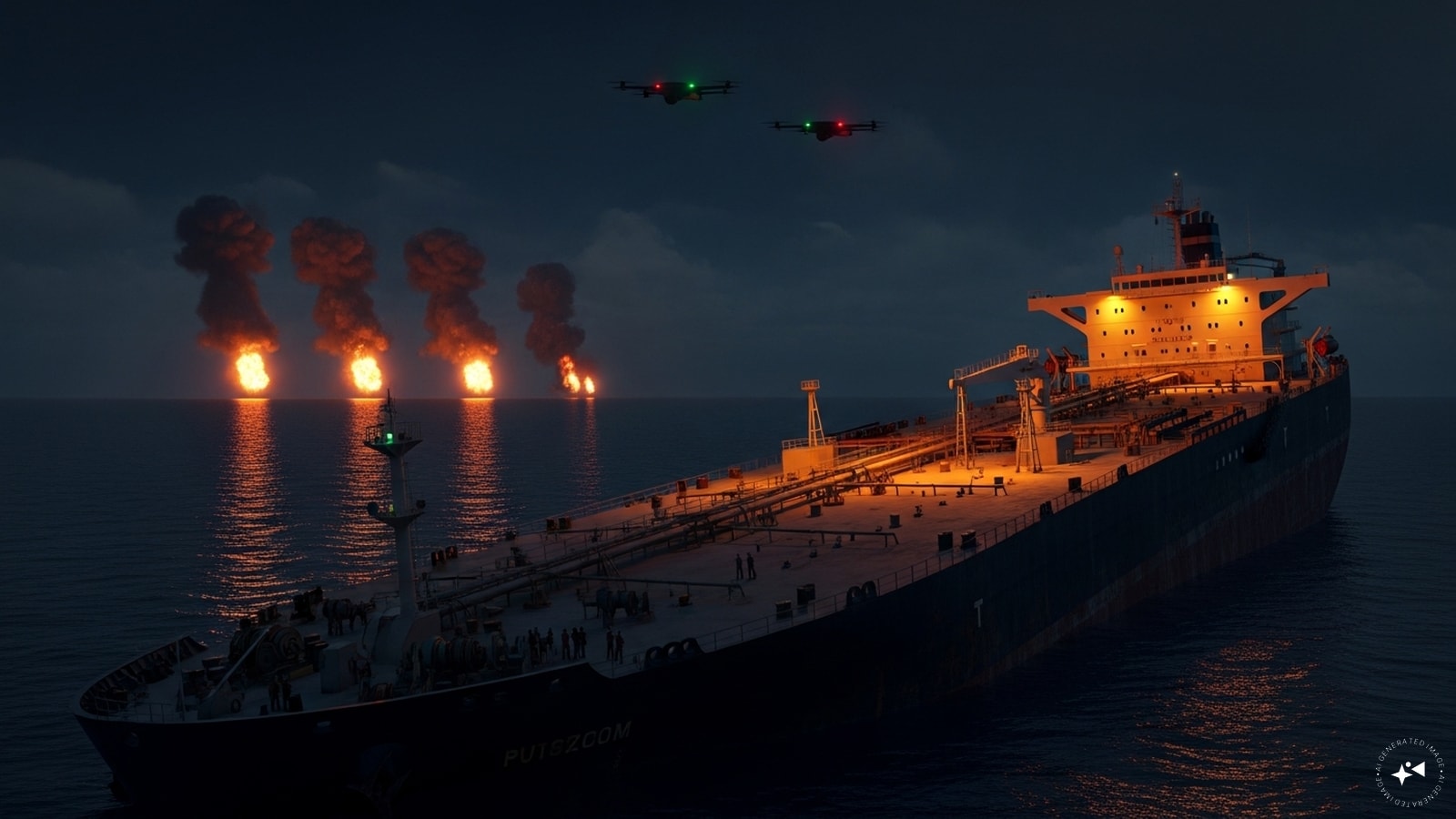
The process of ship seizure has become a choreographed ritual. It usually begins with a sudden loss of communication. GPS jammers or simple orders to cut the AIS (Automatic Identification System) signal turn a massive tanker into a ghost. Once the vessel is diverted into Iranian waters, the crew is subjected to a cycle of interrogation and isolation. The Washington Post has also covered this fascinating subject in great detail.
While the physical conditions on board these seized vessels vary—sometimes the crew is allowed to remain in their quarters, other times they are restricted—the mental toll is uniform. Uncertainty is the primary weapon. Captors rarely give timelines. They provide just enough food and water to maintain the "asset," but keep the sailors in the dark regarding negotiations between New Delhi and Tehran. This isolation is designed to pressure the home government. If the families of the sailors begin to protest in the streets of Mumbai or Kerala, the diplomatic pressure on the Indian government to make concessions increases.
Why India is the Primary Target
India provides roughly 10% of the world’s seafarers. This demographic dominance means that regardless of whether a ship is flagged in Liberia, Panama, or the Marshall Islands, there is a high statistical probability that the men on board are Indian. This creates a unique diplomatic headache for New Delhi.
India maintains a delicate "strategic autonomy" in the Middle East. It buys oil from Russia, manages a port in Iran (Chabahar), and maintains deep security ties with Israel and the US. When a ship like the MSC Aries is seized, India’s neutrality is tested. Tehran knows that holding Indian nationals is a way to force New Delhi to the table or to discourage it from aligning too closely with Western maritime security initiatives like Operation Prosperity Guardian.
The sailors become human shields for a shadow war. They are caught between a shipping company that views the vessel as an insured capital asset and a government that must balance the lives of its citizens against billion-dollar energy deals.
The Insurance Gap
From a business perspective, the "ordeal" is a line item. War risk insurance premiums in the Strait of Hormuz have skyrocketed. When a ship is seized, the owners file a claim. The cargo is usually insured. The hull is insured. The lives and mental health of the crew? There is no policy that can remediate months of captivity in a geopolitical furnace.
We see a recurring pattern where shipping companies offer "danger pay" to entice sailors into high-risk zones. For many Indian seafarers, coming from modest backgrounds where a maritime salary can support an entire extended family, the choice is no choice at all. They take the risk because the alternative is poverty. The industry knows this. It exploits the economic desperation of the Global South to keep the world's supply chains moving through active combat zones.
The Failure of the Flag State System
The maritime industry operates under the "Flag of Convenience" system. A ship owned by a Greek billionaire might fly the flag of Panama and be crewed by Indians. When that ship is seized by Iran, Panama often does nothing. The flag state, which is legally responsible for the safety of the vessel, lacks the military or diplomatic muscle to intervene.
This leaves the seafarers' home country—India—to do the heavy lifting. But India is not the flag state. This creates a jurisdictional nightmare. If an Indian citizen is kidnapped on land in a foreign country, the path to diplomatic intervention is clear. If they are taken on a Liberian-flagged ship in international waters, the lines of responsibility are blurred. This ambiguity is exactly what allows these seizures to continue with such frequency.
The Illusion of Security
Private maritime security companies (PMSCs) often provide armed guards for ships transiting the Gulf of Aden to deter pirates. However, these guards are useless against a sovereign military like the IRGC. In fact, having armed guards on board can escalate a situation from a "seizure" to a "firefight," putting the crew in even greater danger.
The reality is that there is no military solution for the individual sailor. Escort missions by the Indian Navy, such as Operation Sankalp, provide some comfort, but the Navy cannot be everywhere at once. A tanker is a slow, soft target.
The Psychological Aftermath
The ordeal doesn't end when the ship is released. Survivors of these maritime detentions often report symptoms of severe PTSD. They return home to a hero's welcome, but the industry they serve is quick to move on. There is rarely long-term psychological support provided by the shipping agencies or the owners.
Furthermore, there is a "blacklisting" fear. Sailors who speak out too loudly about the lack of security or the failures of their employers during a crisis often find it difficult to secure their next contract. The maritime world is small, and "troublemakers" are filtered out by recruitment algorithms. This enforces a code of silence that keeps the true extent of the trauma hidden from the public and from prospective cadets.
The Strategic Shift Required
If we are to protect the men who power global commerce, the current model must be dismantled. The responsibility for crew safety cannot be outsourced to flag states that exist only on paper.
- Mandatory Repatriation Bonds: Shipping companies operating in high-risk zones should be required to post significant financial bonds that are triggered the moment a crew is detained, ensuring families are supported and legal resources are immediate.
- Direct Diplomatic Accountability: The "beneficial owner" of the ship—the person actually making the profit—must be held legally liable in their home jurisdiction for the safety of the crew, regardless of what flag the ship flies.
- Right of Refusal: Seafarers must have a globally recognized, legally protected right to refuse to enter "War Risk Areas" without fear of termination or blacklisting.
The Strait of Hormuz will remain a flashpoint as long as the regional power struggle between Iran and the West persists. We cannot change the geography, but we can change the value we place on the lives of those navigating it. The Indian seafarer is not a disposable commodity. He is the backbone of the global economy.
Treating him as anything less is not just a corporate failure; it is a moral one. The industry must stop hiding behind the complexity of maritime law to avoid its simplest duty: bringing its people home.
Stop looking at the ship. Look at the men.