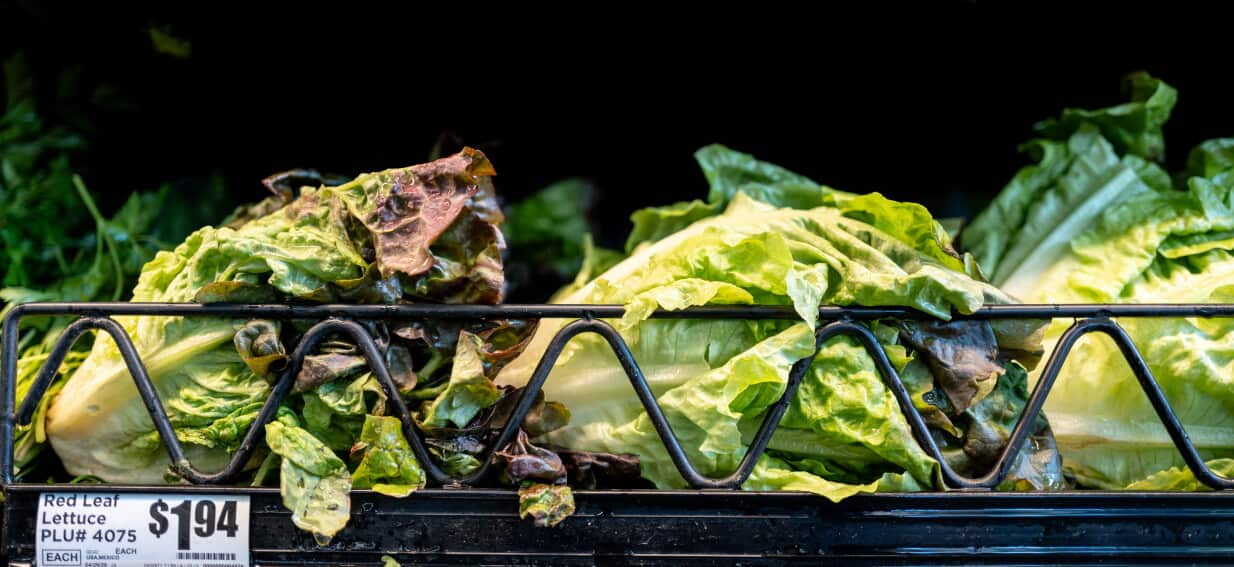
The crunch of romaine lettuce is a sound we associate with health. It is the satisfying, watery snap at the center of a Caesar salad or the refreshing contrast layered inside a fast-food taco. We buy it packaged in neat plastic bags, pre-washed and triple-rinsed, trusting that the system works.
But sometimes, that satisfying crunch is a illusion of safety.
In late 2006, a quiet panic began to ripple through the American food supply chain. It did not start with a massive explosion or a sudden market crash. It started in doctor's offices, emergency rooms, and the quiet bedrooms of families who had done nothing more than eat a quick dinner. Over the course of just a few weeks, a massive outbreak of Escherichia coli O157:H7 swept across multiple states. By the time the dust settled, more than seventy people had fallen severely ill, and the culprit was traced back to a seemingly harmless source: shredded iceberg lettuce served at Taco Bell restaurants across the Northeast.
To understand how a leafy green can become a vehicle for a crisis, we have to look past the sterile grocery aisles and venture into the fields where our food is grown.
The Journey from Valley to Table
Imagine a vast field in the Salinas Valley of California, often called the "Salad Bowl of the World." Here, rows of vibrant green lettuce stretch to the horizon under a cool morning fog. This is where the story begins.
Lettuce is a delicate crop. It grows low to the ground, its broad, ruffled leaves acting like open cups that catch whatever falls from the sky—or whatever is sprayed from the ground. Unlike crops that are cooked before consumption, like potatoes or beans, lettuce is eaten raw. This single fact makes it one of the most vulnerable items in our entire agricultural system.
Consider a hypothetical farmer named Eduardo. He wakes up before dawn, watching the tractors roll out into the fields. Eduardo knows that the water irrigating his crops comes from nearby wells or canal systems. If a cattle ranch is located just a mile uphill, a heavy rainstorm can cause agricultural runoff. Water containing animal waste can seep into the irrigation channels.
Once that contaminated water touches the lettuce leaves, the bacteria find a home.
E. coli is a stubborn organism. It does not simply sit on the surface waiting to be washed away. Research has shown that the bacteria can actually enter the microscopic pores of the leaves, shielding themselves from sanitizing washes. When the lettuce is harvested, sent to a processing plant, shredded, and mixed into massive batches, a single contaminated head of lettuce can taint thousands of cases of product.
The Anatomy of an Outbreak
When the Taco Bell outbreak struck, investigators from the Food and Drug Administration (FDA) and the Centers for Disease Control and Prevention (CDC) had to work backward. It is a grueling process of elimination.
They began by interviewing patients, asking them to reconstruct every single meal they had eaten over the past week.
- "Did you eat onions?"
- "Did you have ground beef?"
- "What about the cheese?"
Initially, suspicion fell heavily on green onions. Public warnings were issued, menus were changed, and tons of scallions were discarded. But the data did not align. The statistical fingerprints pointed elsewhere.
Through rigorous genetic testing known as pulsed-field gel electrophoresis, scientists matched the specific strain of E. coli taken from sick patients. The DNA profile was identical. The common denominator among the victims was not the onions, but the shredded lettuce.
For the average consumer, E. coli is a abstract term. But for those affected, the reality is agonizing. The bacteria produce a potent toxin called Shiga toxin, which attacks the lining of the digestive system. In severe cases, particularly in young children and the elderly, it can lead to Hemolytic Uremic Syndrome (HUS), a life-threatening condition that causes kidney failure.
A teenager who grabbed a quick taco after soccer practice suddenly finds themselves hooked to a dialysis machine. The stakes are not abstract. They are deeply, painfully personal.
The Scale of the Supply Chain
The sheer volume of the American food machine is difficult to comprehend. A single processing facility can handle hundreds of thousands of pounds of leafy greens every day. The lettuce is harvested, cooled, washed in chlorinated water, spun dry, and sealed into bags filled with modified atmosphere gas to keep them green and crisp.
This centralization is highly efficient. It keeps prices low and ensures that a restaurant chain can serve the exact same taco in Maine as it does in Florida. But this efficiency is a double-edged sword.
When a contamination event occurs in a centralized system, the distribution network acts as an accelerator. Instead of a localized issue affecting a single town, the contaminated product is trucked across state lines overnight. By the time the first patient feels ill and the lab results are processed, the remaining lettuce has already been consumed or thrown away, leaving investigators to chase ghosts in empty warehouses.
The 2006 outbreak eventually linked back to fields in California, highlighting the profound interconnectedness of our food system. A microscopic organism in a western valley had disrupted lives, crippled a major restaurant brand, and shaken public confidence across the nation.
Redefining Safety on the Farm
In the wake of the crisis, the agricultural industry had to confront a hard truth: the old ways of monitoring food safety were no longer enough. You cannot test your way to safety. If you have a field of ten thousand lettuce heads and only one is contaminated, the chances of catching it through random sampling are virtually zero.
The focus shifted from testing the final product to securing the entire environment.
This meant establishing strict buffer zones between cattle ranches and produce fields. It meant testing irrigation water weekly, keeping wild animals out of the fields, and ensuring that farmworkers had access to clean, modern sanitation facilities. The industry created the Leafy Greens Marketing Agreement (LGMA) to enforce these standards, trying to rebuild the trust that had been shattered.
Yet, despite these protocols, the threat remains. Biological systems are dynamic, chaotic, and unpredictable. Dust blown from a nearby feedlot, a flock of migrating birds, or an unusually heavy seasonal flood can breach even the most stringent defenses.
The Choice on Our Plates
We live in an era of unprecedented convenience. We expect every vegetable to be perfectly clean, pre-cut, and available year-round, regardless of the season. But this convenience requires us to delegate our safety to a vast, invisible web of growers, processors, truck drivers, and inspectors.
Most of the time, the web holds.
But when we tear open a bag of salad or bite into a fast-food meal, we are participating in a quiet act of faith. We trust that the water was clean, that the workers were protected, and that the system prioritized lives over margins. It is a reminder that the most basic things we consume connect us directly to the soil, to the water, and to the hands of the people who feed us.
The green leaf on your plate is not just food. It is the end product of a massive, fragile human endeavor, carrying with it all the risks and responsibilities of the modern world.