The Midnight Market
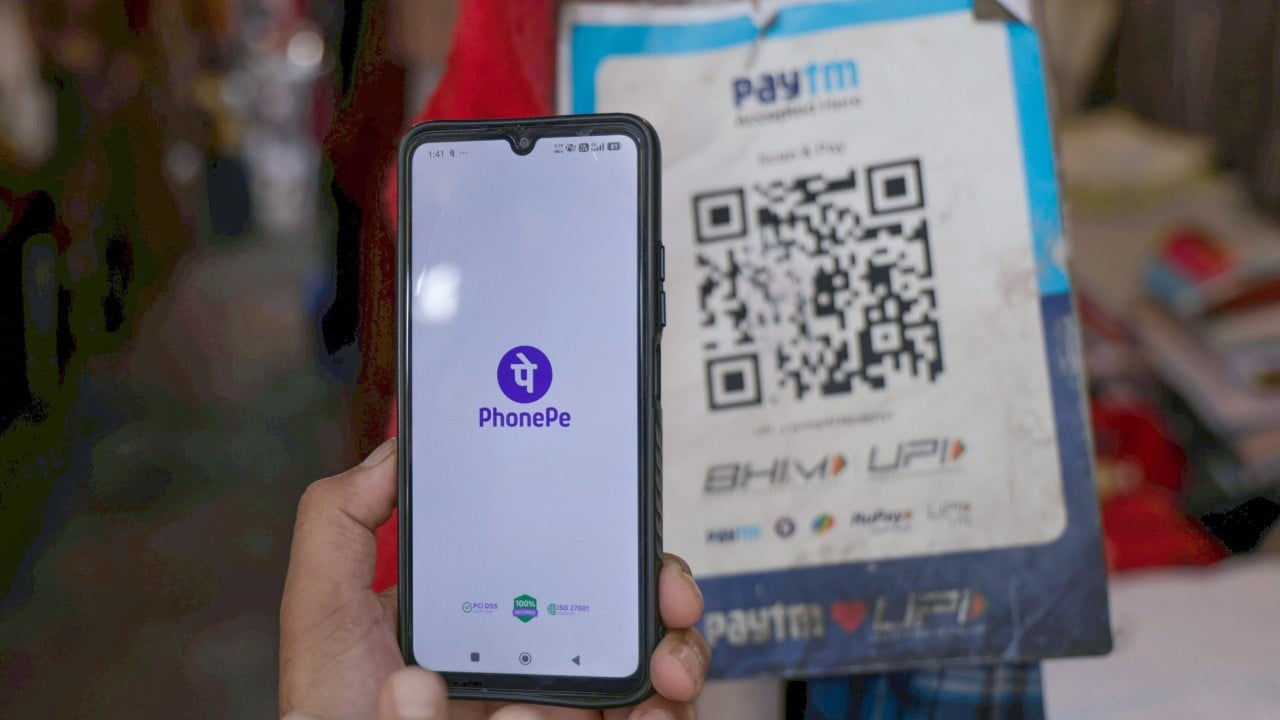
The chai vendor’s fingers move without hesitation. Steam rises from the heavy aluminum kettle, curling into the damp morning air of a Bengaluru side street. He reaches out, not for a creased green banknote or a heavy-nickel coin, but for a scrap of paper taped to his cart. On it sits a square of black-and-white pixels. A customer pulls a phone from a worn denim pocket, taps a glass screen, and the transaction happens. No clinking metal. No plastic swipe fee waiting to quietly nibble away at the vendor’s fragile daily margins.
Just a quiet beep. Done.
To an outside observer, it looks like magic. To the vendor, it is simply survival. For years, the architecture of money favored those who already had it. Every swipe of a card carried a hidden tax—a merchant discount rate that siphoned a percentage of every sale into the quiet vaults of corporate intermediaries. In a street economy built on single-digit profit margins, those fractions of a percent added up to a heavy burden.
Then the architecture changed.
India did something radical with its digital payment infrastructure, building a public utility for money that bypassed traditional gatekeepers. And now, as other nations across the Global South look toward these shores, they are not just watching a technical upgrade. They are watching a quiet revolution in how wealth moves through the hands of ordinary people.
The Cost of the Invisible Toll
Consider what happens when money becomes digital without public intent.
In most of the developed world, moving money electronically means renting a pipe. Private credit card networks and proprietary processors own the road, and they charge a toll for every vehicle that passes. If you buy a five-dollar coffee, the cafe owner does not get five dollars. They get four dollars and seventy cents. The rest evaporates into interchange fees, switch fees, and processing charges.
Multiply that by billions of transactions. It forms a massive, invisible tax on small businesses, street vendors, and corner stores—the very economic engine of developing nations.
When India introduced its Unified Payments Interface, known locally as UPI, it inverted that entire philosophy. Instead of treating payments as a private toll road, the government treated them as a public highway. Built on open standards, it allowed banks, fintech startups, and everyday citizens to transact instantly, interoperably, and crucially, without charging merchants punishing fees.
The results defied conventional economic wisdom. Transaction volumes skyrocketed into the tens of billions per month. A vegetable vendor in a remote village could accept digital payments as easily as a luxury boutique in Mumbai. But this massive scale created a fascinating paradox. When a system costs next to nothing to run, who pays for the plumbing?
This is where the recent debate over digital payment fees enters the narrative. Maintaining a national financial highway requires electricity, server upkeep, cybersecurity defenses, and constant engineering innovation. If the transaction fee is zero for the merchant, private payment apps face a squeeze. They cannot survive on thin air.
Yet, the genius of the system lies in its protection of the smallest player. By keeping person-to-merchant transactions free or heavily subsidized through government support and alternative monetization models, the architecture protects the street-level economy from being choked by fees.
The Global South Watches and Learns
Across the globe, developing economies face a common trap. They want to modernize their financial systems, but copying Western models often means locking their citizens into high-fee ecosystems owned by foreign tech giants.
That is why delegations from Africa, Latin America, and Southeast Asia have been quietly studying the Indian model. They see a blueprint for digital sovereignty.
To understand why this matters so deeply, imagine a smallholder farmer in Kenya or a textile weaver in Indonesia. For decades, financial inclusion meant giving them access to a bank account, only for that account to bleed dry through maintenance fees and high transfer costs. True inclusion is not just about having a digital wallet. It is about keeping what you earn.
When nations look at India's approach, they are learning three foundational lessons.
First, interoperability is non-negotiable. If Bank A’s app cannot talk to Bank B’s system, you have built a walled garden, not an economy. Open standards break down those walls, forcing companies to compete on service quality rather than locked-in customer bases.
Second, government-backed public digital infrastructure can coexist with private innovation. UPI did not crush private fintech companies; it gave them a massive foundation upon which to build innovative apps, credit products, and insurance services.
Third, and perhaps most importantly, zero-fee or low-fee structures for micro-transactions are not charity. They are economic gasoline. When a tiny merchant does not lose two percent of every sale to a corporate middleman, that money stays in their pocket. It buys inventory. It pays for a child’s schoolbook. It circulates locally.
The Human Equation
We often talk about financial technology as if it were purely a matter of code, bandwidth, and cybersecurity protocols. We look at graphs showing exponential growth curves and charts of monthly transaction volumes.
We forget the human friction underneath.
I remember talking to a small shopkeeper who had spent his entire life dodging counterfeit currency and keeping a heavy ledger of credit chalked up on a wooden board. For him, moving to digital payments was terrifying. He worried about technology failing him. He worried about invisible hands reaching into his digital drawer.
When the first digital payment pinged on his cheap smartphone, his face did not register corporate synergy or market disruption. It registered relief. The money was simply there. Whole. Untaxed by predatory middlemen.
That is the true stakes of the digital payment fee debate across the Global South. It is not about whether a fintech unicorn makes a slightly higher margin this quarter. It is about whether the digital economy will serve the people who build it, or whether it will simply recreate old feudal tolls in shiny new wrappers.
The Road Ahead
As other countries begin adapting these open-source payment rails to their own legal and financial landscapes, they will inevitably face friction. Banks will lobby for higher fees. Legacy processors will argue that secure infrastructure requires high tolls. Venture capitalists will demand monetization paths.
The temptation to compromise will be high.
Yet the Indian experiment offers a stubborn counter-narrative. It proves that when a nation treats financial transactions as a fundamental public good—like roads, water, and electricity—the entire economy unlocks a ferocious, grassroots vitality.
The chai vendor down the street does not know the macroeconomic theory behind interoperable APIs or merchant discount rates. He only knows that when the QR code flashes green, the money is his. Every single coin of it.
And in that small, quiet transaction lies the blueprint for the financial future of the developing world.


