Twenty-one miles.
That is the distance across the narrowest point of the Strait of Hormuz. To a long-distance swimmer, it is a morning’s grueling ambition. To a modern naval destroyer, it is a few minutes of steady steaming. But to the global economy, those twenty-one miles are a carotid artery. When that artery constricts, the world doesn't just feel a twitch in the markets; it feels a cold, creeping paralysis in the very machinery of daily life. If you found value in this piece, you should look at: this related article.
Consider a baker in a small town outside Dusseldorf. We will call him Klaus. Klaus does not follow the daily briefings from the White House Press Secretary. He does not track the movements of the U.S. Fifth Fleet. He cares about the cost of the flour he buys and the electricity required to heat his ovens to exactly 230°C.
When the Strait of Hormuz is blocked or threatened, the price of the natural gas powering Klaus’s ovens does not merely tick upward. It leaps. The White House recently pointed out a blunt, uncomfortable truth: while the United States has spent decades acting as the neighborhood watch for this stretch of water, the people who actually need the gates open are often thousands of miles away from Washington. They are in Berlin. They are in Paris. They are in London. For another perspective on this story, refer to the recent update from The New York Times.
The Geography of Dependence
For the United States, the Strait is a strategic headache. For America's NATO allies, it is an existential one.
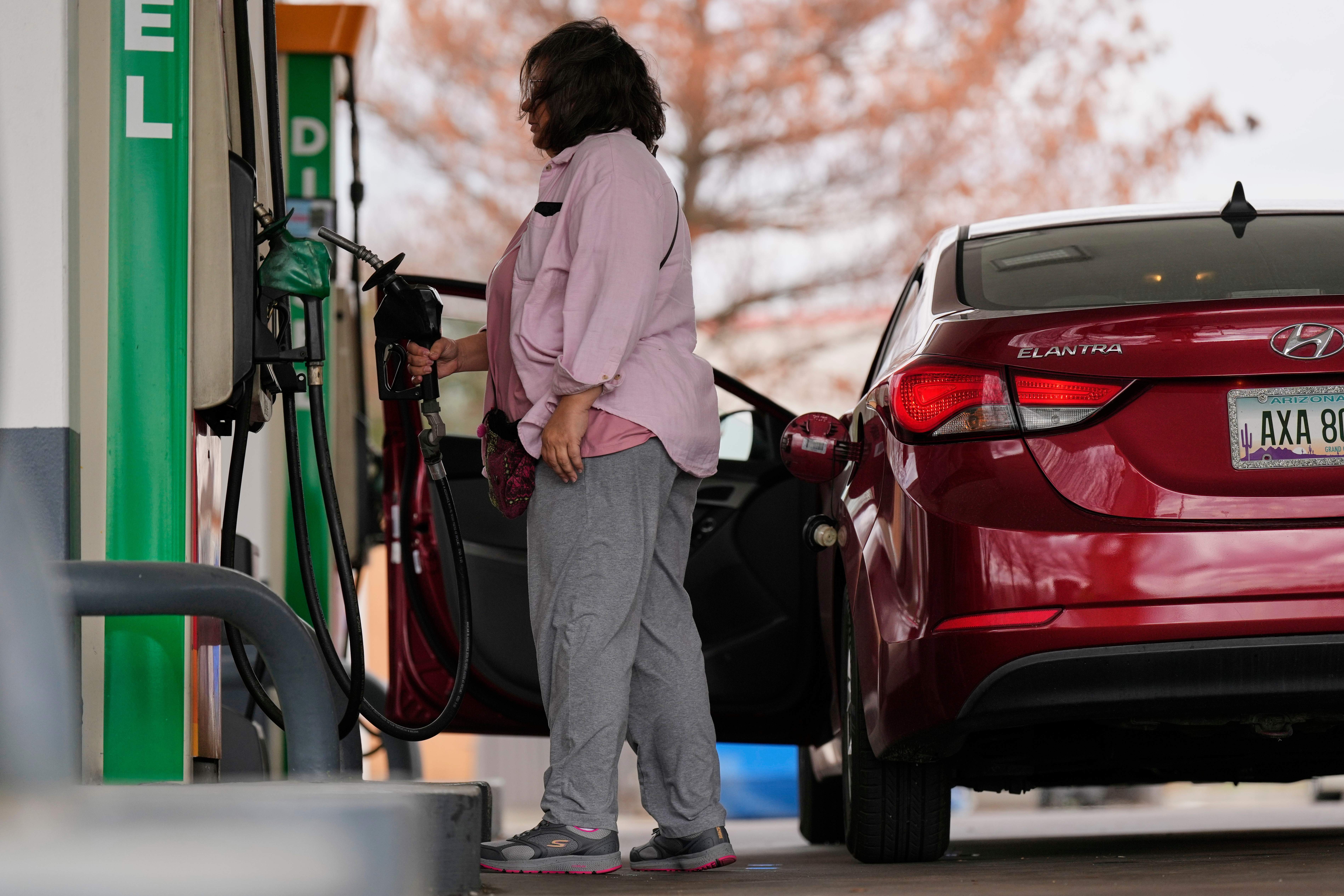
The U.S. has undergone a quiet revolution in the last decade, transforming from a desperate seeker of foreign energy into a powerhouse of domestic production. If the Strait closes tomorrow, American gas stations might see a spike, but the lights will stay on. The factories will keep humming. The sheer vastness of the Permian Basin acts as a thermal blanket against the cold winds of Middle Eastern instability.
Europe has no such blanket.
When a tanker carrying Liquefied Natural Gas (LNG) is stalled in the Gulf, it isn't just a "logistical delay." It is a missing link in the chain that keeps a grandmother in Oslo warm during a sub-zero January. The White House Press Secretary’s recent comments weren't just political posturing; they were an invitation to look at a map and acknowledge a shifting reality. The U.S. provides the muscle, but the allies reap the heat.
The Mechanics of the Chokepoint
Ships move through the Strait in a strictly managed dance. Deep-water channels allow the massive VLCCs (Very Large Crude Carriers) to pass, each one holding enough oil to fill 1,600 Olympic-sized swimming pools.
Imagine these vessels as giant red blood cells. They carry the oxygen of modern civilization. When tensions flare, the insurance premiums for these ships skyrocket. A shipping company owner in Athens suddenly finds that the cost of insuring a single voyage has tripled overnight. That cost is never absorbed by the shipping company. It is passed down, hand to hand, until it reaches the price of a liter of milk in a grocery store in Brussels.
The irony of the current geopolitical standoff is that the protector of the route is the one least reliant on the cargo. The U.S. Navy patrols these waters at a cost of billions of dollars a year. This is not charity, of course—global stability serves American interests—but the lopsided nature of the benefit is becoming harder to ignore in the halls of power.
Why the Math Has Changed
Think back to the 1970s. During the oil shocks of that era, the U.S. was a hostage to the Strait. If the flow stopped, the American economy buckled. Long lines at gas stations became the defining image of a decade’s malaise.
Today, the story is different.
The U.S. produces more crude oil than any country in history. Ever. Because of this, the American interest in the Strait has shifted from "survival" to "management." Meanwhile, the NATO allies—particularly those in Europe who have spent the last few years frantically decoupling from Russian pipelines—have turned their eyes toward Qatar and the United Arab Emirates.
To get that Qatari gas to a terminal in Poland, it must pass through those twenty-one miles.
The White House is pointing to a ledger that has become dangerously unbalanced. On one side, you have the American taxpayer funding the most sophisticated maritime security force in human history. On the other, you have European economies that are 20%, 30%, or even 40% dependent on the energy passing through that specific needle’s eye.
The Fragile Peace of the Tanker War
It is easy to view "maritime security" as an abstract concept. It feels like something out of a techno-thriller novel. But for the crew of a tanker, the reality is the sound of a drone overhead or the sight of a fast-attack craft appearing on the horizon.
There is a psychological weight to this. When the U.S. suggests that allies should take a more active role in reopening or securing these lanes, it is a call for skin in the game. It is a reminder that the "security umbrella" is not a permanent fixture of the natural world like the tides or the stars. It is a choice.
If the U.S. decides that the cost of being the world's petrol-guard is no longer worth the domestic political capital, what happens to the baker? What happens to Klaus?
If the Strait remains closed for a week, the global oil price doesn't just rise; it enters a state of "price discovery," which is a polite economist's term for blind panic. If it stays closed for a month, the industrial heart of Europe begins to seize. Smelters shut down. Chemical plants go dark. The interconnectedness of the NATO alliance is tested not by a land invasion, but by the absence of a fluid moving through a pipe.
The Hidden Stakes of Diplomacy
The White House Press Secretary’s statement serves as a subtle, sharp-edged tool. By highlighting that allies benefit "far more" from the reopening of the Strait, the administration is signaling a new era of transactional diplomacy.
It is a quiet admission that the old guardrails are leaning.
We often talk about "strategic autonomy" in Europe—the idea that the continent should be able to defend its own interests. Usually, this conversation revolves around tanks and fighter jets. But the most immediate need for autonomy isn't on a battlefield; it's in the water.
The U.S. is essentially asking a question: If your entire way of life depends on these twenty-one miles, why are you watching from the sidelines while we hold the line?
Beyond the Barrel
We have a tendency to think of energy as a commodity, but it is actually a social contract. We agree to work, to build, and to innovate under the assumption that the basic inputs of life—light, heat, mobility—will be available at a predictable price.
When the Strait of Hormuz becomes a flashpoint, that contract is torn up.
The human element is the anxiety of the logistics manager in Rotterdam who has to tell his board that three ships are stuck in the Gulf of Oman. It is the frustration of the commuter in London who sees the price at the pump jump twenty pence in a single afternoon. It is the vulnerability of a geopolitical structure that relies on a single, narrow passage that could be disrupted by a few well-placed mines or a handful of missiles.
The U.S. is no longer the primary customer of the Middle East, yet it remains the primary bouncer at the door.
This isn't just about "who pays more." It is about the fundamental architecture of the Western world. If the U.S. steps back, even an inch, the allies must step forward, or the entire house of cards—built on the reliable flow of energy—begins to flutter in the wind.
The Strait is more than a geographic feature. It is a mirror. When we look into its waters, we see the reflection of our dependencies, our aging alliances, and the terrifyingly thin line between a functioning society and a cold, dark winter.
As the sun sets over the Persian Gulf, the silhouettes of the great tankers continue to move, ghost-like, through the haze. They carry the heat for a million homes and the fuel for a thousand industries. For now, the path is open. But the conversation about who keeps it that way has changed forever. The silence of the deep water is deceptive; beneath the surface, the math of global power is being rewritten, one shipment at a time.