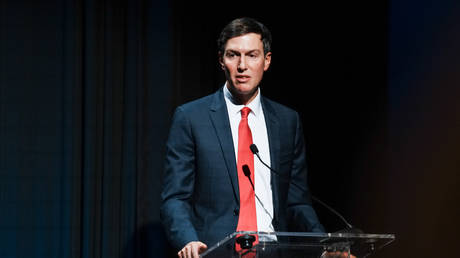
Cold rain streaks the glass of a third-floor apartment in eastern Poland, barely forty miles from the Belarusian border. Inside, a retired machinist named Marek checks the battery level on a hand-cranked radio he bought two winters ago, long before such purchases became routine in his neighborhood. He is not a politician, nor does he read diplomatic cables. Yet when an American envoy steps up to a podium thousands of miles away to outline a new vision for European security—one that involves sitting back down at the table with Moscow—Marek feels the tremor in his floorboards before the broadcast even finishes.
Maps look neat on television screens. Diplomats draw thick lines with markers, trade phrases like "security architecture" and "spheres of influence," and speak of burden-sharing as though it were a simple split of a restaurant bill.
The reality tastes like stale coffee at three in the morning.
When Keith Kellogg, President Donald Trump’s special envoy for Ukraine and Russia, along with senior administration officials, began laying out the framework to reshape European security, the headlines focused on the immediate shockwaves. The proposals, voiced across major international forums and policy briefings, center on three core shifts: pushing for a negotiated freeze or settlement to the war in Ukraine, demanding that European allies shoulder the overwhelming share of their own conventional defense, and reopening structured diplomatic channels with Russia to prevent a broader superpower collision. To supporters of this approach, it is overdue realism—an end to endless, open-ended commitments. To critics across Warsaw, Tallinn, and Brussels, it sounds perilously close to trading away someone else’s house to buy temporary quiet on the block.
To understand why a single speech in Washington or Munich can make a grandmother in Lithuania check her passport expiration date, you have to strip away the jargon and look at the invisible contract that has kept Western Europe mostly peaceful for nearly eighty years.
The Architecture Nobody Notices Until It Creaks
Think of European security since 1945 as the plumbing inside an old apartment building. For decades, most residents turned on the tap, got clean water, and never once thought about the pipes behind the plaster. The United States acted as both the main water line and the emergency plumber. Through NATO’s Article 5—the promise that an attack on one member is an attack on all—Washington guaranteed that no tank would roll across a Western border without facing the full weight of American firepower.
It was expensive. American taxpayers footed the lion's share of the bill, maintaining tens of thousands of troops on European soil while many European governments trimmed their own militaries down to ceremonial sizes, redirecting billions into healthcare, trains, and pensions.
"We have been subsidizing their defense while they build up their economies and lecture us on trade," Trump has argued for years, a sentiment his envoys have now translated into concrete policy proposals. According to statements from the administration's national security team, the new blueprint insists that European nations boost defense spending toward five percent of GDP, take primary responsibility for patrolling any eventual buffer zone in Ukraine, and accept that Ukraine’s membership in NATO is off the table for the foreseeable future.
Listen closely to the logic behind that shift, because dismissing it as mere isolationism misses why it resonates so deeply in places like Ohio and Pennsylvania. In a small manufacturing town outside Toledo, where the local high school roof leaks and fentanyl has hollowed out entire streets, asking a voter to fund another decade of artillery shells for a border dispute six time zones away is a hard sell. The envoy’s pitch to that voter is straightforward: America cannot be the world’s permanent security guard while its own house needs repair, and talking to the Kremlin—however distasteful—is how adults stop a regional fire from burning down the whole neighborhood.
What Happens When the Guard Changes Shifts
Now step across the ocean and stand in Marek’s shoes in eastern Poland, or picture a hypothetical twenty-four-year-old software engineer named Elena living in Tallinn, Estonia. (To be clear, Elena is a composite character, drawn from the very real anxieties voiced daily by young professionals across the Baltic states.)
For Elena, the American security umbrella is not an abstract budget line. It is the sole reason Estonia—a nation of 1.3 million people sharing a nearly two-hundred-mile border with Russia—can function as a thriving digital democracy rather than a nervous garrison state. When she hears American envoys suggest that European forces alone should police a demilitarized zone in Ukraine, without American boots on the ground or automatic NATO backing if things go wrong, she does the math in seconds.
Europe, for all its economic wealth, does not currently possess the unified command structure, satellite intelligence, heavy airlift capacity, or ammunition stockpiles to deter Russia on its own. Pushing Europe into the driver’s seat overnight is like handing the keys of a manual-transmission semi-truck to someone who has only ever driven a compact car—while merging onto an icy highway.
This is the central tension tearing at the transatlantic alliance. Both sides are looking at the exact same set of facts and arriving at opposite survival instincts.
Washington looks at the ledger and sees exhaustion: trillions spent on foreign entanglements since 2001, a rising superpower in China that demands undivided strategic attention, and a European continent rich enough to pay for its own guards. Moscow looks at the same moment and sees an opening—a chance to formalize territorial gains in Ukraine, lock in a neutral buffer zone, and test whether the Western alliance will fracture when pressed. And Europe looks at both capitals and feels the cold draft of 1938, when great powers sat in sleek rooms and redrew the borders of smaller nations in the name of "peace in our time."
The Ghosts in the Negotiating Room
History does not repeat itself verbatim, as the old saying goes, but in Eastern Europe, it certainly rhymes with heavy footsteps.
When the Trump envoy’s plan floats the idea of normalizing diplomatic engagement with Russia as part of a broader European security settlement, diplomats in Paris and Berlin quietly acknowledge a hard truth: you cannot permanently isolate a nuclear-armed state that spans eleven time zones. Eventually, someone has to pick up the phone. During the darkest days of the Cold War, even after Soviet tanks crushed uprisings in Budapest in 1956 and Prague in 1968, Washington and Moscow maintained hotlines, negotiated arms control treaties, and carved out unwritten rules of restraint.
Back then, the world was divided into two rigid blocs. Everybody knew where the tripwires were.
Today, the map is far messier. Russia’s economy has been retooled onto a war footing, churning out drones and artillery shells at a pace that outstrips combined Western production. Meanwhile, European democracies are wrestling with inflation, energy transitions, and domestic political fragmentation. Asking Berlin, Paris, and London to suddenly conjure up hundreds of thousands of battle-ready troops—and the political will to send them toward the Dnieper River—runs headlong into the reality of voters who have spent three generations believing major land wars in Europe were museum pieces.
I remember standing near the Brandenburg Gate in Berlin in November 2019, watching crowds celebrate the thirtieth anniversary of the fall of the Wall. Street musicians played Beethoven; tourists chipped away at souvenir concrete; diplomats gave speeches declaring that Europe was finally "whole, free, and at peace." The air smelled of roasted almonds and damp autumn leaves. Nobody in that square believed that within six years, European leaders would be debating how to ration artillery shells or whether an American president would honor a seventy-five-year-old mutual defense pledge.
That memory lingers because it exposes our greatest blind spot: we mistake long stretches of calm for permanent laws of nature.
The Price Tag of a Frozen Conflict
Suppose the envoy’s blueprint moves forward. Suppose a ceasefire line is drawn across eastern Ukraine, freezing the front roughly where the trenches sit today. What happens the morning after the ink dries?
First, the guns go quiet—and for families in Kharkiv and Odesa who have slept in subway stations for years, that silence alone is a mercy no outsider has the right to belittle. Mothers can walk children to school without checking phone apps for incoming ballistic missiles. Power grids can be repaired before winter hits again.
Yet a frozen conflict is not peace; it is an unexploded shell buried under a playground.
Without ironclad security guarantees—the kind that require real firepower behind them—a ceasefire simply gives a battered military time to rest, rearm, and try again in three or five years. European intelligence agencies, including those in Germany and Denmark, have already warned in public assessments that Russia could reconstitute its conventional forces within a few years if sanctions are lifted and combat pauses. If European peacekeepers are stationed along a six-hundred-mile demarcation line without American air cover or intelligence support, what happens the first time an unmarked drone crosses the line and kills three French or Polish soldiers?
Does Paris escalate? Does Washington step back and say, "We warned you this was your patrol"? Does Moscow bet that a divided alliance will blink rather than risk a wider war?
Nobody in Washington, Brussels, or Kyiv has a clean answer to that question. Anyone who claims otherwise is selling certainty where none exists.
A Continent Forced to Grow Up Overnight
Still, beneath the panic in European capitals, something unexpected is happening. The shock of America’s blunt new posture is doing what twenty years of polite diplomatic nudging never could: it is waking Europe up.
Poland now spends over four percent of its GDP on defense, building the largest land army in the European Union. Baltic nations are constructing concrete bunker networks along their eastern borders. Nordic countries—Sweden and Finland, nations that clung to neutrality through world wars and the Cold War—are now full NATO members, integrating their formidable air forces and Arctic defense networks into a single northern shield. Even Germany, long paralyzed by its twentieth-century history, has begun overhauling its procurement rules and debating the return of military conscription.
In a strange way, the Trump envoy’s hard-edged demands are forcing Europe to confront a question it avoided for decades: if peace on your continent depends entirely on who wins an election in swing-state America every four years, do you truly control your own destiny?
The answer, increasingly whispered in hallways from Warsaw to Stockholm, is no.
Reshaping European security with Russia at the table is not a neat diplomatic reset. It is a high-wire act without a net, conducted in gale-force winds while millions of ordinary lives hang beneath the wire. The Americans are betting that pragmatic deal-making and burden-shifting will pull the world back from the brink of nuclear escalation and free Washington to focus on the Indo-Pacific. The Russians are betting that Western patience is shorter than Russian endurance. And the Europeans are scrambling to build a wall while the storm is already beating against the windows.
Back in eastern Poland, Marek turns down the volume on his radio. Outside his window, a freight train rumbles west through the dark, carrying steel and timber toward ports on the Baltic Sea—ordinary goods moving along tracks that, twice in the last century, carried armies in both directions. He sets the radio on the windowsill beside a half-empty mug of tea, locks the deadbolt on his front door, and turns off the kitchen light, listening to the rain tap against the glass.


