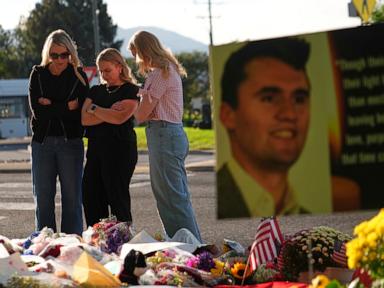
Campus security architectures often fail under stress because they are designed around compliance rather than threat mitigation. When physical security breakdowns result in catastrophic incidents at higher education institutions, public discourse typically focuses on immediate tactical response times or individual policy exceptions. This reactive focus obscures the structural mechanics of institutional vulnerability. Protecting open academic environments requires moving past superficial audits and examining how resource allocation models, bureaucratic friction, and perimeter permeability combine to create systemic failure points.
The core problem in higher education security is the tension between the philosophical imperative of accessibility and the operational necessity of asset protection. Universities are structurally incentivized to maintain low-friction environments. Open quadrangles, porous building boundaries, and decentralized facility management maximize student recruitment and public engagement. However, these same design principles create a high-entropy security surface that is functionally impossible to monitor uniformly with standard institutional resources.
To understand how security breakdowns occur, analysts must deconstruct institutional defense mechanisms into three distinct operational vectors: access control integrity, threat intelligence integration, and incident response architecture.
The Breakdown of Access Control Integrity
Physical security on university campuses rarely operates as a unified network. Instead, it functions as a patchwork of legacy hardware, fragmented administrative jurisdictions, and inconsistent enforcement policies.
The primary vulnerability stems from the friction between administrative convenience and strict credentialing. When an institution scales, the number of entry points increases exponentially faster than the security personnel assigned to monitor them. To maintain baseline operational flow during peak hours, facilities frequently default to unmonitored or uncredentialed open access. This creates structural blind spots that bypass electronic badge systems.
Furthermore, capital expenditure cycles in higher education favor aesthetic and programmatic upgrades over infrastructure hardening. Access control systems often suffer from deferred maintenance. Broken door latches, uncalibrated panic hardware, and outdated firmware turn enterprise-grade physical security perimeters into porous boundaries. A security posture is only as resilient as its weakest operational node; a single unlatched side door negates an investment in comprehensive perimeter fencing.
The Information Silo Effect in Threat Intelligence
Security deficiencies are rarely physical alone; they are frequently informational. Universities handle vast streams of behavioral data, facility reports, and threat notifications, yet this information is routinely siloed across disconnected departments. Campus police, student affairs, housing offices, and academic departments operate on separate informational ledgers.
When a threat actor exhibits escalating behavioral anomalies, the individual data points—reported disturbances, facility access violations, or concerning digital communications—are often distributed across multiple administrative domains. Because no single department possesses the complete dataset, the institution fails to trigger threshold risk evaluations.
This fragmentation creates a structural lag between threat identification and operational intervention. Institutional bureaucracy mandates multi-layered approval chains for behavioral intervention teams, dampening the velocity required to counter dynamic threats. In high-stakes environments, bureaucratic latency is functionally identical to a complete absence of oversight.
Resource Allocation and Cost Functions
The allocation of security resources within higher education is governed by a defensive budgeting model. Security departments are typically treated as cost centers rather than risk mitigation units. Consequently, funding is reactive, spiking immediately following a high-profile incident and decaying over subsequent fiscal cycles as competing academic priorities reclaim capital.
This cyclical funding model prevents long-term strategic investments. Institutions purchase short-term tactical hardware—such as auxiliary surveillance cameras or emergency call boxes—without building the human capital required to monitor, analyze, and act upon the data streams those tools generate. Surveillance without continuous human oversight produces a false sense of security while offering zero tactical utility during a rapid-onset crisis.
Strategic Reconstruction of Campus Defense
Mitigating institutional security failures requires abandoning compliance-driven checklists in favor of resilience engineering. Universities must transition from static perimeter defense to dynamic risk stratification.
First, access control must be centralized under a single security authority with the administrative power to override academic convenience for the sake of physical safety. This involves implementing single-point entry protocols for high-density public zones during periods of elevated threat indicators.
Second, institutions must deploy unified information management systems that aggregate behavioral reports, facilities data, and law enforcement intelligence into a single operational dashboard. Eliminating informational silos ensures that low-level behavioral anomalies can be correlated instantly by automated risk algorithms or centralized threat assessment teams.
Finally, capital allocation models must decouple security funding from reactive incident cycles. Establishing a baseline statutory percentage of operational budgets dedicated strictly to continuous security infrastructure hardening and personnel training removes the vulnerability introduced by fiscal volatility.
The failure of security systems at higher education facilities is an organizational design problem. Until institutions recognize that physical safety requires structural friction, architectural discipline, and unified intelligence aggregation, campus environments will remain uniquely susceptible to catastrophic security failures.


