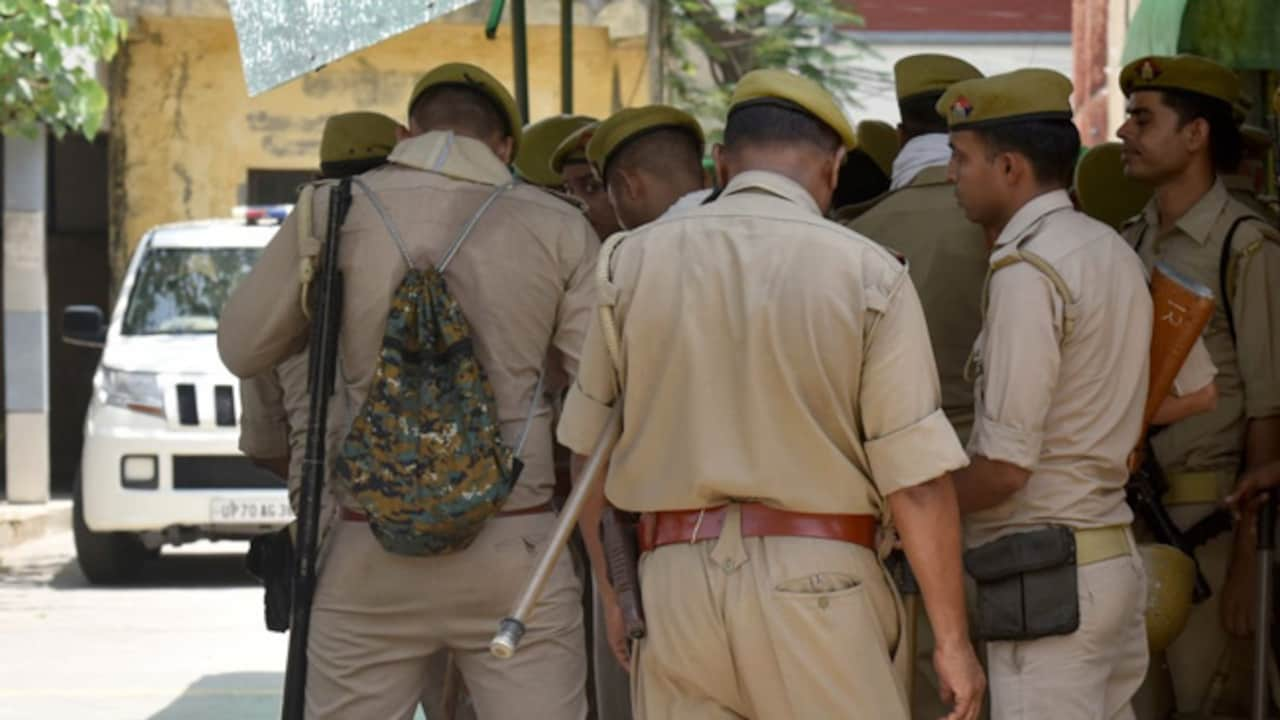
The arrest of four security personnel—comprising two Uttar Pradesh Police officers and two Central Reserve Police Force operatives—following allegations of sexual violence in the Amroha district exposes severe systemic fractures within state and federal security apparatuses. When individuals explicitly mandated with public safety and statutory enforcement transform into predatory actors, the institutional failure extends far beyond individual malfeasance. It indicates a collapse of internal oversight, background vetting mechanisms, and command-level accountability.
Analyzing this event requires examining three core institutional vulnerabilities: the asymmetry of authority, the erosion of internal deterrence structures, and the mechanics of jurisdictional opacity.
The Asymmetry of Authority and Access
The mechanics of the Amroha incident rely heavily on the weaponization of official status. Law enforcement credentials and paramilitary affiliations function as operational leverage, lowering the target's vigilance through manufactured institutional trust or fear of reprisal. When perpetrators wear uniforms or hold state-backed authority, the power dynamic becomes absolute.
This dynamic is reinforced by physical infrastructure access. The use of a remote or restricted-access property, such as a private farmhouse, demonstrates how perpetrators exploit physical isolation to mitigate immediate intervention. The structural problem lies in the ease with which state-issued authority can be decoupled from active duty and redirected toward illicit coercion without triggering automated red flags within internal monitoring systems.
The Breakdown of Internal Deterrence
Standard organizational theory posits that disciplined forces rely on a high-cost deterrence model: severe penalties, rigorous supervision, and peer-reporting mechanisms to maintain institutional integrity. However, when multiple personnel across distinct agencies—state police and central paramilitary forces—collude in criminal acts, it reveals a systemic failure of peer-level controls.
- Screening Deficits: Psychological evaluations and behavioral monitoring during active service often fail to screen for predatory behavioral markers.
- Supervisory Blind Spots: Off-duty or unauthorized utilization of official credentials and tactical positioning points to lax oversight by unit commanders.
- Impunity Expectations: The decision to commit crimes using official designations suggests a calculated, albeit flawed, expectation that institutional loyalty or bureaucratic inertia will protect the perpetrators from swift prosecution.
Jurisdictional Opacity and Systemic Remediation
Incidents involving multi-agency personnel—such as state police operating alongside central reserve forces—frequently encounter jurisdictional friction during initial investigations. Accountability is often diluted by institutional defensiveness, where respective agencies attempt to manage public relations fallout rather than aggressively purge compromised elements.
Elevating the response to such structural failures requires shifting from reactive disciplinary actions to preventative systemic architecture. This necessitates independent oversight boards with direct investigative jurisdiction over law enforcement bodies, mandatory real-time tracking of off-duty credential utilization, and the establishment of independent witness protection protocols to ensure that victims can pursue justice without facing systemic intimidation.
Gang rape in Amroha: Police officers and CRPF personnel arrested
This video covers the news reporting regarding the arrest of police and CRPF personnel in Amroha, providing visual context to the incident.