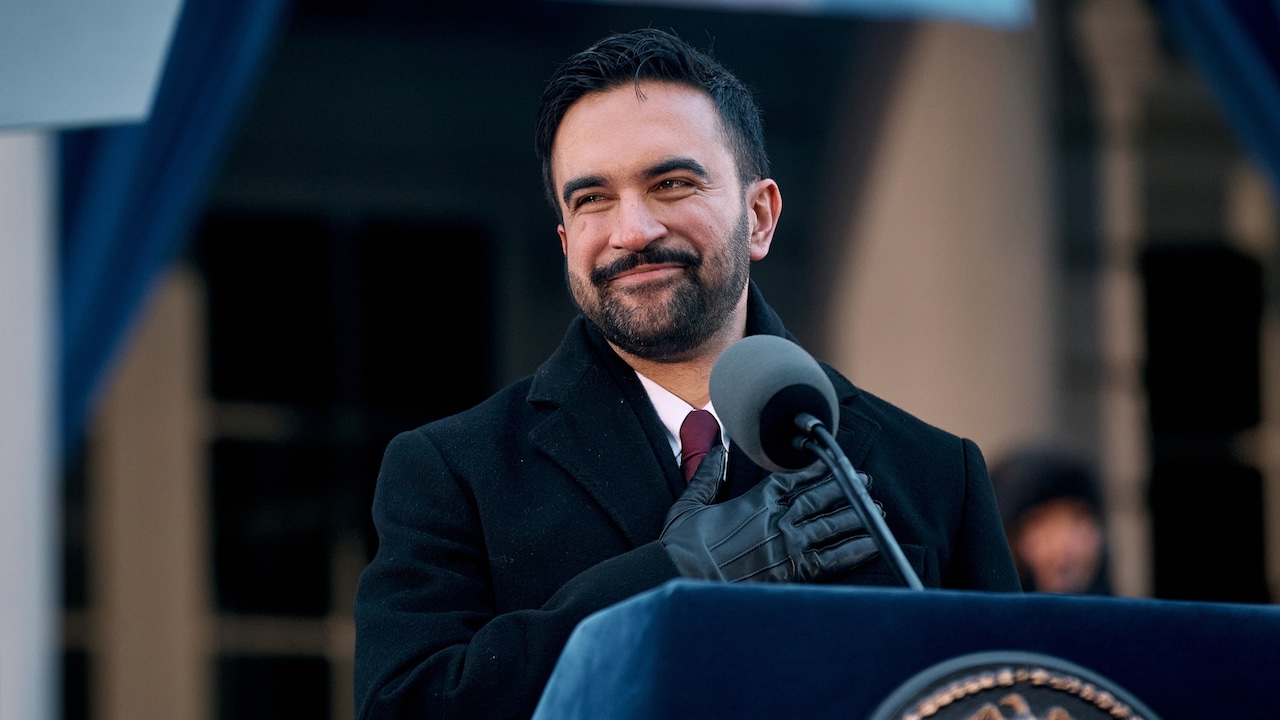
Zohran Mamdani has moved to dismantle the New York Police Department’s Strategic Response Group (SRG), fulfilling a core campaign promise to eliminate a specialized unit long accused by civil rights monitors of aggressive crowd-control tactics and excessive overtime spending. By redirecting the unit’s personnel back to local precincts and shifting its budget toward non-police crisis intervention, the administration is attempting to unwind a decade-old policing experiment that critics argue turned routine street protests into militarized confrontations.
The decision targets one of the most polarizing divisions within the nation’s largest municipal police force. Established in 2015 under former Mayor Bill de Blasio and Police Commissioner William Bratton, the SRG was originally pitched as a rapid-deployment counterterrorism and civil disorder squad. In practice, however, the unit became the department's default response to political demonstrations, labor strikes, and spontaneous street gatherings across the five boroughs.
The Origins of a Militarized Experiment
To understand why dismantling the unit carries such heavy political and operational weight, you have to look at how the NYPD evolved after the 2014 protests surrounding the death of Eric Garner. City Hall and One Police Plaza wanted a mobile reserve force capable of responding within minutes to active shooters, natural disasters, or sudden public unrest without pulling patrol officers away from their regular neighborhood beats.
On paper, the concept made bureaucratic sense. When a major event erupted in Midtown Manhattan, precinct commanders hated losing half their sector cars to crowd control, which left local blocks unpatrolled and response times lagging. The SRG was designed to absorb that shock. Outfitted with specialized gear, armored vehicles, and distinct tactical training, its officers operated outside the traditional precinct command structure, reporting directly to central headquarters.
Yet the operational reality quickly drifted from the original counterterrorism mandate. Because major terrorist incidents are rare in the day-to-day life of New York City, a standing army of roughly 700 to 800 specialized officers needed daily assignments to justify its existence. Commanders began deploying the SRG to routine First Amendment assemblies, subway fare-evasion sweeps, and high-visibility saturation patrols in low-income neighborhoods.
The friction was immediate. Unlike neighborhood coordination officers who spent months learning the names of local bodega owners and community board members, SRG units arrived in unmarked vans or heavy tactical gear, executed rapid arrests, and departed. Accountability evaporated into the anonymity of helmet visors and overlapping badge numbers.
Follow the Money and the Overtime Ledger
Public debate over the SRG usually centers on viral video clips of bicycle-mounted officers kettling demonstrators during the 2020 racial justice protests. Investigative auditors, however, have long pointed to a quieter, equally damaging paper trail inside the city’s municipal budget.
Specialized units are notorious engines of police overtime, and the SRG sat at the top of that ledger. Because the unit was deployed reactively to fluid situations—a march crossing the Brooklyn Bridge, a sudden demonstration outside Gracie Mansion, a diplomatic visit at the United Nations—shifts routinely stretched past twelve or sixteen hours.
Consider a hypothetical scenario illustrating how the fiscal mechanics work on the ground. Suppose a spontaneous protest forms in Lower Manhattan at 5:00 PM, right as the day tour is preparing to sign off. Rather than releasing those officers, supervisors hold the entire squad on extended duty through midnight, triggering automatic time-and-a-half payouts across dozens of personnel simultaneously. Multiply that dynamic by hundreds of demonstrations, parades, and security details over a fiscal year, and the costs balloon tens of millions of dollars beyond initial budget projections.
For years, the New York City Comptroller’s office and the Independent Budget Office flagged these overruns. Every dollar absorbed by SRG overtime was a dollar unavailable for youth summer employment, mental health clinics, or basic precinct staffing. Mamdani’s budget team seized on these audit findings, framing the dissolution of the unit not merely as a civil rights victory, but as basic fiscal hygiene for a city wrestling with tight operating margins.
Dismantling the Apparatus Without Creating a Vacuum
Shutting down a deeply entrenched NYPD division is far messier than signing an executive order or issuing a press release. The personnel do not simply vanish from the municipal payroll. Under civil service rules and collective bargaining agreements with the Police Benevolent Association (PBA) and the Sergeants Benevolent Association (SBA), those hundreds of officers retain their jobs, ranks, and base salaries.
The restructuring relies on three distinct operational shifts:
- Precinct Reabsorption: Rank-and-file officers assigned to the SRG are being transferred back to patrol duties in understaffed precincts across the Bronx, Brooklyn, and Queens. The administration argues this immediately boosts neighborhood visibility and reduces the need for mandatory overtime among regular patrol cops.
- Counterterrorism Consolidation: Genuine high-threat responsibilities—such as responding to active shooters or chemical, biological, and radiological threats—are being folded strictly into the existing Emergency Service Unit (ESU) and the Counterterrorism Bureau, both of which undergo far more rigorous technical vetting than the SRG ever required.
- Protest Liaison Protocols: Management of permitted marches and peaceful assemblies is shifting back to local precinct commanders working alongside the Community Affairs Bureau, replacing heavy tactical gear with standard patrol uniforms and negotiated traffic closures.
The Pushback from One Police Plaza and the Unions
Police unions and veteran law enforcement strategists view this reorganization as a dangerous gamble. Their counter-argument rests on a simple operational premise: crowd dynamics can turn volatile in seconds, and regular precinct cops lack the cohesive unit training required to manage massive, fast-moving crowds safely.
When officers from ten different precincts are thrown together at the last minute to handle an unruly demonstration, they do not know each other’s habits, communication styles, or command thresholds. Veteran commanders warn that ad-hoc crowd control actually increases the likelihood of panic, poor communication, and sudden uses of force. In their view, having a dedicated, centrally commanded unit—whatever its past flaws—provided discipline and standardization when tensions spiked on the pavement.
There is also the question of major civic events. New York City hosts the United Nations General Assembly, New Year’s Eve in Times Square, the New York City Marathon, and hundreds of high-profile diplomatic motorcades every year. Without the SRG acting as a flexible manpower pool, precinct commanders will once again face the exact dilemma that led to the unit's creation in 2015: stripping patrol cars from residential neighborhoods in Staten Island or the Bronx to guard intersections in Midtown Manhattan.
The Legal Shadow of Past Lawsuits
Mamdani’s hand was significantly strengthened by the sheer volume of litigation the SRG generated over the past six years. Following the summer of 2020, New York Attorney General Letitia James, the New York Civil Liberties Union, and the Legal Aid Society filed sweeping lawsuits alleging systemic constitutional violations by the department—specifically targeting the SRG’s use of "kettling," a tactic where police surround protesters on all sides, block exits, and then make mass arrests for curfew or dispersal violations.
The resulting federal consent decrees and multimillion-dollar legal settlements left the city paying out tens of millions of dollars in taxpayer funds to injured demonstrators and journalists. More importantly, court-appointed monitors mandated strict new rules governing how the NYPD polices protests, requiring tiered responses and banning aggressive crowd-containment maneuvers unless imminent physical violence occurs.
Once those judicial guardrails were locked into place, the SRG’s core operational playbook became legally obsolete. Maintaining an expensive, quasi-military unit that was legally barred from using half its specialized crowd-control tactics made little sense even to pragmatic administrators. Scrapping the unit allowed City Hall to claim credit for bold reform while simultaneously resolving an ongoing compliance headache with federal monitors.
What Happens When the Next Crisis Hits
The true test of this restructuring will not happen in press conferences at City Hall or during budget hearings at the City Council. It will happen at 2:00 AM on a humid summer night when an unpermitted march spills onto the FDR Drive, or when two rival political factions clash outside a consulate in Midtown.
Without the SRG, the burden falls squarely on precinct captains and borough commanders who have spent the last decade relying on headquarters to send in the cavalry whenever crowds grew large. Those commanders will have to manage complex street dynamics using standard patrol personnel, community affairs liaisons, and non-police violence interrupters—a model that works smoothly when demonstrations are organized and predictable, but faces severe strain when crowds fragment or turn confrontational.
If the transition holds, New York could establish a national blueprint for demilitarizing urban policing while freeing up tens of millions of dollars in wasted overtime. If precinct staffing buckles under the strain of major public events, the next police commissioner will quietly rebuild the exact same rapid-response apparatus under a different acronym.