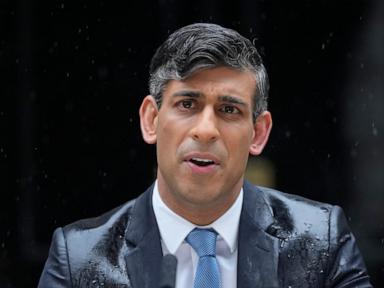
The confession inside Southwark Crown Court on Monday did not come as a surprise, but the underlying mechanisms it exposed should terrify anyone who still believes in the basic integrity of British governance. Craig Williams, once the parliamentary private secretary and trusted gatekeeper to former Prime Minister Rishi Sunak, formally pleaded guilty to cheating at gambling. He admitted what inside investigators had known for two years. He used highly confidential, state-level discussions to turn a quick profit on a smartphone betting app.
This was never just a story about a handful of minor politicians trying to clear a few hundred pounds from a bookmaker. It is the definitive portrait of a political class that grew so detached from reality that it viewed the calling of a national election—the very bedrock of democratic accountability—as a private investment opportunity.
The Anatomy of an Insider Trade
To understand how deep this rot goes, look at what Williams actually did. He did not sit in a smoke-filled room conspiring with bookies. He simply sat in Downing Street planning meetings, listened to the prime minister decide on a July 2024 election date, and then opened the Ladbrokes app on his phone. He placed bets of 250 pounds, 100 pounds, and 22.50 pounds.
The system caught him because he was flagged as a politically exposed person. This is an industry designation required by regulators that triggers automatic compliance checks on high-profile figures. British bookmakers have spent decades building algorithmic tracking systems to protect their own profit margins from corrupt sport matches. The bitter irony is that the exact same fraud-detection software designed to spot a fixed tennis match in Eastern Europe ended up ensnaring the inner circle of the British prime minister.
Williams was not alone. Monday also saw a guilty plea from Amy Hind, the wife of the Conservative Party’s then-deputy digital director. Court records reveal she tried to drop massive stakes of 767 pounds and 700 pounds on a July election just days before the public announcement, hunting for 11-to-1 odds.
A Cultural Sickness Free from Guardrails
Political betting is completely legal in the United Kingdom. It is a quirky, multi-million-pound subculture where ordinary citizens wager on everything from the next party leader to the specific month of a polling day. Because the prime minister held the exclusive royal prerogative to choose the election date, that information became the ultimate commodity.
The defense initially mounted by figures in Westminster was that this was merely an error of judgment. Williams himself released a video in June 2024 claiming exactly that. But that defense completely ignores the legal reality. Section 42 of the Gambling Act 2005 defines cheating broadly, and the law does not care if you wagered 10 pounds or 10,000 pounds. Using non-public, state-held data for financial gain is fraud.
The institutional response at the time was flat-footed because British politics relies heavily on unwritten codes of conduct. There was no explicit rulebook saying "Do not bet on the secrets you hear while prepping the prime minister for Prime Minister's Questions." The system assumed basic decency would prevail. It failed to account for a new generation of political operatives who view public service as an optimization exercise for personal advantage.
The Long Road to September 2027
While Williams and Hind have admitted their guilt, the wider fallout from Operation Scott—the official Gambling Commission investigation—will drag on for years. Twelve other co-defendants pleaded not guilty on Monday. Their trials are now scheduled for September 2027 and January 2028 because of a massive backlog in the British judicial system.
Among those facing trial are senior campaign directors, political strategists, and even a former police protection officer who was tasked with keeping the prime minister safe. They will spend the next two years under a cloud of criminal prosecution. The public will be treated to a slow drip of evidence revealing just how casually confidential state data was passed around over WhatsApp messages and casual drinks.
This long delay means the political system will not achieve closure anytime soon. The Labour Party managed to sweep the Conservatives out of office in July 2024 partly by capitalizing on the sheer disgust this scandal generated among ordinary voters. But changing the party in power does not magically fix the regulatory vacuum that allowed this to happen.
The Absolute Failure of Self-Regulation
The current framework for political integrity in the UK is broken because it relies entirely on retroactive punishment rather than proactive prevention. The Gambling Commission did its job here, but only because the bookmakers handed them the data on a silver platter.
If a corporate executive traded stocks based on an unannounced merger, they would face immediate arrest by financial authorities for insider trading. Yet, for decades, Westminster treated political insider trading as a harmless locker-room perk.
Fixing this requires a complete decoupling of market access from political actors. If British lawmakers cannot resist the urge to gamble on the very dates they control, then the betting markets on political events must be banned entirely for anyone holding a parliamentary pass. The alternative is to accept a system where public trust is treated as nothing more than a chip on a roulette wheel.