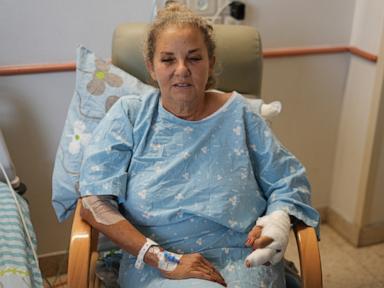
When a photographer attacked by settlers in the West Bank feels insulted by Netanyahu, the outrage goes far beyond hurt feelings or a single botched public statement. It exposes a widening fracture between frontline visual documentation and official political messaging over settler violence in the occupied territory. Photographers covering friction points in the West Bank operate in a volatile space where cameras are treated as weapons or evidence, and where state leadership often frames incidents through competing political narratives. When a prime minister's posture feels dismissive or alienating to someone who just took a physical hit on the job, the insult lands like a second blow.
I have spent decades covering conflict zones, street protests, and contested borders where the camera stands between events on the ground and audiences miles away. In places like the West Bank, visual journalists rarely have the luxury of neutrality in the eyes of the people around them. Every lens pointed at a confrontation carries weight. A photographer who gets assaulted while trying to record what is happening is dealing with immediate physical shock, damaged gear, and a lingering question that cuts straight to the bone. Who actually cares that this happened, and who is willing to say so plainly?
Reactions from top leaders during moments of flare-up often sound choreographed for domestic coalitions rather than grounded in what happened on the dirt road or olive grove. Even when officials offer a general nod to the rule of law or condemn violence in broad strokes, victims and witnesses frequently hear evasion. To a photographer nursing bruises or mourning smashed equipment, political phrasing can feel like a slap in the face. That gap between lived reality on the ground and official rhetoric from Jerusalem is not new, yet it keeps widening whenever accountability looks optional.
Why Frontline Cameras Draw Hostility
Visual journalism in the West Bank happens in tight, unpredictable quarters. A dirt track outside a village, a hilltop outpost, or a stretch of highway can turn tense in seconds. Photographers move fast to get the angle before security forces arrive or crowds scatter. That speed keeps them alive and gets the frame, yet it also puts them squarely in the path of people who do not want to be seen.
Settler violence in the West Bank has drawn sustained international scrutiny because attacks on Palestinians, activists, and journalists frequently occur near flashpoints where enforcement feels uneven or delayed. Some assailants view cameras as hostile instruments designed to paint their communities as aggressors in global media. Others act in the heat of confrontation, lashing out at anyone holding a viewfinder while emotions run high.
Gear gets smashed. Lenses crack on rocks. Bodies take kicks, shoves, or blows meant to drive the witness away.
From an operational standpoint, photojournalists are easy targets because they carry heavy bags, wear visible equipment, and stay put to frame a shot while others run. Unlike a distant correspondent writing from a desk or a phone, a photographer has to get close enough to show faces, expressions, and movement. Proximity is the job. Proximity is also the risk.
Over years of watching newsrooms cover contested ground, one pattern repeats itself. When an assault happens and the response feels lukewarm or defensive, the victim does not just feel physically bruised. They feel written off. An insult from a national leader stings because that leader symbolizes the state apparatus responsible for order, policing, and public messaging. If the person at the top seems more concerned with political optics than with the safety of a working journalist, the insult becomes a statement about status and value.
The Mechanics of Political Messaging and Offence
Politicians rarely speak in a vacuum. Every sentence from a prime minister's office is weighed against coalition dynamics, security briefings, election math, and diplomatic pressure from abroad. When settler violence makes headlines, leaders often face a tug-of-war between condemning unlawful acts and avoiding alienating constituencies whose votes and political support they rely on.
That balancing act produces language that can sound clinical, conditional, or evasive. A statement might stress calm on all sides, highlight broader security threats, or treat an attack on a journalist as a minor footnote rather than an assault on press freedom and basic safety. For someone who was just targeted while doing their work, that tone feels cold. Worse, it can feel like blame is being diffused or brushed aside.
Why does a leader's remark feel like a personal insult rather than mere bad public relations? Because leadership sets a moral baseline. When a photographer is attacked in the West Bank, the immediate expectation from anyone watching is clarity. Did an assault happen? Was it wrong? Will anything come of it? When the answer sounds hedged, the omission speaks louder than the words.
What Gets Lost Between Scene and Statement
There is a wide chasm between a chaotic encounter on a West Bank hillside and a polished press release issued hours or days later. On the ground, there is dust, shouting, adrenaline, and fear. In an office, there are drafts, legal caveats, and strategic calculations.
- Time lag: Hours of silence while a victim is getting checked out or filing a report can make official concern look reactive or reluctant.
- Framing mismatches: Describing an incident as a clash or disturbance when a photographer was singled out erases the specific nature of the attack.
- Selective emphasis: Highlighting general context while glossing over physical injury signals where political priorities actually sit.
- Silence on consequences: Expressing concern without mentioning investigation or protection leaves victims feeling abandoned to the next confrontation.
None of this means every political misstep is malicious. Sometimes leaders misread the mood, rely on talking points written for a different audience, or underestimate how raw an incident still feels to the people involved. Still, intent matters far less to the person feeling insulted than the impact of the words used.
Accountability Gaps on the Ground
Feeling insulted by a prime minister's posture is one layer of the problem. The deeper issue is what happens—or fails to happen—after the cameras stop rolling and the news cycle moves on.
Journalists and rights monitors covering the West Bank have long pointed to a persistent accountability gap around settler attacks. Investigations can move slowly. Arrests can be rare or short-lived. Victims often express skepticism that complaints will lead to meaningful consequences, which deepens the sense that violence carries a low price tag.
Consider a hypothetical example of how that cycle plays out. Suppose a photojournalist documents a confrontation near an unauthorized structure and gets assaulted while trying to back away. A statement comes out that sounds dismissive or fails to treat the attack seriously. Even if local police open a file, the photographer's trust in official institutions is already shaken because the political signal from the top felt indifferent.
Counter-arguments do exist, and ignoring them makes any analysis weaker. Defenders of government policy often argue that security forces in the West Bank face immense strain, juggling counter-terrorism operations, crowd control, and volatile terrain with limited personnel. From that viewpoint, officials contend that individual incidents are investigated when evidence is available and that broad generalizations about settlers or security forces are unfair.
Those points deserve a fair hearing, yet they do not erase the lived experience of someone who took a hit while holding a camera. If enforcement feels inconsistent and top-level rhetoric feels tone-deaf, confidence erodes on both fronts—among journalists trying to do their jobs and among observers trying to gauge whether the rule of law applies evenly.
Press Freedom in Contested Territory
Attacks on photographers are not just labor disputes or isolated street fights. They are pressure points on press freedom. When reporters and photographers get roughed up and feel brushed off by political leaders, newsrooms take notice.
Editors have to weigh risk every single assignment. Sending a freelancer or staff photographer into a flashpoint in the West Bank means calculating insurance, protective gear, backup support, and legal recourse. If an assault is met with political indifference, the message to anyone holding a camera is chilling. You are on your own out there.
Self-censorship does not always arrive with a bang. Often it creeps in quietly. A photographer steps back a little farther. A crew leaves a scene a few minutes earlier. A story loses the close-up visual proof that makes viewers stop scrolling and pay attention.
| Dimension | Frontline Photographer View | Official Political Posture | Resulting Friction |
|---|---|---|---|
| Core Concern | Personal safety, camera gear, accurate visual record | Coalition stability, security framing, diplomatic optics | Victims feel secondary to political calculus |
| Timeframe | Immediate physical shock and ongoing personal risk | Measured statements shaped by briefings and strategy | Delayed or sanitized responses feel detached |
| Accountability | Clear condemnation and visible follow-through | General appeals to calm or existing legal channels | Skepticism that perpetrators face few real costs |
| Impact on Work | Higher stress, fear of repeat attacks, harder access | Emphasis on order and broader regional pressures | Growing mistrust between press and leadership |
Visual evidence is stubborn. A photograph of a bruised arm, a shattered lens, or an altercation on a rocky slope resists spin better than almost any other medium. That is precisely why cameras attract anger during heated moments—and why how leaders respond to attacks on photographers matters so much.
Why This Story Resonates Beyond One Incident
When a photographer attacked by settlers in the West Bank feels insulted by Netanyahu, the story hooks readers because it distills larger tensions into a human moment. Power, vulnerability, truth-telling, and political spin collide in plain sight.
People do not need a degree in Middle Eastern geopolitics to grasp what it feels like to get knocked around while doing your job and then hear words from high office that sound hollow or insulting. That emotion is universal. It cuts across borders and political divides, even as people argue fiercely over the broader conflict.
At the same time, veteran observers know better than to treat any single reaction as the whole story. Political leaders operate inside pressures that outsiders rarely see in full, and media narratives can sometimes flatten complex security realities into simple villains and heroes. Being honest about those gray areas makes the reporting stronger, not softer.
What remains unmistakable is the human cost on the ground. Every time a visual journalist is assaulted and left feeling demeaned by the official response, the distance between those who document reality and those who govern it grows a little wider.
The next time a flashpoint flares on a West Bank hillside, the real test will not be another press release—it will be whether working journalists can do their jobs without taking blows and without being treated like an inconvenience.


