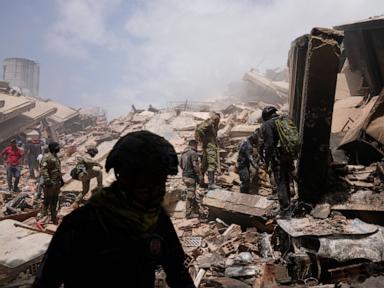
The catastrophic collapse of northern Venezuela’s urban centers under the weight of the June 2026 earthquake sequence was completely predictable. While the twin magnitude 7.2 and 7.5 shocks formed a rare seismic doublet that would test any metropolis, the resulting humanitarian disaster is fundamentally an engineering and institutional failure. Decades of unreinforced masonry construction, systematic evasion of modern building codes, and a massive economic collapse that starved infrastructure of essential retrofits turned a natural hazard into an urban slaughterhouse.
Western headlines blame old buildings and soft soils. That is only the surface layer. The deeper truth is that Venezuela possessed a sophisticated seismic code on paper, but a combination of political hubris, rapid oil-boom construction, and widespread corruption ensured that millions of citizens were housed in structures designed to fail.
The Illusion of the Paper Shield
Venezuela does not suffer from a lack of engineering talent. Following the devastating 1967 Caracas earthquake, local structural engineers revolutionized the nation's building codes. By the 1980s, the national standards body, COVENIN, had implemented rigorous seismic detailing mandates that mirrored international frameworks.
The problem was never the text of the code. The problem was the complete absence of a regulatory enforcement mechanism.
In a functioning seismic governance system, independent third-party inspectors review calculations, verify concrete compression strengths on-site, and audit steel reinforcement placement. In Venezuela, this oversight apparatus dissolved over the last quarter-century. As the national economy contracted by roughly 75% between 2014 and 2021, municipal engineering departments lost their technical staff to mass emigration. The professionals who remained were severely underpaid, creating a breeding ground for regulatory capture. Builders routinely bypassed code compliance through informal payments or political connections, erecting high-density residential blocks that met code requirements only in name.
The Mechanics of Structural Failure
To understand why so many multi-story structures pancaked floor-by-floor in cities like Catia La Mar and Caracas, one must look at the specific engineering shortcuts taken during recent construction surges.
A primary culprit is the lack of ductile detailing in reinforced concrete frames. Ductility is the capacity of a structure, or its components, to undergo significant deformability under seismic loading without breaking. In modern seismic engineering, this is achieved by wrapping vertical concrete columns in closely spaced steel hoops or ties. These ties confine the concrete core, preventing it from bursting outward when the earth shakes violently.
Many of the collapsed towers built during the recent state-sponsored housing booms lacked this critical internal skeleton. Instead of closely spaced, heavy-grade steel ties, builders used widely spaced, thin-gauge wire to save money and speed up construction. When the shallow, back-to-back ruptures struck, these unconfined columns suffered instantaneous brittle failure. The concrete shattered, the vertical steel bars buckled outward, and the upper floors dropped vertically, crushing everything below.
Another widespread vulnerability is the "soft-story" defect. This occurs when the ground floor of a building has significantly less rigidity than the floors above it, usually to accommodate open parking spaces, retail storefronts, or lobbies. When seismic waves strike, the lateral forces concentrate heavily on this flexible lower level. Without massive shear walls or specialized steel bracing, the ground floor acts like a house of cards, buckling sideways and bringing the heavy upper stories down intact onto the street level.
The Shadow of Informal Urbanism
Beyond the failures of formal construction lies the staggering vulnerability of Venezuela’s barrios—the vast, informal settlements terraced into the steep ravines and hillsides surrounding Caracas and the Caribbean coast.
More than half of the capital’s population resides in these self-built, multi-story brick dwellings. Constructed out of unreinforced hollow clay blocks and thin concrete slabs, these homes possess zero lateral load resistance. They are held together by gravity and optimism.
Geographers and urban planners have spent decades warning that these communities are built on inherently unstable land. The underlying soft soils and weathered rock formations amplify seismic waves, causing the ground to behave almost like a liquid during sustained shaking. When the June 2026 doublet hit, it did not just shake these buildings; it triggered massive landslides that swept entire neighborhoods down the mountain faces.
The state's populist response over the years was the Great Housing Mission, a program claiming to have built over five million homes. Independent audits, however, indicate that the true number of structurally sound units delivered was a tiny fraction of that figure. Many of these fast-tracked state apartment blocks were erected directly over known geological faults without proper geological hazard mapping.
The Contrast of True Resilience
The tragedy in Venezuela becomes even more stark when compared to nations that treat seismic governance as a matter of national survival. Consider Chile.
Chile sits on one of the most volatile subduction zones on the planet. Yet, when a massive magnitude 8.8 earthquake struck the country in 2010, only a single modern high-rise building completely collapsed. The distinction lies in a rigid, non-negotiable legal framework. In Chile, the law dictates that the original structural engineer remains legally and financially liable for the building’s performance for a decade after completion. If a building collapses due to design flaws or unapproved modifications, the engineer faces criminal prosecution and financial ruin. This single policy enforces an extraordinary level of discipline across the entire construction supply chain.
Venezuela’s legal reality offers no such accountability. State-backed contractors and politically insulated developers operate with complete immunity, leaving the ultimate buyers to inherit the lethal risks of substandard engineering.
The Cost of Inaction
Repairing a broken urban landscape after the fact is magnitudes more expensive than proactive intervention. Structural engineers estimate that retrofitting an older, non-ductile concrete building to modern seismic standards costs roughly 15% to 20% of the building’s total value. While that represents a significant capital expenditure, it is a negligible sum compared to the total economic and human loss generated by a structural collapse.
The immediate priority for the remaining international rescue and engineering teams in Venezuela is rapid structural triage. Buildings must be systematically color-coded: green for structurally sound, yellow for restricted entry due to repairable damage, and red for structures at imminent risk of collapse from inevitable aftershocks.
This disaster proves that a written building code is entirely useless without a transparent, well-funded, and legally backed enforcement mechanism. Until municipal institutions are rebuilt to insulate safety inspectors from political pressure and economic desperation, the cities of northern Venezuela will remain fragile concrete traps waiting for the next inevitable shift of the Caribbean plate.