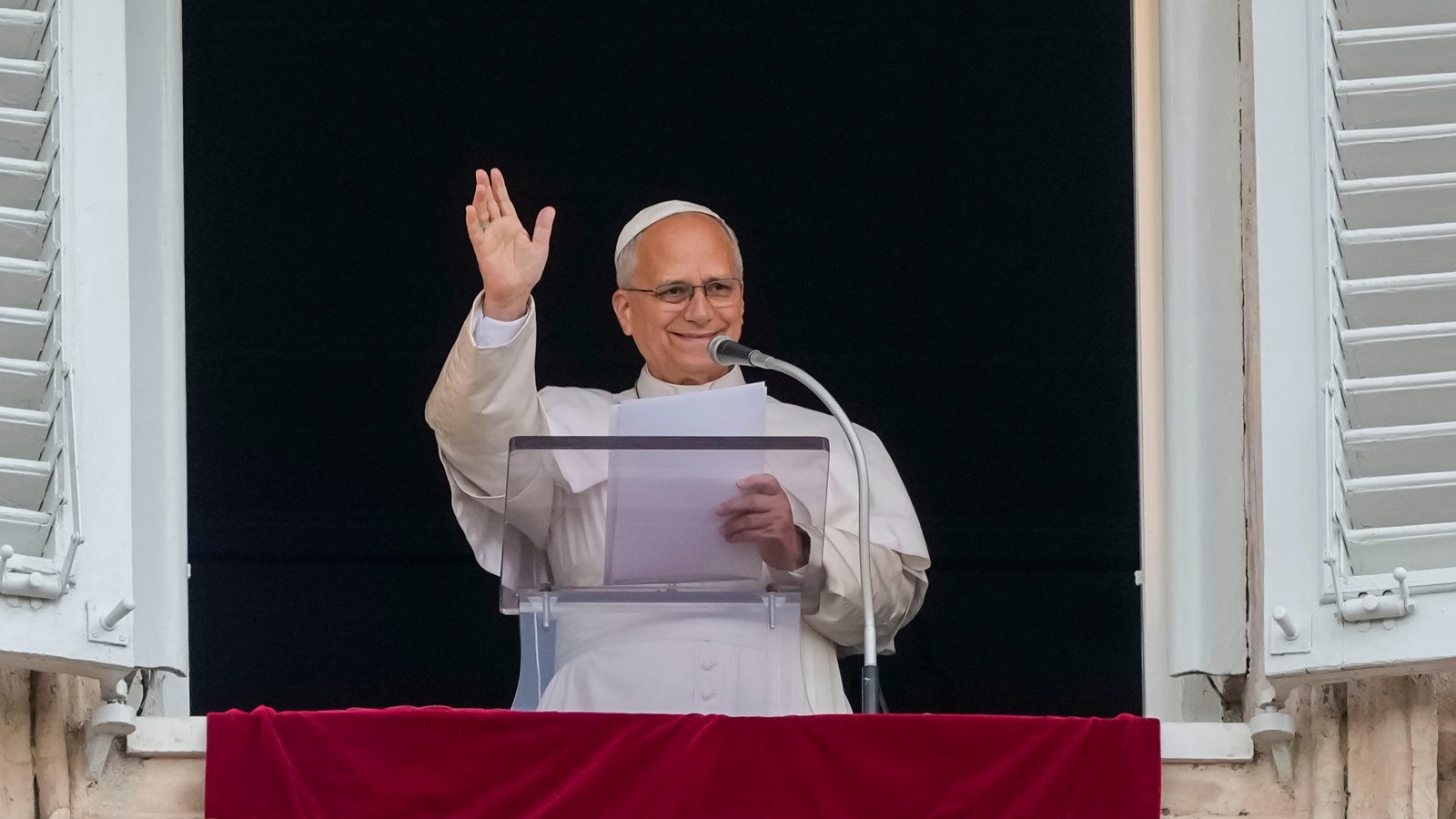
Pope Leo XIV underwent surgery on October 13, 2026, at Rome's Agostino Gemelli Polyclinic to remove a malignant tumor from the lower lobe of his right lung, and doctors later confirmed the non-small cell cancer was localized and required no further treatment. His doctors found the growth during an annual checkup after spotting a shadow on his lung, even though the 71-year-old pontiff had no symptoms and felt fine. Because pathology results showed the malignancy had not spread beyond the resected lobe, medical teams ruled out follow-up chemotherapy or radiation, leaving him with routine surveillance instead.
Papal health bulletins are notoriously terse, and the October headlines about Pope Leo XIV and his cancer diagnosis followed a familiar script. A shadow appears. A surgery happens at Gemelli. A reassuring bulletin arrives days later. Having covered institutional health scares and high-stakes leadership transitions for decades, I know better than to read those two-paragraph Vatican statements as the whole story. Learn more on a related subject: this related article.
What made this episode unusual was not the clinical outcome itself, which is about as clean as a thoracic cancer case gets. It was the speed with which the pontiff moved from an asymptomatic scan to a 90-minute lobectomy, and then straight into a grueling 12-day tour of South America less than a month later. When a world leader who commands 1.4 billion Catholics has part of a lung removed and boards a plane to Uruguay, Argentina, and Peru weeks afterward, the medical facts and the institutional politics collide.
How a Routine Scan Triggered Immediate Surgery
Most lung cancers announce themselves late, often after a persistent cough, unexplained weight loss, or chest pain brings a patient into the clinic. Pope Leo XIV never had that warning. His tumor surfaced by chance during an annual checkup he had maintained for years, starting out as a faint shadow on imaging before biopsy and surgical confirmation established it as non-small cell lung cancer. Further journalism by Healthline highlights similar perspectives on this issue.
That detail matters enormously. In oncology, the gap between finding a suspicious spot and cutting it out is often where anxiety and delay creep in. Leo said the news came as a surprise because he felt completely well. Yet once malignancy was confirmed, he chose immediate resection rather than watchful waiting.
On October 13, 2026, surgeons at Gemelli performed a 90-minute operation to remove the lower lobe of his right lung and sample nearby lymph nodes. Removing a lobe—a lobectomy—remains the gold standard for early-stage non-small cell lung tumors when a patient's baseline respiratory reserve can handle the loss of volume. Take out too little, and microscopic cells can be left behind at the margin. Take out a whole lung, and recovery becomes far harder for a 71-year-old with a demanding travel calendar.
A clean scan after surgery does not mean biological certainty; it means the best available pathology tools found no evidence of regional spread at that moment.
By October 21 and 22, the Vatican released the results that every observer of papal health watches for. Final examination of the excised tissue showed the lung cancer was localized, with no spread detected in the sampled lymph nodes. In plain clinical terms, surgical removal had done the heavy lifting. Adding systemic chemotherapy or radiation to an early, node-negative tumor can carry real toxicity with minimal proven benefit, which is why doctors concluded no further treatment was required.
Why Further Treatment Was Ruled Out—and What Still Carries Risk
Telling a patient they need no more cancer therapy sounds like a finish line. In practice, it marks a shift from active treatment to long-term active surveillance.
Pope Leo XIV put it plainly during his airborne press conference returning from Peru on November 16, 2026. While no additional oncology treatment was necessary, he noted that he would continue routine checkups as a precaution, simply to keep an eye on things. Any veteran health reporter hears the subtext in that phrasing. A localized non-small cell tumor caught early carries a far brighter outlook than advanced disease, yet anyone with a history of lung malignancy faces two enduring realities: the chance of local or distant recurrence, and the small but real risk of developing a second primary lung nodule over time.
| Clinical Factor | What Happened in October–November 2026 | Why It Matters |
|---|---|---|
| Detection | Found incidentally on an annual checkup as a lung shadow | Early detection before symptoms usually allows curative-intent surgery |
| Procedure | 90-minute removal of the right lower lung lobe at Gemelli | Removes the primary tumor along with adjacent anatomical drainage pathways |
| Pathology | Confirmed non-small cell cancer; localized with no spread found | Eliminates the standard rationale for adjuvant chemotherapy or radiation |
| Follow-Up | Routine medical checkups and ongoing monitoring | Catching any future change early remains the primary safety net |
There is also a gray area that official communiqués rarely unpack: functional recovery versus full athletic stamina. Losing a lobe reduces total lung capacity slightly, even when the remaining lung tissue compensates well. Leo admitted candidly after his South American trip that he was not at 100 percent fitness, though he felt reasonably well and credited endurance and faith for carrying him through. A 71-year-old who says he is at 85 or 90 percent a month after thoracic surgery is not hiding weakness; he is describing normal healing after chest surgery.
The Overlooked Screening Debate
Much of the coverage around the pope's recovery treated his message on preventive checkups as a feel-good takeaway. On his flight back to Rome, Leo urged people not to let fear stop them from getting screened or pursuing needed treatment.
From a public health standpoint, his instinct is understandable, though the science of lung screening comes with sharp caveats that headline summaries flatten. In routine clinical medicine, low-dose CT screening for lung cancer is targeted primarily at people within specific age brackets and smoking history thresholds because broad, unselective screening of everyone can generate false alarms, anxiety, and invasive biopsies for benign spots. Consider a hypothetical example of a 70-year-old with zero risk factors who gets an unprompted chest scan and turns up a tiny, harmless granuloma: that single shadow can trigger months of repeat scans and worry over a benign scar. Pope Leo XIV's annual checkup clearly paid off for him. Still, doctors generally advise tailoring screening decisions to individual risk profiles rather than assuming every scan is appropriate for every person.
Surgery, South America, and the Question of Resignation
A papal illness is never purely medical. It is a governance stress test.
In the weeks before Pope Leo XIV departed on November 6 for a 12-day apostolic journey across Uruguay, Argentina, and Peru, skeptics wondered whether a pontiff barely three weeks past lung surgery could handle altitude, long flights, dense crowds, and nonstop ceremonies. His ties to Peru run deep—he spent roughly two decades there as a missionary and bishop and holds Peruvian citizenship—making a Latin American tour emotionally and politically significant for his papacy.
He completed the trip without major medical setbacks, even brushing off a moment in Lima on November 16 when a rosary thrown from a crowd struck him near the eye. More consequential than the rosary incident was the question put to him by reporters mid-flight: had he signed a provisional or conditional letter of resignation ahead of surgery, as Pope Francis had done in case of sudden incapacitation?
Leo said no. He argued there was no need at the moment, pointed out that canon law already contains provisions governing papal incapacity or vacancy, and framed his future in terms of trust and providence rather than contingency paperwork.
Refusing a conditional resignation letter does not change canon law, yet it signals how a leader views his own durability—and how much ambiguity he is willing to leave around a crisis.
Critics of informal governance often argue that written contingency plans reduce confusion if a leader suddenly loses consciousness or decision-making capacity, especially after major surgery. Supporters see things differently: Leo had just received reassuring pathology results showing his cancer diagnosis was localized, he had tolerated travel well, and he viewed a pre-signed exit document as premature. He also noted that his older brother, Louis, was dealing with a far more complicated health situation, grounding his remarks in family reality rather than institutional theater.
What This Episode Reveals About Institutional Transparency
Compared with the secrecy that surrounded popes for much of modern history, the Vatican's handling of Leo's surgery and pathology was relatively direct. It named the hospital, confirmed the operation, and reported within days that the tumor had not spread.
Even so, readers should notice what goes unsaid in institutional health updates. Officials rarely publish detailed staging numbers, specific histologic subtypes beyond broad categories like non-small cell, or pulmonary function test scores. That restraint protects patient privacy, yet it also leaves outside analysts reading between lines—inferring early staging from the absence of adjuvant therapy and the rapid clearance for international travel.
For anyone watching Pope Leo XIV's pontificate, the bottom line is straightforward: the immediate medical threat from his lung tumor appears to have been surgically cleared without need for further cancer treatment, though his age and post-surgical recovery mean routine checkups remain a permanent fixture of his calendar. If you or someone close to you is weighing a routine checkup or a follow-up scan after an unexpected finding, bring a clear list of questions about risk, next steps, and timing to a qualified physician rather than letting fear make the decision for you.