When the Federal Aviation Administration issues a nationwide ground stop due to an "extraordinary circumstance," every departing commercial aircraft across the United States is legally and operationally frozen at the gate or on the tarmac. This rare regulatory hammer is pulled only when a systemic failure threatens the integrity of the National Airspace System—such as a collapse of the Notice to Air Missions (NOTAM) database, a catastrophic radar outage, or a sudden, unverified national security threat. While headlines fixate on stranded passengers and vague bureaucratic phrasing, the real story lies in the brittle, decades-old infrastructure holding American aviation together.
A ground stop is not a delay. It is a hard pause button on the world's most complex logistical machine.
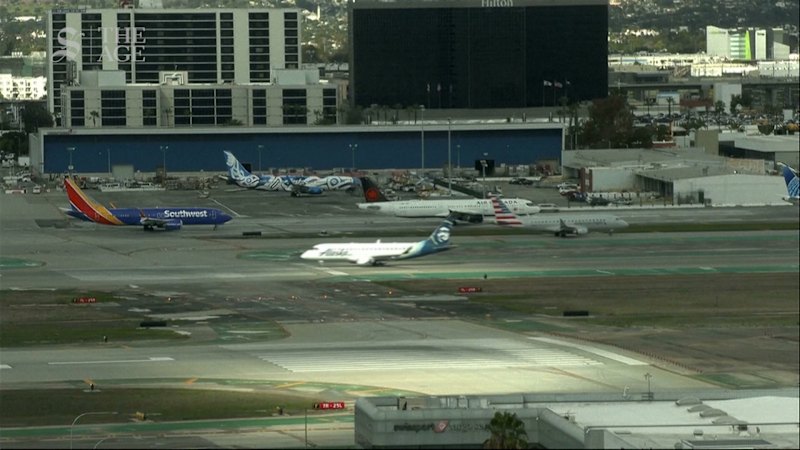
Unlike a ground delay program, which meters traffic into a congested hub by holding planes at their origin airports for calculated intervals, a total ground stop demands immediate, zero-tolerance compliance. Air traffic controllers across twenty-two Air Route Traffic Control Centers cease issuing takeoff clearances. Planes already in the sky are permitted to land at their destinations or diverted to nearby fields, while the rest of the fleet sits burning expensive jet fuel and timing out flight crews.
The Anatomy of an Extraordinary Circumstance
Aviation regulators love elastic language. The phrase extraordinary circumstance does heavy lifting in both regulatory filings and public relations damage control, yet it carries distinct meanings depending on who is speaking and which continent's lawyers are listening.
In European aviation law under Regulation (EC) No 261/2004, the term is a strict legal shield. Airlines invoke it to avoid paying statutory cash compensation to passengers when disruptions stem from events outside carrier control, such as severe weather, air traffic control strikes, or hidden manufacturing defects. In the United States, however, the Department of Transportation does not mandate cash compensation for flight delays, regardless of the cause. Here, when the FAA or major carriers cite an extraordinary circumstance for a nationwide halt, they are signaling an acute systemic breakdown rather than a mere legal defense.
To understand why the entire grid goes dark at once, you have to look at how modern dispatch works. Commercial airlines cannot legally launch a flight without verified, real-time safety data. Before a captain releases the parking brake, dispatchers must confirm that runways are clear, navigational beacons are functioning, and airspace restrictions are mapped. When the central nervous system feeding that data fails, the law leaves zero room for guesswork. You do not fly blind in congested airspace, even if the skies outside the cockpit window are completely clear.
Single Points of Failure in the Sky
The American air traffic control network moves roughly 45,000 flights and nearly three million passengers every single day. It is an operational marvel built atop an archaeological dig of legacy technology.
For decades, Congress and the FAA have poured billions of dollars into the Next Generation Air Transportation System, known as NextGen, meant to transition aviation from ground-based radar to satellite-based navigation. Yet critical subsystems still rely on aging mainframes, copper-wire telecommunications routing, and centralized databases that lack true architectural redundancy. When a single corrupted database file or a severed fiber-optic trunk line knocks out a primary feed, backup systems frequently struggle to absorb the load without mirroring the error.
Consider what happened during the January 2023 NOTAM outage, the first nationwide ground stop since the terrorist attacks of September 11, 2001. A routine database synchronization error corrupted both the primary system and its backup. Because pilots could not verify vital safety alerts—ranging from closed runways to temporary flight restrictions—the FAA had no choice but to halt all domestic departures for nearly ninety minutes. Over 11,000 flights were delayed or canceled within hours.
A system is only as resilient as its weakest unmirrored server.
When a central node fails, the industry faces an immediate dilemma:
- Manual workarounds are impossible at scale. A dispatcher might manually verify conditions for ten flights an hour, not ten thousand.
- Decentralized fallback protocols take time to activate. Shifting traffic control responsibilities between regional centers requires strict coordination so aircraft do not slip between radar sectors.
- Cybersecurity paranoia forces hard shutdowns. Whenever an unexplained glitch hits critical infrastructure, federal authorities must immediately rule out a state-sponsored cyberattack before rebooting the network.
The Cascading Economics of a Frozen Fleet
Stopping the system takes seconds. Restarting it takes days.
Airline schedules are not built with comfortable cushions of spare aircraft and rested pilots sitting idle at every hub. To keep ticket prices competitive and margins intact, carriers operate a tightly wound hub-and-spoke network where an inbound aircraft from Chicago becomes the outbound flight to Miami forty-five minutes later. When a nationwide ground stop freezes departures for even two hours, that delicate choreography shatters.
The financial bleed begins the moment the order drops. Airlines burn millions of dollars in wasted fuel while aircraft idle in departure queues waiting for clearance windows that never open. More critically, the industry runs headfirst into FAR Part 117, the strict federal regulations governing pilot flight and duty times.
Flight crews have a hard legal clock. Once a pilot reports for duty, they can only work a specific number of hours before they must legally stop flying, regardless of whether their plane is sitting on a taxiway in Denver or parked at a gate in Atlanta. During a prolonged ground stop, hundreds of crews time out simultaneously. Even after the FAA lifts the restriction and clears the skies, the planes cannot move because the pilots are legally barred from touching the controls.
Recrewing a stranded fleet across dozens of time zones is a mathematical nightmare. Spare reserve pilots are concentrated at major crew bases, not at regional outposts where diverted or halted planes end up stuck. Airlines must deadhead fresh crews on commercial flights just to rescue stranded aircraft, creating a multi-day domino effect of cancellations that ripples across the global network.
Who Pays When the System Breaks
When an extraordinary circumstance halts aviation, passengers absorb the immediate chaos while airlines absorb the balance sheet shock—and almost nobody gets made whole.
Under current U.S. Department of Transportation rules, airlines are only required to refund your ticket price if your flight is canceled and you choose not to travel. If your flight is delayed for six hours due to an FAA ground stop, you are entitled to nothing beyond rebooking on a later flight. Because federal regulators classify an FAA-mandated ground stop as an event outside the airline's control, carriers are not obligated to provide hotel vouchers, meal stipends, or reimbursement for missed cruises and non-refundable event tickets.
Travelers often assume their credit card travel insurance will step into the breach. Sometimes it does, provided the policy explicitly covers common carrier delays caused by air traffic control outages and the delay exceeds a six- or twelve-hour threshold. Frequently, however, fine print excludes systemic government actions or requires documentation that overwhelmed gate agents simply cannot produce during a meltdown.
Meanwhile, the airlines themselves have no legal recourse against the federal government for the hundreds of millions of dollars lost during an infrastructure failure. Unlike commercial vendors, the FAA enjoys sovereign immunity against operational delay claims. Carriers eat the fuel costs, the crew overtime, and the lost revenue, eventually passing those structural risks back to consumers through higher base fares and ancillary fees.
The Modernization Trap
Every time an extraordinary circumstance brings American aviation to its knees, lawmakers haul FAA administrators and airline executives before Senate committees. Cameras flash. Senators demand accountability. Press releases promise sweeping upgrades.
Then the news cycle moves on, and the structural funding bottlenecks remain untouched.
The FAA is funded largely through the Airport and Airway Trust Fund, which relies on excise taxes collected from airline tickets and aviation fuel. While the revenue stream is substantial, it is subject to the whims of congressional appropriations, continuing resolutions, and government shutdown threats. Multi-year technology overhauls cannot be executed efficiently when funding authority expires every few months.
Worse, the agency faces a chronic shortage of certified air traffic controllers and specialized systems engineers. Training a fully certified controller takes years, and mandatory retirement at age 56 steadily drains the ranks of veteran talent. When staffing drops below safe thresholds at key facilities like the New York Terminal Radar Approach Control (TRACON) or Jacksonville Center, the margin for error vanishes. Even minor weather events or localized equipment glitches force controllers to space aircraft farther apart, turning routine afternoons into nationwide bottlenecks.
Consider a hypothetical scenario where a localized telecommunications failure knocks out radio frequencies in a single busy corridor along the Eastern Seaboard during peak summer travel. Because neighboring sectors are already operating at maximum staffing capacity, controllers cannot safely absorb the displaced traffic. To prevent mid-air saturation, the command center in Warrenton, Virginia has no choice but to issue a ground stop across half the country, halting departures from Los Angeles to Boston simply to keep the Northeast corridor from overflowing.
The Uncomfortable Reality of Modern Air Travel
We have built an aviation network optimized for maximum daily throughput rather than shock absorption. In normal conditions, the system performs miracles, moving millions of people safely at 500 miles per hour through crowded skies with an unmatched safety record.
That safety record is precisely why the ground stop exists. When data degrades, radar flickers, or security protocols trigger an alarm, the system is designed to fail safe—by stopping everything immediately rather than gambling with human lives. The extraordinary circumstance is rarely a single rogue event; it is the inevitable collision between record passenger demand and an infrastructure backbone running past its expiration date.
Until federal funding mechanisms decouple critical air traffic infrastructure from short-term political cycles and replace legacy single-point databases with truly decentralized, cloud-native redundancies, every traveler stepping into an airport terminal is flying on borrowed time. Pack essential medications in your carry-on, book the earliest flight of the morning before daily delays compound, and never assume the schedule printed on your boarding pass is anything more than an optimistic suggestion.