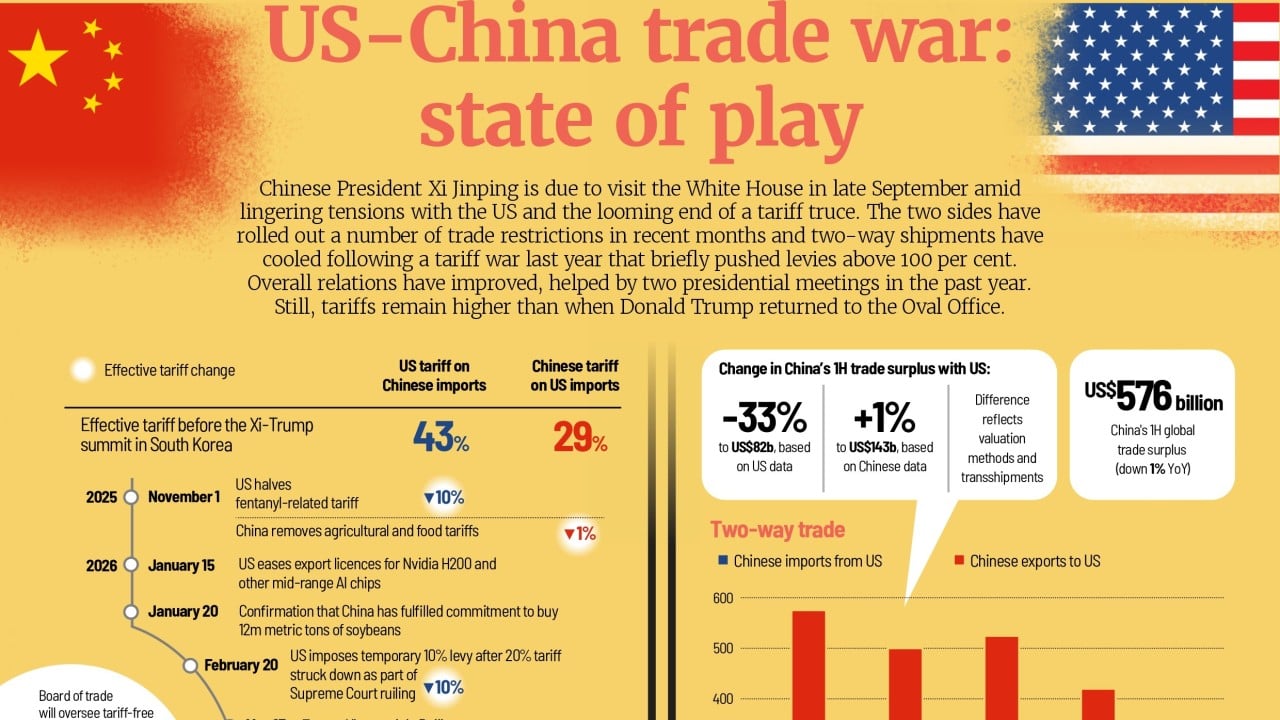
The average effective tariff rate on imports into the United States has climbed to levels unseen since the early nineteen-forties. At the center of this economic pressure cooker stands the complex architecture of bilateral levies between Washington and Beijing. Supply chain strategists who anticipated a cooling of trade hostility find themselves staring at a moving target of Section 301 duties, metal quotas, and fluctuating compliance thresholds.
Trade data rarely captures the frantic back-and-room negotiations happening behind closed doors. Corporations are no longer asking how to optimize global shipping lanes. They are asking whether their structural footprint can survive another quarter of regulatory surprises.
The Anatomy of Modern Protectionism
Decades of integrated manufacturing cannot be unstitched by executive decree without collateral damage. When the White House adjusts levies on electronics, industrial machinery, or semiconductor components, corporate boardrooms absorb an immediate operational shock. Consider a hypothetical mid-sized electronics manufacturer based in the Midwest. This firm relies on specialized circuit boards fabricated in Shenzhen. Under the multi-tiered tariff structures enforced through various regulatory updates, the landed cost of those components fluctuates unpredictably depending on the exact metal content ratio and statutory subclassifications.
Customs compliance departments have evolved into massive legal fortresses. Importers must track whether a specific screw or housing component breaches the newly expanded Section 232 thresholds, or if it triggers compound duties.
- The full-value rule means that minor metallic components can drag entire finished assemblies into higher penalty brackets.
- Automated Commercial Environment portals require real-time validation to prevent shipments from stalling at ports of entry.
- The elimination of traditional workarounds leaves very little margin for error.
Margins thin out with every iteration of regulatory text. Companies that baked fixed cost projections into their annual budgets discover that compliance requires continuous re-engineering of bills of materials.
The Myth of Clean Reshoring
Politicians often speak of domestic manufacturing revivals as a switch that can be flipped overnight. Reality tells a vastly different story. Building a foundry, a precision stamping plant, or an advanced chemical processing facility takes years of environmental reviews, capital allocation, and workforce training.
Factory floor expertise cannot be imported via cargo ship. When companies attempt to pull operations out of industrial clusters in Guangdong or Jiangsu, they run into a severe talent deficit at home. Tool and die makers, specialized industrial electricians, and process engineers command exorbitant salaries because decades of hollowed-out domestic industrial policy left a massive generation-long vacuum.
Furthermore, domestic suppliers often lack the localized supplier ecosystems found abroad. A factory in Ohio might secure local steel, but struggle to source the secondary fasteners, specialized plastics, and testing gear within a five-hundred-mile radius. Importing those auxiliary pieces from alternative international hubs merely shifts the geographic dependency rather than solving it.
The Beijing Calculus and Retaliatory Patience
Beijing watches these structural shifts with a calculated mix of frustration and strategic adaptation. Chinese exporters have refined their playbook since the initial trade disputes years ago. Rather than folding under the weight of higher duties, major industrial conglomerates redirect finished goods through third-party nations, altering routing profiles to obscure primary origin points.
Bilateral agreements occasionally freeze certain rates or delay specific sectoral crackdowns, but the underlying friction remains permanent. For instance, temporary truces keep baseline retaliatory levies on specific agricultural and energy exports at manageable thresholds, yet the threat of escalation hangs over every negotiation.
Consider what happens when critical mineral export controls tighten. Rare earth elements necessary for permanent magnets, defense guidance systems, and electric vehicle motors remain subject to sudden licensing freezes.
- Beijing holds significant leverage over the upstream processing of heavy rare earths.
- Washington holds leverage over high-end semiconductor fabrication tools and software design architecture.
- Both nations are locked in a mutual hostage situation where neither side can decouple without inflicting severe self-harm.
This technological interdependence creates a bizarre paradox. The more policymakers try to separate the two economies through defensive walls, the more chaotic the daily operations become for the commercial entities trapped underneath those walls.
The Financial Reality for Households
Corporate compliance costs invariably trickle down to retail shelves. Economists tracking consumer price indices note that while targeted exemptions soften the immediate blow on everyday goods, the cumulative drag on capital investments slows long-term productivity growth.
When a logistics firm pays higher tariffs on commercial transport vehicles, shipping rates increase for every retailer utilizing that fleet. Those increased transport expenses merge with higher inventory holding costs, resulting in creeping price increases across consumer electronics, home appliances, and apparel.
The financial burden distributes unevenly across income brackets. Lower-income households spend a significantly larger share of their disposable income on manufactured goods subject to baseline import duties. Wealthier consumers absorb the price adjustments without altering purchasing behavior, while working-class families trim discretionary spending.
Trade deficits persist despite the protective wall of tariffs because global demand for specific manufacturing outputs outpaces domestic capacity. The trade deficit shifts in composition rather than shrinking in magnitude.
The Road Ahead for Global Logistics
Supply chain leaders have stopped planning for a return to historical normalcy. The era of frictionless, lowest-cost global sourcing has ended permanently. Companies now prioritize resilience and political compliance over raw efficiency, accepting higher operational baselines as the cost of doing business in a fractured global marketplace.
Navigating this environment requires continuous adaptation. Organizations must invest heavily in data infrastructure to map every tier of their supply chain down to the raw material source. Those failing to modernize their customs tracking face mounting legal liabilities and detained cargo.
The border is no longer just a physical checkpoint where goods clear customs. It is a dynamic filter where every import faces an exhaustive political audit.