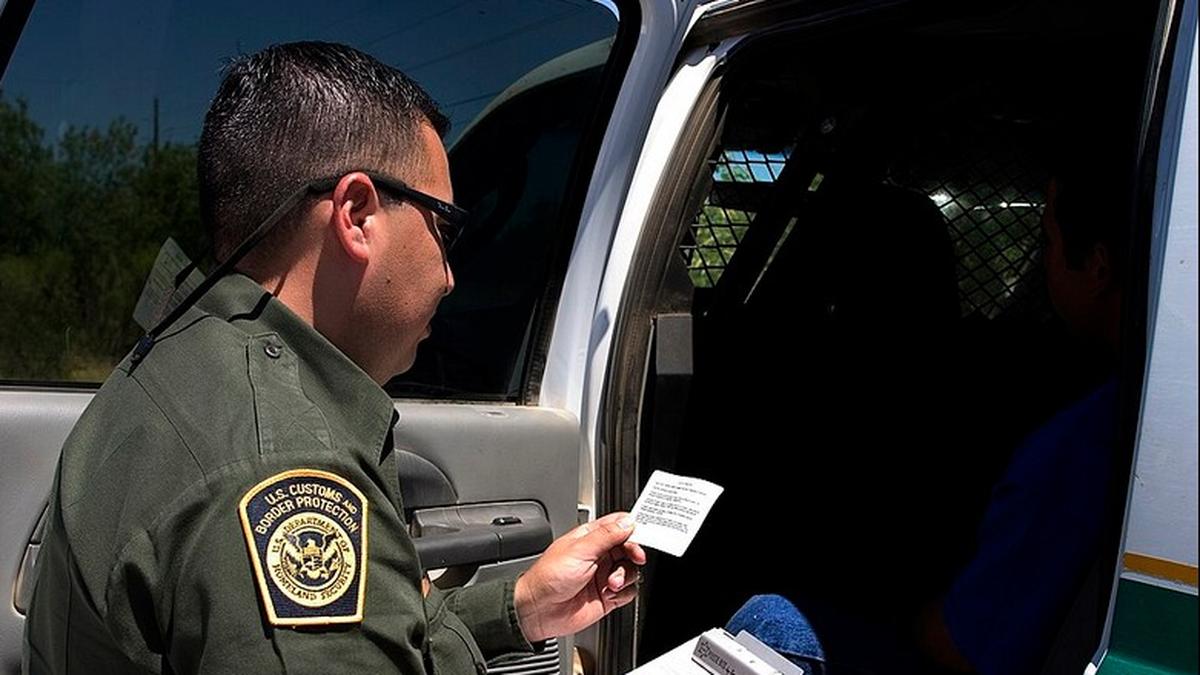
A coordinated federal sweep has disrupted a major underground pipeline in the American logistics sector, leading to the arrest and pending deportation of 30 Indian nationals operating commercial semi-trucks without legal status.
The arrests occurred during Operation Checkmate, a targeted multi-day enforcement action led by U.S. Customs and Border Protection (CBP) in Arizona’s Yuma Sector. Federal agents detained 52 individuals for immigration violations, identifying 36 of them behind the wheels of massive commercial motor vehicles. Among those commercial drivers, an overwhelming majority—30 individuals—were citizens of India, exposing a highly organized, rapidly growing network of undocumented operators navigating the nation's interstate highways. For a deeper dive into this area, we recommend: this related article.
The incident highlights a glaring systemic vulnerability where state-level licensing loopholes intersect with federal immigration oversight. Investigators revealed that many of the detained drivers held authentic Commercial Driver’s Licenses (CDLs) issued by states like California, New York, Washington, and Virginia.
The Paper Trail of Expired Loopholes
To understand how an undocumented migrant ends up commanding an 80,000-pound tractor-trailer down an American highway, one must examine the bureaucracy of employment authorization. A significant portion of the drivers arrested in the Yuma Sector possessed legitimate Employment Authorization Documents (EADs) that had been issued during the previous presidential administration. For further details on this issue, detailed analysis can also be found at BBC News.
Those permits have since expired or been invalidated under current federal directives. However, during the window in which their paperwork was active, these individuals successfully applied for and obtained state-issued CDLs.
Once a driver secures a commercial license, tracking their ongoing immigration status becomes a game of bureaucratic telephone. State Departments of Motor Vehicles (DMVs) manage licensing, while federal agencies oversee immigration enforcement. The two systems rarely communicate in real time. A driver can lose their legal status to remain or work in the country while retaining a physical, unexpired commercial license in their wallet.
State Licensing Versus Federal Law
The issue is further complicated by state laws regarding non-domiciled commercial licenses. Certain states allow non-citizens, including those with temporary work authorizations or asylum seekers awaiting hearings, to obtain commercial driving privileges.
Proponents of these policies argue they fill critical vacancies in a chronically understaffed supply chain. Opponents counter that they create an unmanageable public safety hazard. The federal government has moved to aggressively counter these state-level policies. The Department of Transportation recently instituted strict orders to prevent unqualified foreign nationals from obtaining or renewing commercial licenses.
Additionally, the introduction of the federal Dalilah Law aims to completely halt the issuance of commercial driver's licenses to undocumented individuals nationwide. This federal pushback follows a string of high-profile, fatal accidents involving foreign national truck drivers operating with questionable or expired state credentials.
Rising Fatalities and the Safety Argument
Federal enforcement agencies are framing Operation Checkmate not merely as an immigration crackdown, but as an urgent public safety intervention. Driving a commercial semi-truck requires specialized training, fluent understanding of American traffic safety signs, and strict adherence to service-hour regulations.
The industry has watched with growing alarm as a series of severe accidents spotlighted the risks of unregulated commercial operators.
- In late 2025, a 21-year-old undocumented driver caused a multi-vehicle collision in Southern California that claimed three lives. Investigators found he had entered the country illegally through the El Centro Sector years prior and was operating a freightliner while intoxicated.
- In mid-2025, a similar tragedy unfolded in Florida when an commercial driver executed an illegal U-turn on a high-speed highway, causing a fatal crash that killed three family members in a minivan.
- In early 2026, subsequent fatal crashes in Oregon and Indiana involving commercial operators with out-of-state licenses resulted in additional civilian deaths, triggering intense political scrutiny.
The recurring theme in these cases is a dangerous disconnect: drivers operating heavy machinery across multiple state lines while holding licenses from states with lax oversight, far from where they actually reside or operate.
The Economic Pull of the Open Road
The sheer volume of Indian nationals discovered in this single enforcement operation points to a broader macroeconomic trend. The trucking industry has long struggled with a massive driver shortage, creating an environment where motor carriers, particularly smaller independent fleets, are tempted to look the other way regarding driver documentation.
For undocumented migrants, commercial trucking offers a lucrative alternative to low-wage agricultural or service industry jobs. A long-haul trucker can earn a steady income that far exceeds what is available in traditional underground economies.
Unscrupulous trucking firms exploit this dynamic. They hire undocumented drivers as independent contractors, paying them lower rates than legal residents while avoiding corporate payroll taxes, workers' compensation insurance, and federal safety audits. The driver gets a paycheck that can be remitted home, the company gets cheap labor, and the American consumer gets cheap shipping—until the arrangement shatters on an interstate highway.
Enforcement in the New Regulatory Climate
The Yuma Sector sweep signals a fundamental shift in how border enforcement operates. Federal agents are no longer just watching the physical border wall; they are monitoring the transport infrastructure that connects the border to the interior of the country.
Operation Checkmate utilized tactical checkpoints and highway patrols to screen commercial vehicles specifically. Acting Chief Patrol Agent Dustin Caudle stated that federal agents are actively patrolling these corridors daily to identify unlawfully present drivers before more fatal crashes occur.
The 52 individuals detained in Arizona have been processed under Title 8 federal immigration law. Because their temporary work authorizations have lapsed, they face expedited removal proceedings without the lengthy delays that characterized prior immigration backlogs.
The logistics industry now faces a harsh reckoning. As federal authorities tighten the squeeze on commercial licensing and increase highway sweeps, the supply chains that quietly relied on this gray-market labor pool will have to adapt to a reality where a commercial license is no longer a shield against federal deportation.