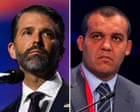
The headlines arrived with a predictable shock value. Donald Trump Jr.’s multi-day wedding celebration in the Bahamas featured a hidden financial backer: Umar Kremlev, a Russian oligarch with direct ties to Vladimir Putin. For days, political Washington and investigative desks tore through the details of private island rentals, fireworks, and hundreds of thousands of dollars in foreign-sourced cash underwriting a private family milestone.
Yet focusing solely on the optics of a party misses the broader structural reality of how modern elite networking operates. This controversy is not just a salacious political footnote. It is a stark window into the informal economy of global power, where personal hospitality functions as a shadow currency and traditional boundaries between national security and personal enrichment blur beyond recognition.
The Anatomy of a High-End Favor
When the story broke, the defense from the Trump family and their associates relied on a familiar playbook: it was merely a personal friendship, an expression of generosity, and a private gift devoid of political calculations. Kremlev himself leaned heavily into this narrative, framing his contribution as the simple act of a host welcoming friends.
From the perspective of political anthropology, however, the concept of a purely disinterested gift among the global ultra-wealthy is an illusion. When an individual closely aligned with an adversarial foreign government—a leader under Western sanctions and heavily embedded in state-backed entities like Gazprom—finances high-ticket events for the inner circle of an American political dynasty, the transaction defies standard definitions of friendship.
Influence in these strata rarely operates through crude suitcases of cash or cinematic spycraft. Instead, it relies on manufactured intimacy. By absorbing the exorbitant costs of private island hospitality, a foreign actor buys something far more valuable than a policy concession: proximity, social validation, and a channel of informal access that bypasses conventional diplomatic screening.
The Mechanics of Scrutiny and Retroactive Damage Control
The political fallout was swift, triggering immediate congressional inquiries and unusual cross-party calls for formal oversight. Lawmakers focused heavily on whether the arrangement violated standard ethics frameworks or opened backdoors for foreign intelligence gathering.
Recognizing the escalating political liability, the narrative shifted rapidly. Reports surfaced that Donald Trump Jr. had moved to reimburse Kremlev for the celebration expenses, an attempt to sanitize the ledger and neutralize ongoing congressional subpoenas. Kremlev confirmed the repayment publicly during a sports federation press conference in Istanbul, expressing mild public bewilderment as to why the younger Trump felt the need to return a friendly gesture.
This retroactive fix exposes the core vulnerability of elite foreign networking. A financial transaction can be unwound with a wire transfer, but the underlying network topology remains intact. The dinner tables shared, the private introductions made, and the personal rapport established during a weekend in the Bahamas cannot be refunded.
Why the Traditional Watchdogs Miss the Point
Mainstream media coverage routinely frames these episodes as isolated ethical lapses or political gotchas. This approach fundamentally misunderstands the environment. The convergence of oligarchic capital and political dynasties is a systemic feature of an interconnected global economy.
When billionaires from authoritarian states invest in Western political families—whether through sporting bodies like the International Boxing Association, luxury hospitality, or joint investment ventures—they are hedging their geopolitical bets. They are embedding themselves into the fabric of Western influence so deeply that disentangling their interests from national security becomes nearly impossible for regulatory bodies.
The system relies on plausible deniability. As long as transactions can be categorized as personal friendships or cultural exchanges, traditional oversight mechanisms struggle to intervene effectively. Ethics laws are built to catch formal bribery, not the ambient warmth of an oligarch-funded beach party.
The Lingering Precedent
The episode ultimately highlights the lax defensive posture of American political families toward foreign entanglements. Even after years of heightened scrutiny regarding foreign interference, the boundaries separating private social lives from public accountability remain porous.
Writing checks to cover wedding costs or organizing luxury excursions in remote locations provides a frictionless vector for actors seeking influence without paperwork. Until the financial and social costs of accepting such hospitality outweigh the short-term benefits, these alignments will continue to test the limits of public trust and national security. The money may eventually be paid back, but the architecture of access remains fully operational.