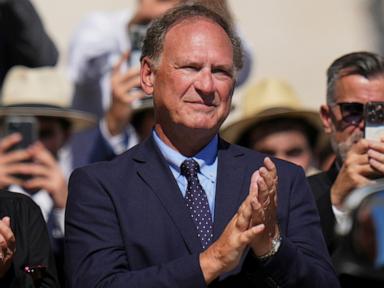
Supreme Court Justice Samuel Alito stepped aside from the high-profile climate liability case Suncor Energy v. Boulder County just one week before oral arguments, bowing to mounting pressure regarding his personal financial investments in the energy sector. The eleventh-hour recusal highlights a persistent vulnerability within the nation's highest court: a self-policing ethics structure that routinely allows personal stock portfolios to collide with matters of national consequence.
The dispute centers on whether municipal and state lawsuits seeking billions of dollars from fossil fuel companies belong in state or federal courts. While Alito does not hold individual shares in the primary litigants, ExxonMobil or Suncor, his financial disclosures have long listed investments in other major energy entities, including ConocoPhillips. Legal scholars note that a sweeping ruling on jurisdictional boundaries for climate litigation carries downstream financial implications for the entire hydrocarbon market. By holding individual equities in energy corporations while adjudicating foundational questions affecting that sector, Alito created an avoidable structural crisis that ultimately forced his own retreat.
This dynamic is not entirely unprecedented. Earlier in the year, Alito stepped aside from Chevron USA Inc. v. Plaquemines Parish under similar clouds of financial conflict. Yet, the piecemeal nature of these recusals underscores a deeper institutional flaw. Unlike lower court judges who are bound by strict statutory disqualification rules enforced by higher review, Supreme Court justices operate under a code where individual discretion reigns supreme. Chief Justice John Roberts has long defended this arrangement, arguing that outside oversight threatens the separation of powers. But when an individual justice accounts for a disproportionate share of total high-court recusals due to personal stock holdings, the defense of absolute judicial independence begins to ring hollow to the public.
The timing of the Suncor withdrawal amplifies the friction. Court watchers and watchdog organizations pointed out that holding stock portfolios with direct exposure to industrial sectors creates an optics nightmare that no amount of late-stage maneuvering can fully sanitize. Critics argue that the damage to public trust occurs long before a gavel falls, rooted in the initial decision to retain individual equities in industries whose fortunes are regularly weighed on the federal docket.
The broader implications extend far beyond a single docket line. Dozens of state and municipal climate lawsuits across the country have been frozen, waiting for the high court to establish the rules of engagement. When the integrity of the deciding body is repeatedly drawn into question over personal investment portfolios, the final ruling—regardless of its legal merits—inherently carries the stain of perceived partiality.
Judicial legitimacy is a depreciating asset once spent, and repairing it requires more than last-minute procedural exits. Until the court institutes mandatory, transparent asset management protocols matching those required of the executive and legislative branches, every major economic dispute risks being overshadowed by the personal balance sheets of the bench.