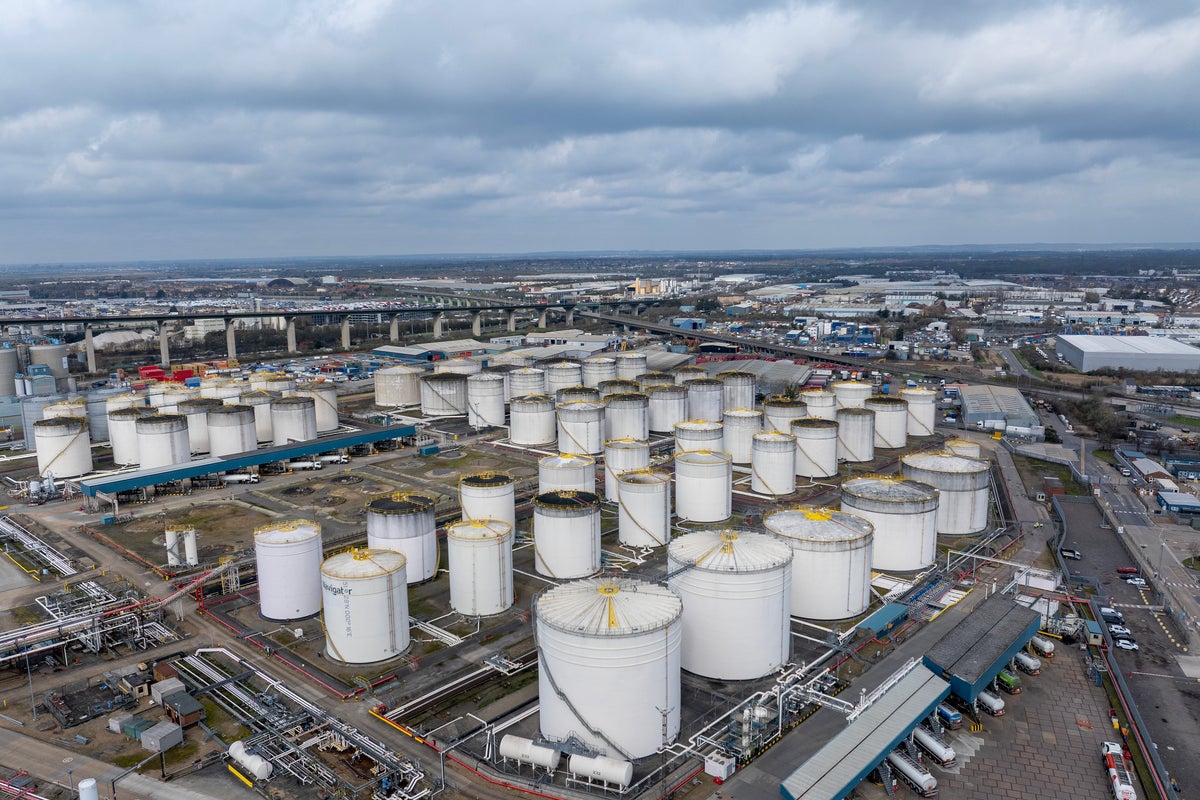
The white-hot reality of the American energy supply is bleeding through the optimistic rhetoric of the White House. While the administration publicly insists that the current pain at the pump is a short-term blip tied to a rapidly evolving conflict with Iran, the mathematical reality under the hood of the global oil market tells a far more terrifying story. The United States is burning through its ultimate emergency safety net at a pace that cannot be sustained, leaving the domestic economy exposed to a catastrophic price shock within weeks.
The structural buffer built up during the shale revolution has been completely erased. Total inventories of commercial crude and petroleum products have plummeted to 1.57 billion barrels—the absolute lowest level recorded since 2004.
Behind closed doors, corporate energy titans are no longer whispering their concerns; they are explicitly warning that a structural wall is fast approaching. The market has entered a dangerous distortion where the United States is draining its domestic emergency reserves to act as the global lender of last resort, supplying foreign buyers while leaving American consumers exposed.
The Illusion of the Temporary Blip
White House officials look at oil futures markets and tell the public that prices will drop dramatically the moment a diplomatic solution is reached. They point to back-month contracts to suggest that the baseline remains secure.
This view ignores how physical oil infrastructure actually operates. The conflict has essentially choked off the Strait of Hormuz, through which roughly 20 percent of the world’s daily petroleum supply flows.
Top corporate executives, including ExxonMobil Senior Vice President Neil Chapman and Chevron CEO Mike Wirth, have pulled back the curtain on how dangerously low physical inventories have fallen. The issue is not paper trading or market sentiment; it is the physical extraction, refinement, and transport of actual molecules.
When a wellbore is shut in, or a regional loading facility suffers structural damage, you do not simply flip a switch to resume normal operations. Restoring pressure to offline wells, conducting complex safety audits on damaged maritime terminals, and clearing major shipping bottlenecks takes months, sometimes years.
Physical Supply and Demand Gap (Mid-2026 Estimate)
-----------------------------------------------------------
Global Demand:                  ~100 million b/d
Hormuz Disruption Loss:         ~20 million b/d
US Strategic Release Offset:    ~1.5 million b/d
Net Global Daily Deficit:       ~18.5 million b/d
-----------------------------------------------------------
The administration’s public reliance on the Strategic Petroleum Reserve (SPR) has fundamentally backfired. By pouring millions of emergency barrels into the market to suppress domestic gasoline prices, the government has created an artificial floor. Global commodities traders have realized that the American reserve is finite. Instead of calming the market, every major emergency release now signals to global buyers that the physical stockpile is getting closer to empty, driving panic buying up the curve.
The Dangerous Mechanics of the Supplier of Last Resort
The domestic market is suffering from its own structural success. Because American shale producers can extract oil and export it efficiently, the global market is treating US crude as the premier alternative to missing Middle Eastern barrels.
Foreign buyers are outbidding domestic refineries. US crude shipments recently surged from 4.4 million barrels a day to a staggering 5.8 million barrels a day.
- Refinery Starvation: Domestic refineries are built to process specific blends of crude. When high-quality light sweet crude is exported en masse to Europe and Asia, local refiners must pay a hefty premium to secure raw materials.
- The Export Drain: This massive export pull means that even though America pumps historic volumes of oil, the actual physical inventory sitting on American soil is dropping by millions of barrels a week.
- The Price Calibration: To halt this rapid drain of domestic inventories, US domestic oil prices must rise to a level that deliberately shocks the market, making exports economically unviable.
This is the hidden mechanism driving the price spike. The domestic market cannot heal until American oil becomes too expensive for foreign nations to buy. Bob McNally, president of Rapidan Energy Group and a former White House adviser, has warned that unless the Strait of Hormuz reopens immediately, crude prices could realistically push toward $200 per barrel to force this necessary economic slowdown.
The Rural and Industrial Breakdown
The broader economic fallout goes far beyond the price of filling a standard passenger sedan. The surge in crude has triggered an immediate, severe crisis across the agricultural and industrial sectors because of the complex chemical links between oil refining and basic manufacturing.
Petroleum Byproduct Price Escalation Since Conflict Onset
=========================================================
Jet Fuel:      +60%
Sulfur:        +53%
Urea/Fertility:+49%
Diesel Fuel:   +46%
Gasoline:      +35%
=========================================================
Data Source: Market Commodity Index Tracking
Consider the agricultural sector. Diesel and urea are not luxury items for American farmers; they are foundational requirements for food production.
A standard industrial farm requires thousands of gallons of diesel simply to complete spring seeding. When diesel costs climb by nearly 50 percent, the thin profit margins of independent agricultural operations disappear completely. Over half of American farmers now report that their financial outlook has severely worsened.
Furthermore, urea—a critical component of commercial fertilizer—is a direct byproduct of energy processing. The sudden supply squeeze has left nearly 80 percent of domestic farmers reporting that they can no longer afford to purchase their full crop nutrition requirements. This shortfall means lower crop yields in the coming harvest cycle, ensuring that today's energy crisis becomes next season's grocery store crisis.
Why the SPR Cannot Save the Market
The belief that the federal government can simply keep opening the valves at the Strategic Petroleum Reserve indefinitely is a dangerous technical misconception. The SPR is not a giant underground swimming pool that can be drained to zero with a standard pump.
The reserve is housed in a network of deep, hollowed-out salt caverns across Texas and Louisiana. To push oil out of these caverns, operators must pump massive quantities of raw brine into the bottom of the cavern, forcing the lighter crude oil up to the surface pipelines.
There is a hard physical limit to how fast this process can occur. If you run the system at maximum drawdown capacity for too long, the structural integrity of the salt caverns begins to degrade, threatening a permanent collapse of the storage facility.
The United States has already authorized the release of well over 100 million barrels of crude from this emergency system. As the total volume sitting in the reserve falls toward the 300-million-barrel line, the physical pressure required to extract the remaining oil drops, making it mechanically impossible to maintain high daily flow rates. The safety cushion is not just shrinking; it is actively losing its functional utility.
The Looming Autumn Reckoning
The administration is currently betting its entire economic future on an unstable diplomatic gamble. By keeping the market artificially supplied through continuous inventory drawdowns, they have bought themselves a few weeks of volatile stability.
If those delicate peace negotiations completely fall apart, the market will instantly face the realities of a depleted SPR, record-low commercial stockpiles, and a permanently blocked global transit corridor.
The critical inflection point will hit during the peak summer driving season. When millions of American families hit the highways just as commercial fuel inventories hit rock bottom, the regular pricing mechanisms will break down.
Independent fuel distributors will be forced to compete directly with massive international trading houses for a dwindling pool of domestic refined products. The resulting spike will not be a slow, orderly climb; it will be a violent, structural step-up that resets the baseline for the entire global economy.