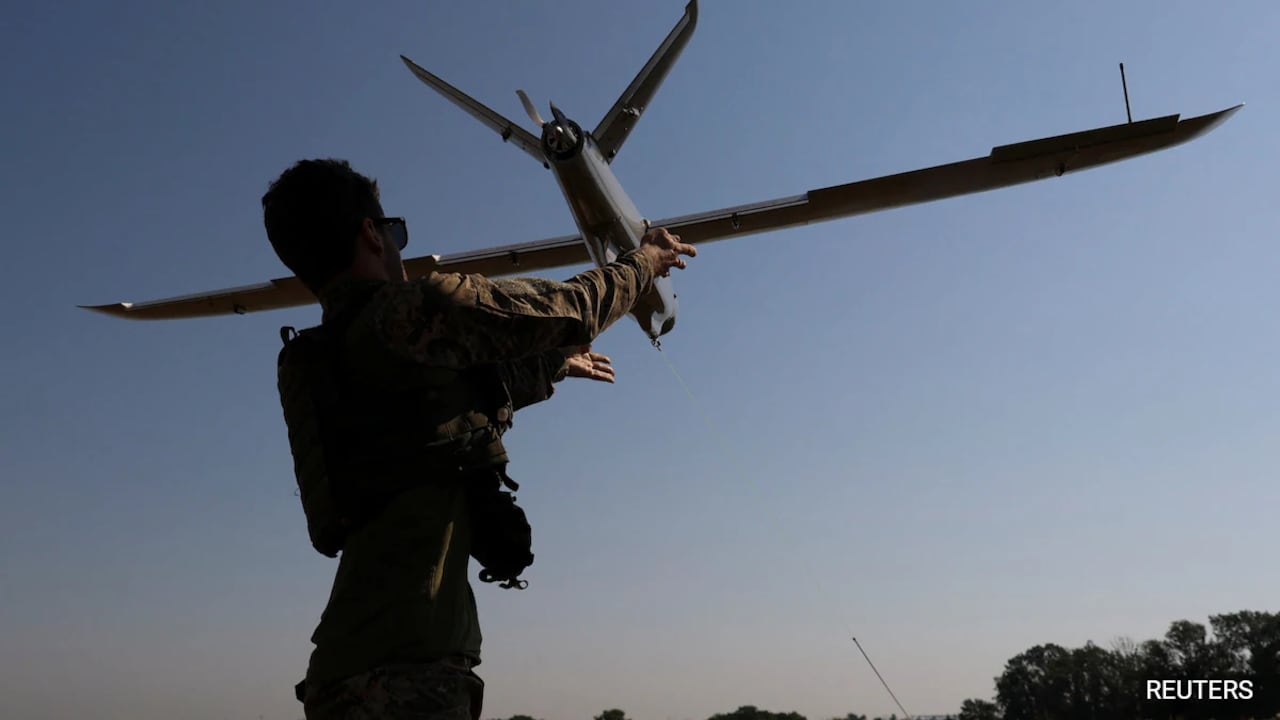
Ukrainian drone missions have suffered sudden connectivity drops and speed-related link failures amid disputes over Starshield restrictions, leaving interceptor and reconnaissance aircraft blind or tumbling from the sky when they cross roughly 100 miles per hour. That single threshold is the difference between catching a jet-powered attack drone over occupied ground and watching an expensive airframe lose telemetry mid-flight.
Headlines about drones dropping out of the sky make great copy. They also flatten a tangled web of orbital engineering, Pentagon procurement contracts, geopolitical friction, and finger-pointing between Kyiv, Washington, and SpaceX into a cartoon villain story. I have covered defense tech and space infrastructure long enough to know that when a critical link fails in combat, the real culprit is rarely one switch flipped in isolation. It is usually a collision of architecture, policy, and accountability.
How a Speed Cap Turns Fast Interceptors Into Dead Weight
Modern aerial defense in Ukraine is a race against time and airspeed. Propeller-driven loitering munitions were bad enough to track and shoot down. Jet-powered drones compress the timeline to minutes, forcing Ukrainian air defenders to push interceptor drones hard just to close the distance.
When a high-speed drone relies on a satellite link for live command, video feed, or telemetry relay, doppler shifts, antenna handoffs between low Earth orbit satellites, and geofenced software rules all enter the equation. Ukrainian officials and defense advisers have reported that connectivity drops when drones reach speeds around 161 kilometers per hour—100 miles per hour—severing operator control during critical intercepts.
If an interceptor loses its link at 100 mph over contested or occupied territory, the operator cannot steer, abort, or re-task it. The aircraft either flies dumb until fuel runs out or goes down.
Consider a hypothetical scenario where an interceptor unit launches after a fast incoming drone near a contested sector. The pursuit begins cleanly, with crisp telemetry and responsive flight control. The moment the interceptor accelerates past the 100 mph mark to close the gap, packet loss spikes or the link drops altogether, forcing operators to pull back or wait until threats cross deeper into Ukrainian-controlled airspace where intercept geometry is far less forgiving.
That delay carries a heavy human cost. Every kilometer a jet-powered drone travels unchallenged brings it closer to power stations, substations, rail hubs, and apartment blocks as winter tightens its grip on the grid.
Starshield Over Starlink and the Whitelist Maze
To understand why these disruptions feel so slippery to pin down, you have to look at how Starshield and commercial Starlink actually intersect on the battlefield. They are often spoken of as interchangeable in news briefs. They are not.
Commercial Starlink is a massive, high-volume low Earth orbit network built primarily for consumer and enterprise broadband, using small terminals and thousands of satellites to deliver low-latency data. Starshield is SpaceX's military-oriented offering tied to U.S. government contracts, designed around stricter security, government oversight, and specialized defense missions. Yet analysts and procurement observers note that military drone operations in Ukraine have leaned on configurations often described as Starshield over Starlink, routing authorized defense accounts across the broader orbital infrastructure rather than an isolated, standalone constellation.
Earlier in 2026, SpaceX moved to an allow-list or whitelist model in Ukraine to shut out unauthorized terminals—including hardware that Russian forces had managed to acquire or misuse. Whitelisting solved one major security headache. It also created a sharper operational bottleneck:
- Stationary vs. mobile rules: Terminals approved for fixed positions and basic battlefield communications face very different assumptions than fast-moving airborne platforms.
- Geographic boundaries: Service policies and geofencing over Russia, Ukraine, and temporarily occupied territories create hard edges where deep-strike or cross-line operations run into technical or policy walls.
- Latency and handoffs: Fast aerial movement stresses beam switching and link stability even when no artificial throttle is applied, making it harder for field operators to tell a network quirk from an imposed ceiling.
When a drone drops out of the sky during a raid, a soldier in a trench or a pilot in a bunker does not see a neat compliance memo on their screen. They just see red warnings and dead video.
Who Actually Pulls the Lever on Starshield
Nobody should accept simple denials or simple accusations at face value here. The blame game around Starshield exposes a constitutional and contractual gray zone that Western militaries have been dreading for years.
Elon Musk has stated that Starshield sits under U.S. government control, with military authorities setting speed and usage restrictions and ultimate authority resting with the U.S. president. At the same time, he has publicly argued that commercial Starlink terms of service forbid offensive strikes using civilian-grade connectivity, and SpaceX has pushed back against claims that it imposed new limits during certain flare-ups.
Meanwhile, Ukrainian leaders have pointed to recurring restrictions—including periods where connections reportedly snapped back after diplomatic or technical pushback, only for speed caps or mission failures to surface again—and questioned why assurances of government control did not prevent front-line outages. Lawmakers in Washington have likewise pressed for straight answers on who authorized what, when, and why.
| Layer of Control | Primary Actors | Core Tension | Battlefield Impact |
|---|---|---|---|
| Orbital & Software Layer | SpaceX engineers, constellation management | Technical throttling, geofencing, and whitelist enforcement vs. dynamic combat needs | Sudden link drops, speed ceilings around 100 mph, and failed drone runs |
| Policy & Contract Layer | Pentagon, White House, SpaceX | Government defense authority vs. commercial terms of service and liability | Ambiguous accountability when outages coincide with diplomatic pressure |
| Tactical Execution Layer | Ukrainian drone units, air defense command | Need for fast, uninterrupted links over occupied and contested zones | Delayed intercepts, lost airframes, and greater risk to energy infrastructure |
There is a gray area where honest engineers and cynical politicians overlap. A network can experience real congestion or motion-handling limits during heavy electronic warfare or rapid configuration shifts. A government or contractor can also tighten parameters to curb escalation risks or enforce mission boundaries. When transparency is low, every technical glitch looks like politics, and every political decision hides behind a technical excuse.
The Monopoly Trap Nobody Can Wish Away
Relying on a single private space company for low-latency, high-mobility satellite links is not a mistake born of carelessness. It is a reflection of hard physical and industrial reality.
Building thousands of low Earth orbit satellites, launching them at high cadence, and manufacturing compact phased-array terminals that hold a lock while moving fast takes years and tens of billions of dollars. European alternatives and allied government systems exist, yet defense analysts have repeatedly noted that they are not drop-in replacements for Starlink's scale, speed, and terminal availability.
That creates asymmetric leverage in modern warfare. A sovereign nation fighting for survival can buy hardware, negotiate aid packages, and build domestic factories for airframes and interceptors—and Ukraine has scaled domestic drone production remarkably—yet still depend on external orbital infrastructure whose rules can shift without prior notice to field commanders.
Critics of Ukraine's deep-strike strategy argue that long-range strikes have not ended the war on their own, while supporters counter that blunting Russian missile and drone salvos and hitting war-making logistics directly protects civilians and slows advances. Both arguments miss the deeper structural point: if a single commercial-defense ecosystem can throttle speeds or sever links mid-mission, operational sovereignty is rented, not owned.
What Serious Defense Planners Must Change Now
Waiting for the next diplomatic phone call or software patch is not a strategy. Any military that watches these Starshield disruptions and treats them as a quirk of the Ukrainian theater is setting itself up for the exact same shock.
First, drone programs need multi-path resilience baked into the airframe from day one. Fiber-optic tethers for short-range tactical work, hardened radio datalinks, autonomous terminal guidance when telemetry drops, and alternative satellite or high-altitude relays must be treated as standard kit rather than afterthoughts.
Second, allied governments must demand binding operational rules of engagement before tying critical combat roles to contractor-run networks. A military cannot fight high-tempo air defense if speed limits or undisclosed parameter changes can turn an interceptor into a glider at 100 mph.
Third, auditability has to be non-negotiable. When mission-critical links degrade, commanders need clear, verifiable diagnostics separating jamming, weather, and hardware faults from policy-driven throttling—because in modern air defense, minutes are measured in lives.