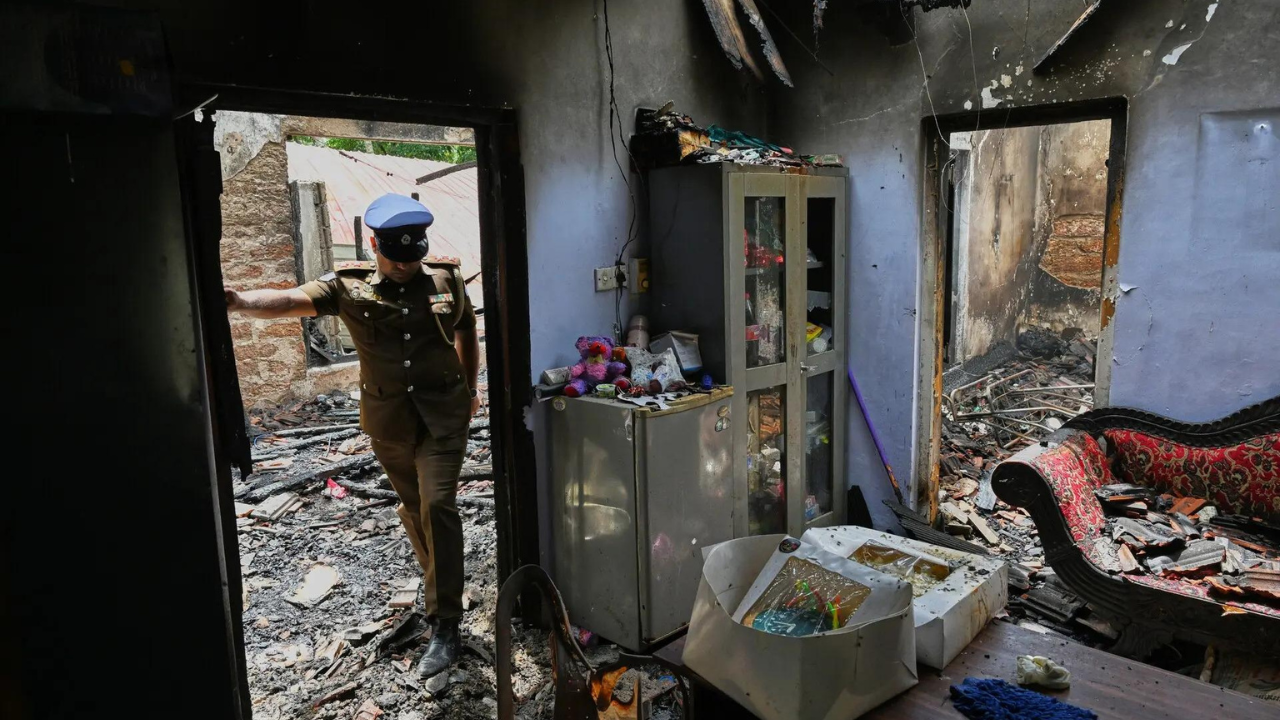
The fatal blaze that swept through the Mawpiya Sevana Elderly Care Home in Anguruwatota, Sri Lanka, killing 12 residents and injuring several others, is a tragedy born from structural failure. On Wednesday evening, the privately run facility in the Kalutara district became a death trap. Police swiftly arrested the home’s owner and director on charges of negligence, while initial reports pointed toward a potential gas cylinder explosion. Yet, focusing solely on the immediate ignition source or the culpability of a single operator misses the systemic dysfunction. The horrific incident exposes a massive regulatory vacuum in Sri Lanka’s elder care framework, where unregistered facilities routinely house vulnerable citizens without meeting basic safety standards.
The Illusion of Regulatory Oversight
The National Secretariat for Elders confirmed after the disaster that the Mawpiya Sevana facility was completely unregistered. It operated entirely outside the legal boundaries meant to safeguard the elderly. Chathura Mihudum, the director of the state secretariat, revealed that authorities had previously visited the site and explicitly warned management to comply with national guidelines.
Those warnings went ignored. The facility was designed to comfortably accommodate roughly 15 individuals. Instead, management crammed 71 vulnerable residents into the confined structure. This extreme overcrowding actively prevented safe evacuation when the fire broke out. When emergencies strike, a space packed to nearly five times its intended capacity guarantees chaos.
Sri Lanka’s state apparatus has historically lacked the teeth to enforce compliance. Bureaucrats can issue written warnings, but without enforcement mechanisms, rogue operators treat these notices as minor administrative nuisances. The state knew the facility was dangerously overcrowded, yet it remained open until the smoke cleared to reveal 12 bodies.
The Mechanics of an Enforcement Failure
The breakdown of oversight stems from a severe resource gap within the social services sector. Field officers are tasked with monitoring hundreds of informal care providers across expansive rural and suburban districts.
- Lack of Enforcement Power: Regional officers frequently find themselves powerless to shut down non-compliant operations on the spot.
- Legal Bottlenecks: The judicial process required to shutter an illegal home winds through backlogged local courts for months.
- The Relocation Dilemma: Displacing dozens of elderly residents with nowhere else to go forces regulators to look the way, hoping for the best.
This passive approach creates a highly profitable environment for predatory operators. They capitalize on the desperation of families who cannot afford premium care or find space in government-run facilities.
The True Cost of an Aging Demography
Sri Lanka faces one of the fastest-aging populations in South Asia. Decades of declining fertility rates paired with longer life expectancies have created a massive demographic shift. The traditional social fabric, which historically relied on extended families to care for aging parents, is fraying under intense economic pressures.
Many young professionals have migrated abroad to escape domestic financial volatility, leaving their aging relatives behind. Others work multiple jobs to survive, leaving them unable to provide the round-the-clock supervision that cognitive decline and physical frailty require.
The state sector cannot fill this gap. Publicly funded elder care homes are sparse and chronically underfunded. This shortfall drives families directly into the unregulated private market.
+-------------------------------------------------------------+
|               THE ELDER CARE COGNITIVE GAP                  |
+-------------------------------------------------------------+
|  Surging Demand for Care  ---->  Chronic Public Shortfalls  |
|                                            |                |
|                                            v                |
|  Unregistered Facilities  <----  Families Out of Options    |
+-------------------------------------------------------------+
Unregistered homes thrive because they offer an affordable alternative. They cut operational costs by bypassing fire safety infrastructure, hiring untrained staff, and ignoring capacity limits. The tragic reality is that for many families, these dangerous spaces are the only option available.
When Care Homes Double as Psychiatric Wards
The Anguruwatota tragedy revealed another deeply troubling reality of the local care system. Police Spokesman Fredrick Wootler confirmed that the facility did not just house the elderly; it also held individuals suffering from severe mental illnesses.
Mixing geriatric care with psychiatric institutionalization is a recipe for disaster, especially in an unmonitored environment. Managing patients with complex psychological needs requires specialized medical training, secure facilities, and tailored evacuation plans.
The Evacuation Nightmare
When the fire erupted at 5:30 PM, the staff on duty were instantly overwhelmed. Evacuating dozens of mobility-impaired elderly residents is exceptionally difficult under ideal circumstances. Introducing residents experiencing acute psychiatric distress makes coordination nearly impossible.
Survivors reported immense confusion as thick smoke filled the corridors. Some residents froze in terror, while others could not comprehend the emergency commands shouted by neighbors and the skeleton crew of workers.
Local volunteers, police officers, and arriving military personnel managed to pull 51 survivors from the inferno. They transported them to a nearby school for emergency shelter. The rescue was an act of raw community desperation, not a managed emergency response. Ten individuals died where they lay inside the building, and two more succumbed to severe injuries after arriving at Horana Base Hospital.
The Danger of the Gas Cylinder Economy
While forensics teams sift through the ash to determine the official cause, the initial focus on a kitchen gas cylinder explosion highlights a broader vulnerability. Across Sri Lanka, liquid petroleum gas (LPG) remains the primary cooking fuel for commercial and domestic kitchens alike.
       [ Unregulated LPG Storage in Commercial Kitchens ]
                               |
                               v
            [ Failure to Install Gas Leak Detectors ]
                               |
                               v
        [ Rapid Flame Spread via Overcrowded Layouts ]
                               |
                               v
             [ Catastrophic Structural Entrapment ]
In an unregulated commercial kitchen, safety protocols are nonexistent. Gas cylinders are frequently stored indoors next to open flames, rubber hoses are left to degrade, and automated leak detection systems are absent.
When an LPG cylinder ruptures or leaks in an enclosed space, the resulting flash fire expands with immense speed. If the building lacks fire-retardant walls, smoke detectors, or clearly marked emergency exits, the structure becomes an inescapable kiln within minutes.
Holding Owners Accountable is Only the First Step
The arrest of the Anguruwatota facility director on suspicion of causing death by negligence provides a brief flash of public accountability. It satisfies the immediate demand for justice, but past disasters show that prosecution rarely translates into systemic reform.
True accountability requires a sweeping overhaul of how Sri Lanka treats its elderly population. The state must transition from a reactive policy of post-disaster arrests to a proactive strategy of strict licensing and mandatory safety audits.
Necessary Legislative Reforms
- Mandatory Fire Infrastructure: Every elder care facility must feature hardwired smoke alarms, fire extinguishers, and direct emergency exits.
- Enforcement Powers: Field inspectors need the administrative authority to issue immediate closure orders to facilities operating over capacity.
- Centralized Tracking: The government must establish a public register of certified elder care providers, allowing families to verify safety records before admitting loved ones.
Without these concrete legislative actions, the underlying vulnerabilities will remain completely untouched. The Anguruwatota fire was not an unpredictable accident. It was the natural, catastrophic consequence of an entire sector left to rot in the dark.