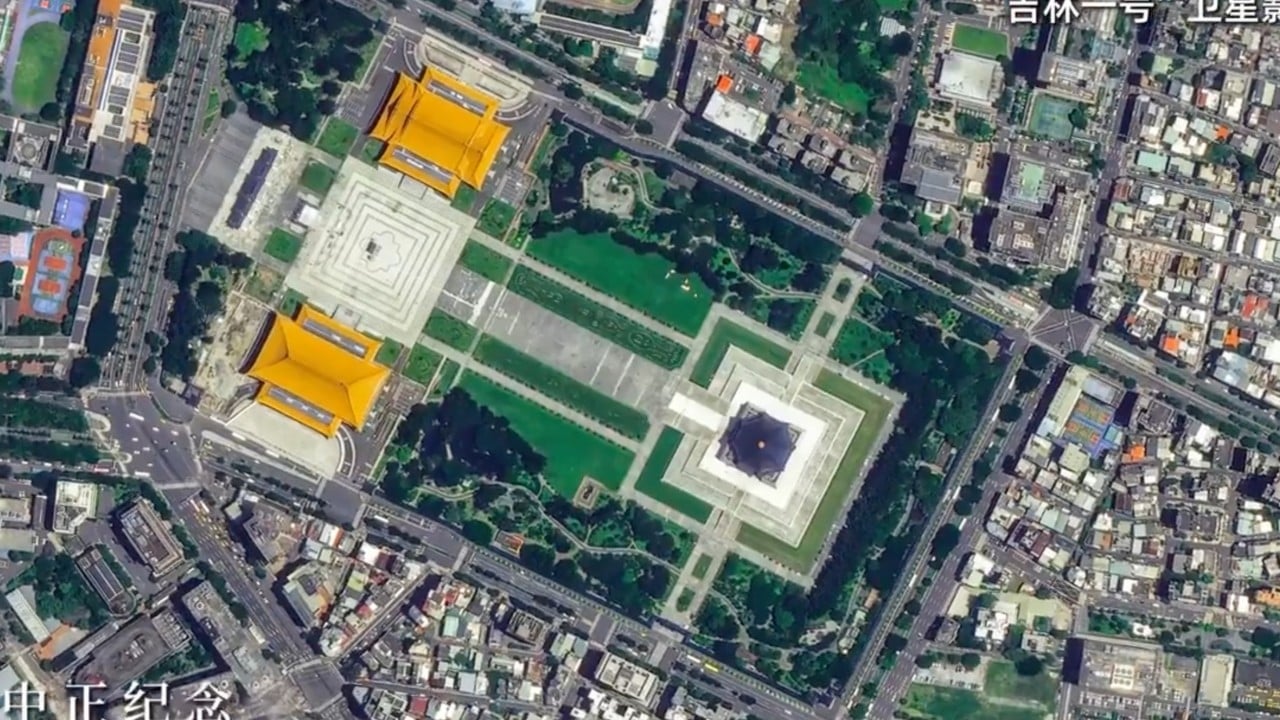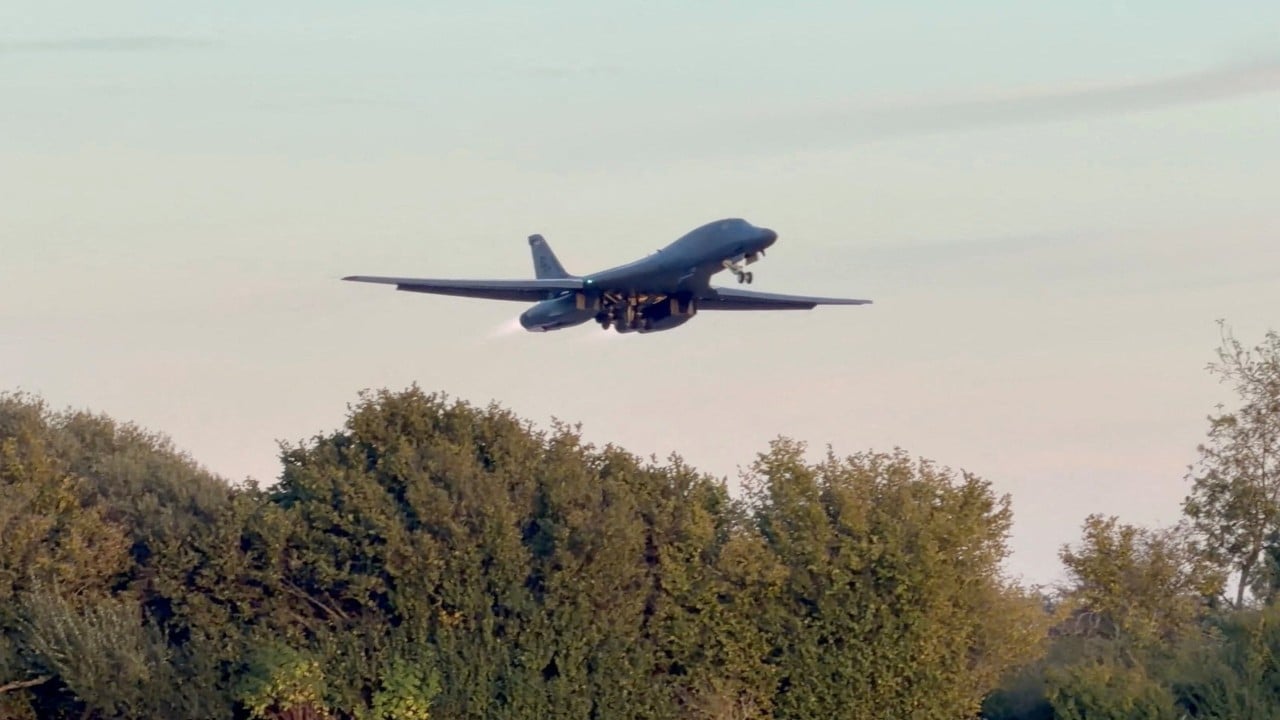
Two men face formal charges following a security incident at a Royal Air Force base in the United Kingdom used by the United States military, with British counter-terrorism police explicitly linking the breach to Iran. The charges bring an otherwise quiet perimeter violation directly into the center of a escalating covert conflict between Tehran and Western defense alliances. Rather than treating the event as an isolated act of local trespassing or anti-war protest, investigators handed the file to specialist counter-terrorism units, signaling that the suspects were allegedly acting under foreign direction or gathering intelligence on critical allied infrastructure.
For decades, the American military footprint in Britain has operated under a uniquely vulnerable arrangement. These facilities are officially Royal Air Force stations, governed by British law and guarded primarily by Ministry of Defence Police, yet they house some of the most sensitive intelligence, logistics, and strike capabilities in the United States arsenal. When an incident occurs at one of these bases, the jurisdiction splits instantly. Local constabularies handle the immediate perimeter response, while Counter Terrorism Policing steps in the moment a state-level nexus emerges.
The involvement of Iran elevates a physical breach into a national security crisis. Tehran has spent years expanding its asymmetric reach across Europe, moving away from relying solely on uniformed operatives and toward a decentralized network of local recruits, criminal proxies, and ideological sympathizers. By targeting a UK airbase hosting US assets, the alleged operation strikes at the exact seam where transatlantic defense cooperation is most exposed.
The Anatomy of a Dual-Use Military Target
To understand why an incident at a British airbase draws immediate counter-terrorism scrutiny, you have to look at how these installations actually function. Bases like RAF Lakenheath, RAF Mildenhall, RAF Fairford, and RAF Menwith Hill are not merely runways with American flags painted on the hangars. They are the logistical spine of US European Command and US Central Command operations.
Every major American deployment into the Middle East relies on British soil as a staging ground. Heavy transport aircraft refuel there. Long-range bombers rotate through their tarmac. Signals intelligence arrays intercept communications across continents from quiet corners of the English countryside. From Tehran’s perspective, an airbase in Suffolk or Gloucestershire is functionally identical to a forward operating base in the Persian Gulf, only with far looser perimeter defenses and a civilian population living right up against the fence line.
Security at these installations has historically relied on deterrence rather than physical impenetrability. Public footpaths frequently run parallel to high-security zones. Local plane spotters routinely gather at the ends of runways with telephoto lenses, creating a permissive environment where surveillance is remarkably easy to disguise. An operative photographing flight schedules, cargo manifests, or radar installations looks identical to an aviation enthusiast until the metadata on their memory card tells a different story.
When police charge suspects in connection with a base incident and cite an Iranian link, they are usually looking at charges under the National Security Act 2023. Passed specifically to modernize Britain’s outdated espionage laws, the legislation criminalizes approaching, inspecting, or entering a "prohibited place" for a purpose prejudicial to the safety or interests of the United Kingdom. Crucially, the law lowered the threshold for prosecution. Investigators no longer need to prove that classified blueprints changed hands; demonstrating that the suspects were conducting reconnaissance or assisting a foreign intelligence service is enough to secure a conviction.
Tehran’s Shift to Proxy Reconnaissance in Europe
Iranian intelligence operations on British soil are nothing new, though their methods have mutated considerably over the past five years. Historically, the Ministry of Intelligence and Security (MOIS) and the Islamic Revolutionary Guard Corps (IRGC) focused their European efforts on monitoring, intimidating, and occasionally targeting Iranian dissidents and journalists living in exile. That operational focus widened dramatically as tensions in the Middle East spilled over into maritime shipping lanes and regional proxy wars.
Faced with severe travel restrictions, heightened visa scrutiny, and aggressive counter-intelligence monitoring by MI5, Iranian handlers adapted. Instead of inserting trained intelligence officers into the UK under diplomatic or commercial cover, they began outsourcing low-level operational tasks.
Consider a hypothetical scenario that mirrors documented cases across European jurisdictions. An individual living in the UK, perhaps facing financial pressure or holding strong ideological grievances against Western foreign policy, is contacted via an encrypted messaging app by an anonymous handler. The handler does not ask for state secrets. Instead, they offer a modest sum of cryptocurrency for seemingly mundane tasks: driving past a specific military installation at set hours, filming the tail numbers of incoming transport planes, testing the response time of gate guards, or leaving a package near a perimeter fence.
This compartmentalized approach gives Tehran plausible deniability while protecting its core intelligence apparatus. If the local operatives are caught, as happened in this case, the British justice system prosecutes two men in a magistrates' court while the handlers sit safely behind layers of digital obfuscation thousands of miles away. Yet the intelligence value gathered from dozens of these micro-operations is immense. Combined with commercial satellite imagery and open-source flight tracking data, ground-level reconnaissance allows foreign analysts to map base routines, identify vulnerabilities in physical security, and track the movement of specialized munitions.
Why British Counter-Terrorism Police Lead the Charge
The decision by police to publicly link the charges to Iran is a calculated strategic move. Law enforcement agencies in the UK are notoriously tight-lipped during active prosecutions due to strict contempt-of-court laws that prevent anything that might prejudice a jury. When Counter Terrorism Policing releases a statement explicitly naming a foreign state in connection with criminal charges, that wording has been cleared at the highest levels of the Home Office and the intelligence community.
Public attribution serves three distinct purposes:
- Deterrence through exposure: By confirming that the Iranian link has been uncovered, authorities signal to Tehran that its covert networks inside Britain are compromised and under active surveillance.
- Public vigilance: Local communities surrounding US-operated bases are reminded that unusual activity near military perimeters is a national security matter, encouraging residents to report suspicious behavior around restricted zones.
- Legal framing: Establishing a foreign state connection early in the public record prepares the ground for severe sentencing guidelines under counter-espionage statutes rather than minor public order offenses.
The operational burden of these investigations falls on Counter Terrorism Policing (CTP), which works alongside MI5 to bridge the gap between secret intelligence and admissible courtroom evidence. Intelligence gathered through intercepts or human sources cannot easily be presented in an open British court without exposing sensitive methods. Therefore, detectives must build a parallel evidentiary trail—relying on automatic number plate recognition (ANPR) cameras, cell-site analysis, financial records, and digital forensics extracted from seized devices—to prove beyond a reasonable doubt that the suspects were acting on behalf of a foreign power.
The Structural Vulnerability of Shared Airbases
This incident exposes a long-standing friction point in the UK-US defense relationship. While the United States invests billions of dollars into the technological capabilities housed at these airbases, the physical security of the outer perimeter remains a shared, and often complicated, responsibility.
American military personnel stationed in the UK operate under the NATO Status of Forces Agreement, which strictly limits their authority outside the immediate confines of their designated work areas. US Air Force Security Forces can detain intruders who breach inner tactical zones, and they maintain lethal force protocols around nuclear-capable assets or strategic bombers. However, they cannot patrol public roads, question civilians outside the fence, or conduct independent counter-intelligence investigations on British soil.
That responsibility belongs entirely to the Ministry of Defence Police (MDP) and local territorial police forces. Over the past decade, budget constraints and staffing pressures across British policing have stretched resources thin. While high-profile bases maintain armed patrols and advanced intrusion detection systems, the sheer geographic footprint of these airfields makes total perimeter security nearly impossible. A typical airfield spans thousands of acres of rural land, bordered by dense woodland, agricultural fields, and public highways.
Activist groups have exploited these exact geographic vulnerabilities for years, cutting through chain-link fences to stage protests on runways or paint slogans on military aircraft. For a long time, security planners viewed these intrusions through the lens of civil disobedience—annoying, costly, and embarrassing, but ultimately non-lethal. The realization that foreign intelligence services are probing the exact same perimeters changes the threat calculus entirely. A gap in a fence that lets a protester reach a tarmac can just as easily let a saboteur plant an explosive device or deploy a short-range drone against high-value aircraft sitting exposed on the apron.
The Drone Factor and Modern Base Defense
Any modern security breach at an airbase immediately raises questions about unmanned aerial systems. Across Europe, military installations hosting American troops have reported a surge in unexplained drone incursions over sensitive airspace. Commercial quadcopters, modified to bypass geofencing restrictions and obscure radio frequency signatures, can be launched from a vehicle parked miles away from a base perimeter.
In many cases, physical breaches at the fence line are directly tied to aerial reconnaissance. Operatives on the ground act as spotters, guiding drones toward specific hangars, fuel depots, or communications arrays, or retrieving equipment after a flight. The legal framework governing airspace over British military bases has struggled to keep pace with this reality. While flying a drone near an airfield is illegal, intercepting or neutralizing an unmanned aircraft over rural England carries massive safety and legal hurdles for base commanders, particularly when civilian air traffic and local villages sit directly beneath the flight path.
When investigators examine suspects linked to a foreign state, digital forensics almost always focus on flight controller logs, encrypted messaging histories, and cryptocurrency wallets. Even if an incident appears on the surface to be a physical intrusion or an attempted breach at a gate, the underlying objective is frequently tied to mapping electronic counter-measures—testing how quickly base radar detects an anomaly and how ground patrols respond to a coordinated distraction.
Navigating the Diplomatic Fallout
Charging two suspects with an Iran-linked offense at a US-operated facility puts Downing Street in a delicate diplomatic position. Britain has spent years trying to balance containment of Iranian aggression with maintaining minimal diplomatic channels in Tehran. Unlike the United States, which severed formal diplomatic ties with Iran in 1980, the UK maintains an embassy in Tehran and hosts an Iranian embassy in London.
Every time British police uncover an Iranian plot—whether it involves surveillance of journalists, plots against dissidents, or breaches at military bases—calls grow louder inside Parliament to formally proscribe the Islamic Revolutionary Guard Corps as a terrorist organization. Doing so would make membership in or support for the IRGC a criminal offense under the Terrorism Act, giving police sweeping powers to disrupt networks before they reach the perimeter of a military base.
Yet successive British governments have hesitated to take that final step, largely due to warnings from the Foreign Office that proscription would trigger the immediate expulsion of British diplomats from Tehran, sever intelligence backchannels, and place dual-national citizens held in Iranian prisons at extreme risk. Instead, the UK has relied on targeted sanctions, asset freezes, and aggressive domestic prosecution under the National Security Act.
Meanwhile, Washington watches closely. The Pentagon’s willingness to base its most advanced fighter squadrons, strategic bombers, and intelligence-gathering platforms in the UK depends entirely on confidence that British security services can protect those assets from asymmetric threats. Following previous intelligence warnings regarding Iranian threats against US personnel and facilities in Europe, American bases in the UK have periodically raised their Force Protection Conditions, tightening entry controls and expanding perimeter patrols.
What Happens Next in the Legal Process
As the two charged men move through the British criminal justice system, the case will likely be transferred from a local magistrates' court to the Central Criminal Court (the Old Bailey) in London, where specialist judges handle national security and terrorism trials.
Prosecutors will have to navigate the complex intersection of open justice and state secrecy. Under the Justice and Security Act, the Crown Prosecution Service can apply for portions of the trial to be held in camera—closed to the public and the press—if discussing the specific capabilities of the US-operated airbase or the intelligence methods used to uncover the Iranian connection would compromise national security. Defense lawyers will almost certainly challenge the breadth of these restrictions, arguing that their clients cannot receive a fair trial if key evidence regarding the alleged foreign direction remains classified.
Regardless of the eventual verdict, the operational reality for Western military installations in Europe has permanently shifted. The boundary between domestic criminal policing and international covert warfare has dissolved, leaving every perimeter fence, public footpath, and rural airfield in Britain on the front line of a shadow conflict that shows no signs of cooling down.