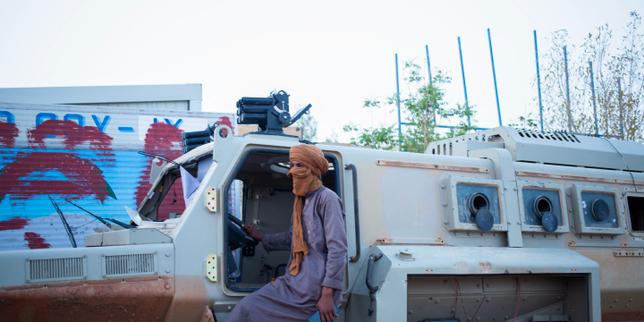
In the blistering expanse of northern Mali, the illusion of Moscow's expeditionary invincibility evaporated under a barrage of insurgent fire. When a joint column of Malian armed forces and Russian paramilitary fighters walked into a meticulously prepared ambush near the remote outpost of Tinzawaten, the ensuing carnage left at least one hundred soldiers and foreign contractors dead. It was not merely a tactical setback. It was a structural rupture that exposed the profound vulnerabilities of the military junta in Bamako and the structural limits of Kremlin-backed security contracts across the Sahel.
For months, the junta had promised citizens that the substitution of Western peacekeepers and French troops with Russian operatives would decisively crush the stubborn insurgency. Instead, the operational reality on the ground proved far more unforgiving.
The Anatomy of a Desert Ambush
The catastrophe at Tinzawaten did not happen in a vacuum. To understand why the joint convoy suffered such catastrophic losses, one must examine the topography of northern Mali and the evolving tactics of the Azawad separatist coalition and Al-Qaeda-aligned factions.
The terrain around the border region favors those who know how to use the dunes, rocky outcrops, and seasonal wadis to conceal movement. Insurgents utilized a severe sandstorm to mask their maneuvers, effectively blinding aerial surveillance and neutralizing the technological advantages boasted by the military coalition. When the convoy entered a natural depression, heavy weapons fire erupted from the elevated positions flanking the route.
Crucially, the ambush capitalized on a dangerous overconfidence that had taken root within the command structure. Relying heavily on mechanized transport and air support, the column moved through hostile territory without adequate reconnaissance of the high ground. When the first vehicles were disabled by mines and rocket-propelled grenades, subsequent attempts to provide medical evacuation or reinforcement turned into secondary disasters. Insurgents managed to down critical rotary-wing aircraft, stranding survivors and ensuring that the casualty count mounted unchecked over days of fierce fighting.
Beyond the Battlefield: The Myth of Absolute Security
The fallout from the bloodbath extended far beyond the dunes of Tinzawaten. In the capital of Bamako, the psychological impact was immediate. The narrative pushed by the military government—that territorial integrity was being systematically restored—collided harshly with reality when news of the fallen contractors and soldiers trickled back.
Prominent military bloggers and digital networks associated with the Russian paramilitary apparatus, which had previously projected an aura of ruthless competence, suddenly found themselves grappling with public grief and operational embarrassment. The loss of high-ranking commanders and prominent military figures stripped away the veneer of professional infallibility.
This incident laid bare a fundamental flaw in the prevailing counter-insurgency model across the Sahel. Rent-a-gun security solutions cannot substitute for a comprehensive political strategy, local intelligence networks, and sustainable governance. While foreign fighters excel at high-intensity kinetic engagements and securing urban nodes, they frequently lack the cultural fluency and long-term investment required to pacify hostile populations. When local populations witness indiscriminate violence or administrative neglect, the pool of recruits for insurgent movements inevitably expands.
The Geopolitical Fallout
The wider geopolitical chessboard shifted perceptibly in the wake of the disaster. Regional neighbors, particularly Algeria, viewed the escalation with deep alarm, recognizing that instability on their southern border threatens their own security architecture. Meanwhile, Western intelligence agencies watched closely as the limits of Moscow's African projection strategy were laid bare for the world to evaluate.
The junta's reliance on external military contractors has created a heavy financial and diplomatic debt. Mineral concessions and state resources are frequently leveraged to pay for security assistance, mortgaging the nation's economic sovereignty for short-term tactical firepower. Yet, as the events in the north demonstrated, even heavily armored columns cannot hold territory that is fundamentally contested by indigenous populations and agile insurgent networks.
Military analysts examining the operational logs note that subsequent attempts to re-establish control over the contested zones have repeatedly bogged down. Convoy operations launched to recover lost ground or retrieve abandoned equipment have frequently faced logistical paralysis, hampered by fuel shortages, mechanical breakdowns, and the constant threat of secondary ambushes.
The security architecture of West Africa remains trapped in a volatile loop. As long as state strategies prioritize kinetic sweeps over structural reform, political inclusion, and economic development, the cycle of violence will persist. The disaster in the north served as a brutal reminder that military alliances forged in desperation cannot outrun the deep-seated grievances tearing the region apart.
The sand continues to shift across the Sahel, burying the wreckage of armored vehicles and the political promises that brought them there, leaving a fractured nation to confront an increasingly uncertain horizon.