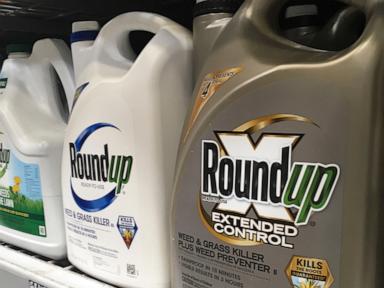
A proposed $7.25 billion class-action settlement meant to finally extinguish the nationwide legal firestorm over Bayer’s Roundup weedkiller is violently unraveling. Promoted by corporate executives and elite class-action attorneys as a orderly resolution for tens of thousands of cancer victims, the deal has instead triggered an intense, multi-front war that exposes deep institutional rot within the mass tort complex.
The public narrative surrounding mass litigation usually follows a predictable script. A multinational corporation faces catastrophic jury verdicts, admits no wrongdoing, and writes a massive check to put the nightmare behind it. Wall Street cheers the sudden predictability, and plaintiffs receive a modest measure of financial closure.
But behind the scenes of this deal, a far darker reality is playing out.
On Friday, opposing attorneys threw a massive wrench into the machinery, filing a petition to forcibly remove the entire global settlement from a friendly Missouri state court to federal jurisdiction. The move effectively freezes the impending June 4 opt-out deadline. It exposes a deeply controversial architecture that critics label a unconstitutional, collusive "sweetheart deal" designed to protect corporate profits while starving actual cancer sufferers.
The strategy is transparent. By shoving the settlement into a Missouri state court, the architects attempted to outrun a looming United States Supreme Court decision that could alter the entire legal playing field by the end of June. If this engineered escape hatch collapses, thousands of terminal patients could see their fundamental legal rights completely extinguished for pennies on the dollar.
The Billion Dollar Breakdown of Private Toll Booths
The architecture of the proposed $7.25 billion settlement is structured to pay out over an incredibly protracted 21-year timeline. When an un-indexed financial sum is stretched across more than two decades, inflation quietly guts its real-world purchasing power.
The starkest disparity lies in how the money is sliced up between the corporate defense, the elite plaintiffs’ bar, and the people actually dying of non-Hodgkin lymphoma.
The Compensation Divide
| Claimant Profile | Average Payout |
|---|---|
| Elite Class Action Counsel | $675,000,000 |
| Occupational Worker (Under Age 60) | $165,000 |
| Elderly Resident (Age 78 or Older) | $10,000 |
Consider that single, flat $675 million fee earmarked for a small group of elite class-action lawyers, led by prominent attorney Christopher Seeger. To secure that historic payday, these lawyers must deliver a massive, bound class of silent victims to Bayer.
If you are an agricultural laborer or a professional landscaper diagnosed with aggressive non-Hodgkin lymphoma under the age of 60, your average gross payout sits at roughly $165,000. For an elderly community gardener diagnosed at age 78, that payout plummets to a mere $10,000.
After accounting for medical liens, health insurance reimbursement demands, and miscellaneous litigation expenses, a $10,000 gross settlement checks out as virtually nothing. It fails to cover a single round of modern targeted cancer therapies, let alone funeral expenses.
The math reveals a disturbing truth. The system works beautifully for the professional intermediaries who manage the trauma, while leaving the actual victims to absorb the financial ruin.
Shifting Jurisdiction to Escape a Looming Supreme Court Threat
The rush to secure preliminary approval in St. Louis Circuit Court earlier this spring was not a matter of administrative convenience. It was a calculated race against the high court in Washington.
The Supreme Court is currently reviewing a critical case brought by John Durnell, a St. Louis community gardener who developed non-Hodgkin lymphoma after spraying Roundup for more than 20 years.
Bayer’s core legal defense hinges on a concept known as federal preemption. The company argues that because the Environmental Protection Agency explicitly approves Roundup's packaging and claims the active ingredient, glyphosate, is unlikely to cause cancer, state-level courts cannot legally penalize a company for failing to add a warning label.
The high court appears deeply divided on the issue, and the upcoming ruling could completely eliminate a plaintiff's right to file state-level failure-to-warn lawsuits.
This potential ruling creates a complex high-stakes gamble for everyone involved.
[Supreme Court Ruling on Preemption]
       /                      \
      /                        \
[Rules for Bayer]        [Rules for Plaintiffs]
    /                            \
State-level suits blocked;     Jury trials continue;
Settlement is only payout.     Bayer faces unlimited risk.
If the Supreme Court rules in favor of corporate preemption, the ability to sue Bayer in state court disappears overnight. For a plaintiff who chooses to opt out of the settlement before that ruling, the consequences are severe: they lose their leverage, lose their lawsuit, and get absolutely nothing.
Class counsel is using this terrifying scenario as a blunt instrument to force scared, sick plaintiffs into accepting a deeply flawed deal. Yet, if the settlement is nothing more than a defensive hedge against a devastating Supreme Court ruling, it deserves intense scrutiny.
By rushing this deal into a local state court, the architects created a closed loop. They insulated the settlement from the intense oversight of federal judges who have previously rejected similarly structured "futures" settlements as legally toxic.
The Fabricated Future and Due Process Rights
The most legally offensive element of the Missouri deal is its aggressive attempt to bind "futures" plaintiffs. This category includes millions of individuals who have used Roundup but have not yet developed non-Hodgkin lymphoma, alongside children and people who may not even be sick for another decade.
Under the terms of the deal, these individuals are automatically swept into the class. If they fail to opt out of a complex legal proceeding they don't even know exists, they forfeit their constitutional right to a jury trial before they ever receive a medical diagnosis.
Ashley Keller, the opposing attorney who filed the sudden removal to federal court, summarized the constitutional crisis directly. Keller noted that the massive settlement effectively extinguishes the rights of tens of thousands of cancer victims, calling out the haste with which it was rushed into state court.
How can an individual exercise meaningful due process to opt out of a settlement when their cancer has not yet mutated inside their lymph nodes?
They cannot.
The legal framework relies entirely on a fiction: that a legal notice published in newspapers and run on late-night television can stripping a citizen of their constitutional rights years before they ever step foot inside an oncology ward. It treats future human illness as a predictable corporate liability that can be depreciated on a corporate balance sheet over a 21-year period.
The Exhausted Corporate Playbook
Bayer’s current predicament is an object lesson in the severe dangers of corporate acquisitions. When the German conglomerate purchased Monsanto for $63 billion in 2018, it did not just buy a dominant portfolio of agricultural products; it inherited an unprecedented mountain of toxic legal liability.
The company has already spent over $10 billion attempting to settle an earlier wave of roughly 125,000 claims, only to watch tens of thousands of new lawsuits flood the dockets after losing massive individual jury verdicts, including a $2 billion judgment in Georgia.
The core of Bayer's strategy is simple: achieve definitive finality at any cost to stabilize a volatile stock price.
The company's public statements maintain a strict corporate line, claiming that the removal notice has no merit and that the class is properly before a Missouri court where the vast majority of claims reside.
This position ignores the reality of the situation.
The chemical giant continues to state that decades of independent studies prove glyphosate is safe. They lean heavily on the EPA's official stance while ignoring the World Health Organization’s International Agency for Research on Cancer, which explicitly categorized glyphosate as a probable human carcinogen.
This deep divide between regulatory compliance and grassroots jury anger is precisely why Bayer is so desperate to escape the tort system entirely. Juries who review internal corporate documents routinely penalize the company heavily. A managed settlement fund in a quiet state court is the only way to avoid those unpredictable, multi-billion-dollar surprises.
The Friction Inside Mass Tort Machinery
This unfolding disaster shatters the illusion that mass tort law firms always operate as unified advocates for public health. The reality is far more competitive.
The field is fractured between the elite class-action lawyers who negotiate global settlements to secure massive administrative fees, and the trial attorneys who want to take cases before live juries to chase historic verdicts.
Christopher Seeger defended the deal by arguing it guarantees compensation at a critical time when a pending Supreme Court ruling threatens cancer victims' ability to get paid at all.
He points to the very real risk of a catastrophic Supreme Court ruling or a potential Bayer bankruptcy as valid reasons to accept the certain, if small, payouts.
But this defense reveals a deeply cynical calculation. It asks dying patients to accept a low settlement out of fear that the justice system will fail them completely.
The sudden removal of the case to federal court effectively halts this smooth operation. Federal judges are historically far more skeptical of sweeping class-action settlements that restrict future personal injury claims.
By forcing the case out of state court, the challengers have exposed the entire arrangement to rigorous federal standards. This move all but guarantees significant delays, jeopardizing the July 9 final fairness hearing and giving thousands of plaintiffs more time to realize exactly what they are giving up.
This battle is no longer just a standard dispute over an agricultural product. It has evolved into a high-stakes conflict over the boundaries of corporate accountability and the integrity of mass justice. If an enterprise can structure a multi-decade settlement that strips future cancer victims of their right to sue before they are even diagnosed, it creates a dangerous blueprint for every major polluter in America.
The legal maneuvering in Missouri has successfully paused the assembly line. For the thousands of families dealing with a non-Hodgkin lymphoma diagnosis, that delay may be the only thing preventing them from being traded away in a highly profitable corporate restructuring.