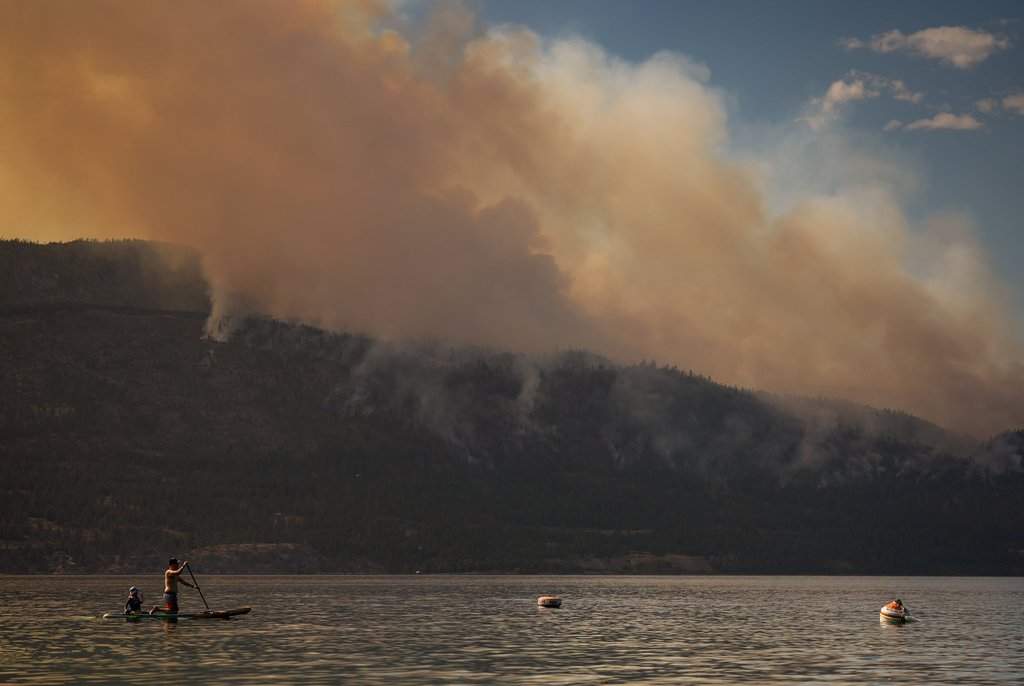
The Escalation at Quilpituk Creek
Emergency management officials expanded evacuation orders and issued urgent new alerts late this week for the Quilpituk Creek wildfire, forcing residents across vulnerable sectors to pack what they could carry and flee northward. The fire, which has defied initial containment lines due to erratic wind shifts and tinder-dry timber, represents a severe escalation in regional emergency response protocols. Local authorities acted swiftly after smoke plumes reduced visibility to near zero along primary evacuation corridors, triggering panic among isolated communities that rely on single-lane access roads.
Yet, reporting on fast-moving fires typically stops at the perimeter line. Evacuation maps update, acreage numbers tick upward, and evening broadcasts show orange glow against a darkening sky. That surface-level coverage misses the structural mechanics driving these recurring disasters.
Behind every expanded evacuation order lies a complex web of municipal planning decisions, decades of fire suppression policies, and the stark realities of rural infrastructure deficits. Understanding why the Quilpituk Creek blaze became an immediate threat requires looking past the daily incident reports and examining the systemic vulnerabilities turning seasonal blazes into regional emergencies.
Infrastructure Bottlenecks and Evacuation Realities
Communities situated near dense timberlands face a fundamental logistical barrier when a major fire breaks out. Single-point egress. When a single highway or gravel logging road serves as the sole artery for both fleeing residents and incoming emergency apparatus, bottlenecks become inevitable.
During the initial hours of the Quilpituk Creek escalation, local traffic monitoring indicated immediate gridlock as residents towing livestock trailers and utility vehicles vied for limited asphalt space. Emergency planners have long warned that rural infrastructure constructed decades ago was never engineered to handle concurrent mass evacuations driven by rapid fire growth.
The Cost of Isolated Geography
- Communication Deserts: Dead zones in cellular coverage leave outlying cabins and seasonal settlements blind to shifting wind alerts until emergency crews arrive at their doors.
- Fuel Supply Vulnerabilities: Power grid failures caused by falling timber knock out local fuel stations, stranding motorists who lack sufficient tank capacity to clear the danger zone.
- Heavy Equipment Transit: Moving bulldozers and water tenders onto narrow fire lines often forces civilian traffic to pull onto hazardous shoulders, slowing response times precisely when minutes dictate survival.
When local governments issue mandatory evacuation orders, they are managing a mathematical race against time. The physical capacity of the road network dictates the safety margin. If thousands of people attempt to evacuate simultaneously along a restricted corridor, human behavior and mechanical breakdowns routinely collide to create dangerous delays.
The Policy Trap of Historical Suppression
Modern fire behavior is not an act of nature alone. It is the cumulative result of a century-long doctrine of absolute fire suppression. For generations, land management agencies treated every spark in the backcountry as an enemy to be neutralized immediately.
While well-intentioned, this policy inadvertently altered forest ecologies. Without regular, low-intensity natural fires to clear out underbrush, fallen branches, and dense sapling thickets, forests accumulated a massive, continuous ladder of combustible fuel.
[Dense Underbrush] ---> [Ladder Fuels] ---> [Canopy Ignition] ---> [Catastrophic Crown Fire]
When a fire ignites in these overgrown tracts under drought conditions, it bypasses the surface stage entirely. It climbs rapidly into the tree canopy, generating its own weather patterns, throwing embers miles ahead of the main front, and rendering traditional firebreak strategies obsolete.
The Quilpituk Creek wildfire is burning through precisely these over-accumulated timber stands. Firefighters on the ground report that historic fuel loads have created extreme burning conditions that resist aerial drops of retardant and water. Until land management frameworks fully integrate proactive fuel reduction—including controlled burns and targeted mechanical thinning—communities near high-risk zones will remain hostage to the next dry lightning strike.
Economic and Social Aftershocks
The immediate physical danger of smoke and flames is only the first wave of disruption. Evacuation orders ripple through local economies with brutal efficiency. Small businesses dependent on summer tourism or seasonal resource extraction face sudden revenue halts while maintaining fixed overhead costs.
Furthermore, emergency shelter capacities in nearby receiving towns are strained to their breaking points. Hotels book out within hours, forcing municipalities to convert community centers and ice arenas into temporary cot-filled dormitories.
The psychological toll on rural populations also demands scrutiny. Repeated seasonal evacuations foster a distinct form of environmental fatigue. Residents forced to pack their lives into vehicles year after year experience chronic stress, leading some to refuse future evacuation orders entirely. This resistance introduces a severe hazard for rescue personnel who must later risk their lives to extract defiant property owners from active burn zones.
Emergency services must now balance tactical fire suppression with psychological support operations, recognizing that disaster recovery extends far beyond extinguishing the final hot spot. The expanding footprint of the Quilpituk Creek wildfire serves as a stark reminder that resilience requires more than temporary alerts; it demands a complete overhaul of how vulnerable regions prepare for a hotter, drier future.