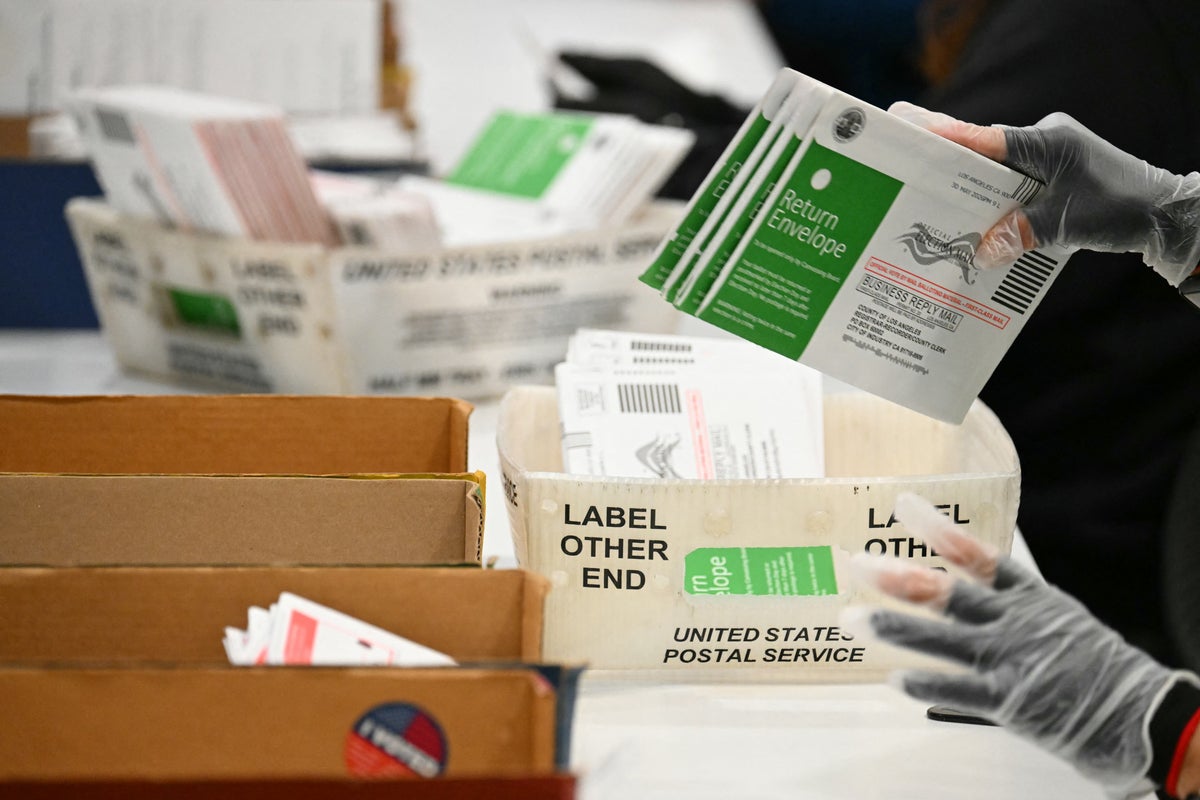
Millions of American voters depend on the mail to make their voices heard. That fundamental civic channel is now facing an unprecedented technical bottleneck. A high-level whistleblower disclosure made public by Senator Richard Blumenthal reveals that the U.S. Postal Service is rushing to deploy a complex digital infrastructure designed to screen mail-in ballots under executive directives from the White House. According to internal warnings, this fast-tracked electronic portal and its unforgiving verification mechanisms could stall or discard massive volumes of ballots ahead of the midterm elections.
For months, the intersection of postal logistics and ballot security has lived in legal purgatory. Following an executive order signed earlier this year, the agency was tasked with enforcing strict new standards for outbound and return ballot envelopes, complete with unique barcodes that must cross-reference a centralized database. Building such an intricate validation network typically requires a year or more of rigorous software engineering, security audits, and stress testing. Instead, development was compressed into a frantic three-month window.
The core vulnerability lies in the operational mechanics of the agency's new compliance protocol. Under the disclosed guidelines, postal facilities will process batches of ballots by scanning a sample—such as 400 pieces out of a lot of 10,000—to verify that individual data entries match the federal portal. The system enforces an absolute verification threshold. If a single barcode fails to scan properly or presents an administrative mismatch due to a recent change of address or a hyphenated surname, the entire batch faces rejection.
Consider a hypothetical scenario to understand the scale of disruption. An election office drops off a consignment of 15,000 outgoing ballots. During the random postal sample check, a single envelope triggers an error because the voter's database entry contains a minor clerical discrepancy. Rather than flagging the isolated file, the protocol halts the entire delivery cycle. The whole consignment is returned to the state election board for manual correction, forcing officials to restart the verification loop from scratch. Multiplied across thousands of jurisdictions, these cascading verification loops threaten to trap vital election mail in administrative gridlock.
Legal battles have compounded the operational chaos. Last week, the Supreme Court lifted a lower court injunction that had temporarily paused implementation of the executive directive, ruling that the initial multi-state challenge was premature. Yet that procedural decision left the underlying legality of the system entirely unresolved. While federal judges continue to weigh separate injunctions, postal leadership has pressed forward to meet aggressive internal deadlines, bypassing standard quality assurance protocols in the process.
Whistleblower advocates point out that skipping comprehensive beta testing on a mission-critical government portal invites catastrophic software failures. Database latency, synchronization errors between state rolls and federal servers, and hardware incompatibilities at local post offices could paralyze ballot distribution entirely. When an agency accustomed to moving standard commercial packages is suddenly thrust into the role of an absolute electoral gatekeeper with zero margin for error, the system strain inevitably breaks the weakest links.
The political stakes could not be higher. Roughly one-third of the national electorate casts votes through the postal network, relying on a system designed for universal reach rather than rigid administrative exclusion. As electronic portals go live and physical sorting hubs adjust to the new screening mandates, the invisible machinery of democracy is operating under a strain it was never engineered to bear.


