The warning did not arrive through a public diplomatic channel or a late-night social media post. It came via quiet intelligence cables circulating through defense ministries across Western Europe, detailing a stark contingency calculation inside Tehran's military command structure. If a future administration led by Donald Trump triggers a direct military confrontation with Iran, Islamic Revolutionary Guard Corps planners are not merely preparing to defend their domestic airspace. They are actively mapping asymmetric retaliation vectors targeting United States military installations embedded deep inside European sovereign territory.
European capitals have spent decades treating regional conflicts in the Middle East as distant thunderstorms, capable of sending economic shockwaves and refugee flows northward, but largely sparing bricks and mortar on the European continent. That illusion is fracturing. United States installations in Germany, Italy, Spain, and Greece form the logistical backbone of American power projection across the entire Eurasian theater. Tehran views these staging grounds not as neutral European infrastructure, but as forward-operating launchpads for any offensive campaign directed against Iranian soil.
Understanding why European facilities suddenly sit squarely in the crosshairs requires an honest assessment of how modern military doctrine has evolved under sanctions and asymmetric constraints. Iran lacks a blue-water navy capable of challenging American carrier strike groups in the Atlantic or the Mediterranean. Its conventional air force relies on aging platforms that would struggle to survive initial engagement with modern fifth-generation stealth fighters and integrated air defense networks.
Therefore, symmetry is dead. When a regional power faces an adversary with absolute conventional dominance, doctrine dictates that retaliation must bypass the front lines entirely.
Consider the logistical architecture that makes these European bases indispensable to Washington. Ramstein Air Base in Germany functions as the grand central station for American military transport, medical evacuation, and command communications spanning multiple combatant commands. Naval Support Activity Souda Bay in Crete provides critical refueling and repair docking for fleets transiting between the Atlantic and the Middle East. Sigonella in Italy anchors surveillance operations tracking maritime and aerial movements across the Mediterranean basin.
If a hypothetical strike campaign originates from or relies upon these nodes, Iranian strategic planners view them as legitimate belligerent targets. The calculation inside Tehran centers on cost-imposition. By threatening European host nations with long-range ballistic missile strikes or sophisticated cyber sabotage against critical infrastructure, Iran aims to fracture the North Atlantic alliance from within.
European leaders are waking up to a chilling geopolitical reality. Their diplomatic alignment with Washington's maximum pressure campaigns carries a direct physical security cost that domestic populations have never voted to accept.
The Mechanics of Asymmetric Reach
How realistic is the threat of an Iranian strike landing hundreds or thousands of miles outside the Middle East theater? The answer depends entirely on the weapon systems Tehran chooses to deploy and the nature of the escalation ladder.
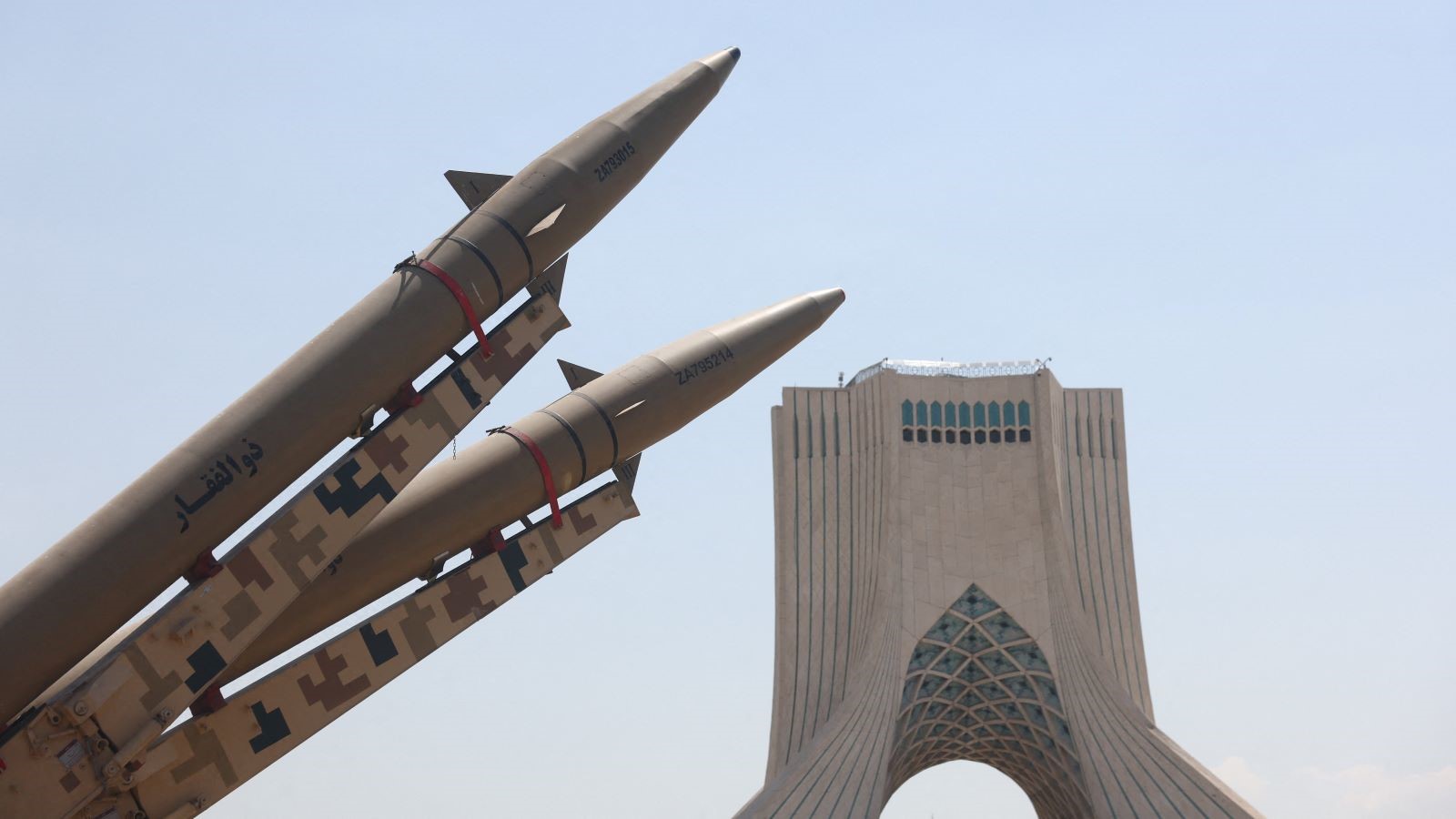
Standard short-range tactical rockets possess nowhere near the fuel capacity to bridge the gap between Iranian launch sites and Western Europe. However, Iran's missile development program has spent the past decade quietly expanding the range and guidance precision of its medium-range ballistic missile inventory. Systems like the Khorramshahr and Sejjil families boast operational ranges stretching well past two thousand kilometers when configured with lighter payloads.
Stationed in western or northwestern Iran, these missiles possess the theoretical footprint to threaten southeastern European NATO members like Greece or Italy. For installations located further west in Germany or the United Kingdom, direct ballistic trajectories become far more problematic, running up against complex integrated air defense shields including Aegis Ashore batteries and Patriot systems deployed across Eastern Europe.
Yet, missiles represent only one vector in a modern multi-domain threat environment.
Proxy networks and specialized sabotage units offer an alternative route that bypasses radar tracking entirely. European intelligence agencies have quietly documented years of Iranian intelligence operatives embedding within diaspora communities, utilizing front companies to acquire dual-use technology, and mapping the physical vulnerabilities surrounding critical military logistics hubs.
The sabotage of European railway lines, telecommunications nodes, or fuel supply chains feeding American bases requires far less technological sophistication than an intercontinental ballistic strike, while producing a comparable paralyzing effect. If fuel depots supplying Ramstein Air Base catch fire under mysterious circumstances during a high-stakes standoff, the operational tempo of the United States military grinds to an immediate halt regardless of whether the spark came from a missile or a timed explosive device planted by a local proxy cell.
The Political Fracture Within the Alliance
The deeper vulnerability is not structural concrete or aviation fuel storage tanks. It is political willpower.
European populations have grown accustomed to a post-Cold War security umbrella where threats are outsourced to distant deserts and mountains. A scenario where citizens in Rome or Berlin must check their phones for incoming air raid alerts because a Washington-led campaign ignited a wider war in the Persian Gulf would detonate domestic political support for transatlantic military cooperation overnight.
Right-wing populist parties and pacifist left factions across the continent would instantly mobilize against American military footprints within their borders. Street protests demanding the immediate expulsion of United States personnel would dwarf anything seen during previous regional crises. Governments in capitals like Madrid and Rome, historically sensitive to public anxiety over foreign entanglements, would face an agonizing dilemma. Do they stand shoulder-to-shoulder with an American commander-in-chief pursuing an aggressive escalation doctrine, or do they demand a stand-down to protect their own cities from retaliatory fire?
Iran's grand strategy relies precisely on this fracture. Tehran does not need to win a conventional war against the United States military to achieve its core political objectives. It merely needs to make the cost of hosting American power intolerable for European partners.
When allied governments quietly signal to Washington that their airspace is closed to offensive operations against Iran, the entire architecture of American forward defense begins to buckle from the friction.
The Intelligence Blind Spot
American intelligence agencies are intimately familiar with Iranian capabilities, yet a dangerous analytical blind spot persists regarding how European host nations manage their own internal security. Many European military bases operate with porous perimeter security compared to heavily fortified installations inside the continental United States or active combat zones. Local civilian contractors routinely access sensitive logistics areas, maintenance hangars, and communication hubs with minimal counter-intelligence vetting.
This creates an open invitation for foreign intelligence penetration. Iranian operatives have historically demonstrated patience, utilizing multi-year recruitment cycles to compromise low-level contractors, logistics managers, and security personnel stationed near critical installations.
During a crisis triggered by a potential Trump administration escalation, these dormant assets would transition from intelligence collection to active disruption. A compromised logistics manifest could misroute crucial replacement parts for air defense batteries. A corrupted digital certificate could inject malicious code into base power grids.
The Pentagon's war-gaming tends to focus heavily on kinetic exchanges—incoming missiles, interception rates, and sortie generation numbers. It routinely discounts the insidious erosion caused by months of low-level sabotage executed by local actors who never touch a weapon but possess complete access to the physical veins of the base.
The High Cost of Strategic Drift
Washington continues to operate under the assumption that European real estate remains a permanent, risk-free asset for global force projection. That assumption belongs in a museum.
Every escalation in the Middle East echoes directly through European capitals, altering the domestic political calculus of allies who are growing weary of underwriting American foreign policy goals with their own national security exposure. If a future administration decides to roll the dice on a decisive military showdown with Tehran, the fallout will not stay contained to the Strait of Hormuz or the deserts of the Iranian plateau. It will track westward, landing squarely on the doorsteps of allies who thought geography was enough to shield them from the consequences of American power.