The Pentagon just dropped an economic cluster bomb on the eve of the most sensitive diplomatic event of the year, effectively gutting the narrative of a stabilizing US-China relationship. By quietly expanding its Section 1260H blacklist to include crown jewels of Chinese industry like Alibaba, Baidu, and BYD, the Department of Defense is sending a blunt message. Diplomatic optics mean nothing when the technological supremacy of the United States is at stake.
This aggressive escalation comes only weeks after the Beijing summit, where a fragile detente was engineered, culminating in an invitation for Xi Jinping to visit Washington in September. That visit is now hanging by a thread.
For years, Washington treated the Pentagon’s Chinese military companies list as a bureaucratic afterthought. Not anymore. The inclusion of these commercial titans reveals a fundamental shift in American strategy. The US is no longer just targeting state-owned defense contractors; it is actively moving to sever the civilian arteries fueling China’s artificial intelligence and electric vehicle dominance.
The Illusion of the Beijing Detente
Superficial diplomatic gestures have papered over the widening chasm between Washington and Beijing. The recent summit yielded handshakes and promises of strategic stability, but behind closed doors, the institutional machinery of American national security never stopped grinding.
The publication of this expanded list exposes the deep institutional friction within Washington itself. In February, the Pentagon briefly uploaded an earlier version of this very list, only to pull it down within an hour. That frantic reversal triggered intense speculation that political actors wanted to avoid disrupting high-level diplomatic tracks.
The institutional hawks won the bureaucratic war. The newly released list not only retains the tech giants but explicitly reinstates two massive Chinese memory-chip makers, ChangXin Memory Technologies and Yangtze Memory Technologies. Their removal in February had sparked fierce pushback from national security officials who warned that leniency would directly undermine American chipmakers like Micron.
Mapping Civil Military Fusion
The legal justification for targeting these commercial entities rests entirely on Beijing’s own state mandates. Under Section 1260H, the Pentagon is required to identify companies contributing to China’s Military-Civil Fusion strategy.
This strategy explicitly dictates that private commercial innovations must be shared with the People’s Liberation Army. By aligning with China's Ministry of Industry and Information Technology, companies like Alibaba and Baidu became automatic targets. The Pentagon is effectively declaring that in modern warfare, a cloud computing platform or an autonomous driving algorithm is just as lethal as a hypersonic missile.
- Alibaba: Flagged for providing cloud infrastructure and technological support that defense analysts warn could support military logistics and computational operations.
- Baidu: Target because of its deep involvement in foundational artificial intelligence models, autonomous mapping, and dual-use unmanned systems.
- BYD: The world’s largest electric vehicle manufacturer is now classified as a military-civil fusion contributor due to its industrial scale, battery technology dominance, and direct institutional ties to state-owned assets.
The Upcoming Clock that Corporate America is Ignoring
Corporate compliance officers are making a dangerous mistake by treating the 1260H designation as a mere reputational hazard. While it is true that inclusion does not trigger immediate, blanket sanctions from the Treasury Department, a hidden statutory time bomb is ticking.
Statutory Deadline: Beginning June 30, the Department of Defense is legally prohibited from contracting directly with any company listed on the 1260H roster.
The real pain begins exactly one year later. On June 30, 2027, the prohibition extends to third-party procurement. This means any American corporation holding a federal defense contract will be legally barred from buying products, software, or services from any vendor utilizing components from these blacklisted Chinese entities.
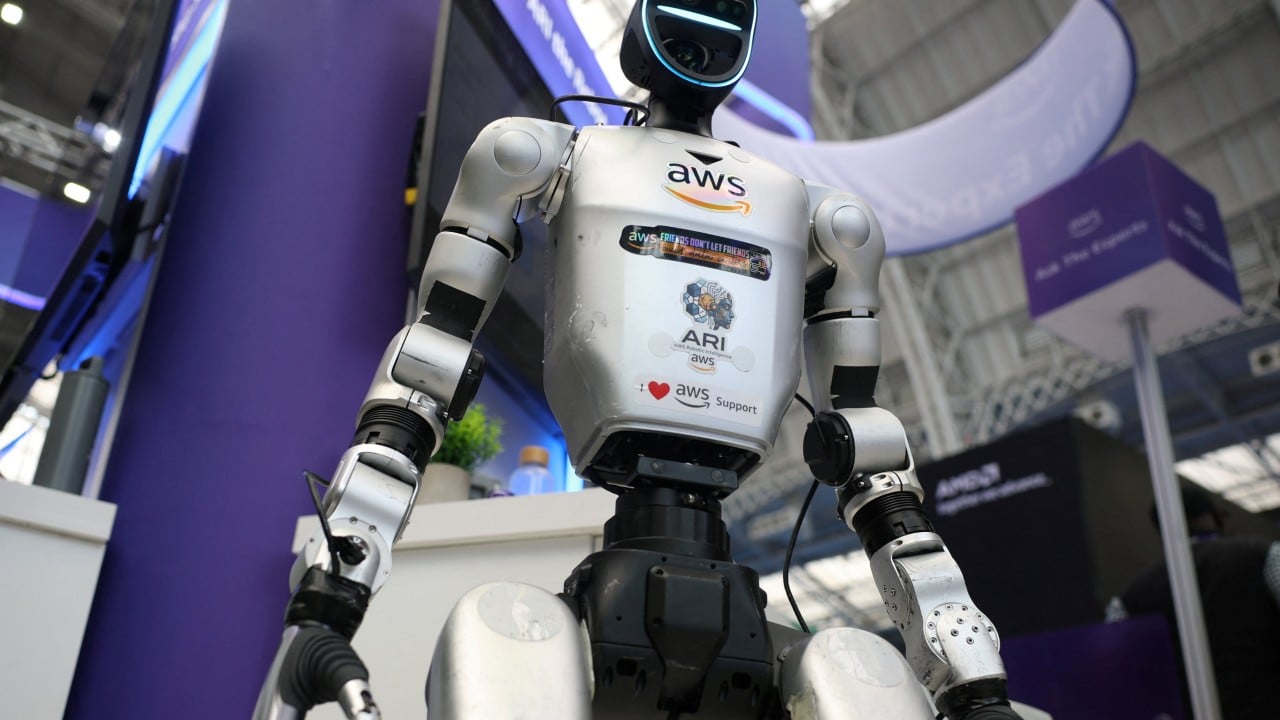
The secondary shockwaves are already hitting the private sector. Silicon Valley giant Nvidia recently announced a high-profile partnership with Unitree, a Chinese robotics startup planning an IPO in Shanghai, to develop humanoid robots for researchers. The Pentagon just added Unitree to the blacklist. Because Nvidia relies heavily on federal and defense-related contracts, partnerships like this are suddenly toxic.
| Company Named | Primary Sector | Immediate Impact |
|---|---|---|
| Alibaba | Cloud / AI / E-Commerce | Scrutiny on US cloud partnerships |
| Baidu | Artificial Intelligence / Search | Exclusion from Western AI research collaboratives |
| BYD | Electric Vehicles / Batteries | Blocked from federal fleet supply chains |
| WuXi AppTec | Biotechnology | Immediate threat to US pharmaceutical supply chains via Biosecure Act |
Xi Jinping Capital Dilemma
The timing of this release strips Xi Jinping of leverage ahead of his planned September trip to Washington. The Chinese economy is facing systemic real estate weakness and deflationary pressures. Xi desperately needs to signal to global markets that China remains an attractive, stable environment for foreign direct investment.
Instead, Washington has signaled that China's top growth engines are high-risk assets. When the Pentagon labels a publicly traded firm a military vendor, it creates an immediate compliance nightmare for Western institutional investors.
The political counter-argument from Beijing is predictable. The Chinese foreign ministry has accused Washington of overstretching national security to enforce raw economic containment. Lobbyists for Chinese tech firms frequently point out that American automotive giants like Ford or General Motors routinely fulfill defense contracts without having their global commercial operations blacklisted by foreign powers.
But Washington is no longer listening to conventional free-market arguments. The consensus across both political parties is that China's high-tech manufacturing sector, termed "new quality productive forces" by Beijing, is being systematically integrated with "new-type combat capabilities."
The Disruption of Biotech and Supply Chains
The inclusion of WuXi AppTec on the reinstated list proves that this economic warfare extends far beyond traditional defense tech. WuXi is a pharmaceutical contract manufacturer that produces active ingredients for some of the most widely used drugs in America, including blockbuster weight-loss medications.
Under the recently passed Biosecure Act, the federal government is restricted from doing business with any biotechnology company tied to the 1260H list. By forcing a decoupling in the biotech space, the Pentagon is betting that the long-term security of the American healthcare supply chain outweighs the short-term disruptions and price hikes consumers will likely face.
This is a high-stakes gamble with zero margin for error. American tech firms, automakers, and pharmaceutical companies have spent decades weaving their supply chains into the Chinese ecosystem. Untangling this web will take years, cost billions, and inject immense volatility into global markets.
The Weaponization of Risk Advisory
We have entered an era where risk advisory is used as an offensive weapon. The 1260H list works by creating a gray zone of preemptive deterrence. It forces American corporate boards to self-censor their partnerships out of fear of future sanctions.
For Beijing, the path forward is highly restricted. Retaliatory measures, such as tightening export controls on critical minerals like gallium and germanium, will only accelerate Western efforts to build alternative supply chains. Accepting the designations quietly, however, projects weakness at a time when the regime needs to project absolute stability.
The upcoming Washington summit will not be a celebration of normalized ties. It will be a cold, transactional confrontation where the American side holds a freshly updated ledger of economic targets. Corporate boards across the globe must now accept a harsh reality. The distinction between commercial technology and military hardware has been permanently erased by both sides of the Pacific.

